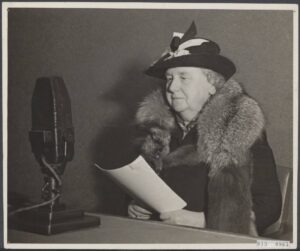
A Royal Decree (Koninklijk Besluit) is a formal decision by the King or Queen. In the Netherlands, royal decrees started in 1813. Contents Royal decrees covered a range of topics. Some were of (inter)national importance, such as treaties, laws, and abdications. But many dealt with individual citizens, employees, or service personnel. These can be a great source for information about your ancestors. Examples of information about your ancestors you may find in royal decrees: Marriage … [Read more...]
Source: Estate Inventories
1 September 2023 by Leave a Comment
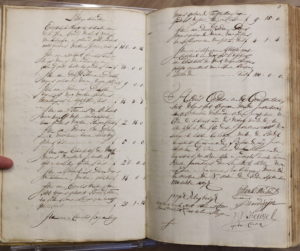
Estate inventories tally the assets and debts of a person, family, or company. They were typically created for people of means. You are unlikely to find them for poor ancestors. Different regions have different customs, but in general, you are unlikely to find them before the 1600s, though you may find earlier examples. The most important reasons for creating an estate inventory are: ensuring the rights of minor heirs after a parent died. documenting what a spouse brought to a … [Read more...]
Source – Church Membership Records
21 October 2022 by 1 Comment
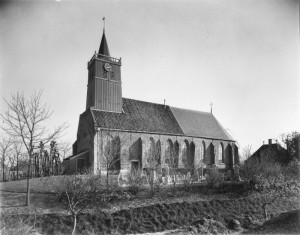
Church membership records or lidmatenboeken record the members of a church. Church membership records are typically kept by protestant churches, like the Dutch Reformed Church. In the protestant faith, people become members by confession of faith as adults. This is different than in the Roman Catholic Church, that considers people as members from the moment of baptism, often in infancy. Structure of church membership records Church membership records are typically kept in chronological … [Read more...]
Researching Military Ancestors in the Netherlands – Before 1795
23 September 2022 by 1 Comment
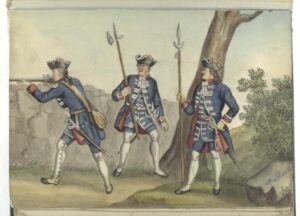
I often get questions about finding military ancestors, and thought I would write a few posts about that. I will start with the early period, before 1795. Before 1795, most soldiers were professional soldiers, not conscripts. The Dutch Republic (1588-1795) hired both Dutch and foreign men. Often, whole regiments were hired, including from Scotland, Switzerland, and Germany. The regiments would be stationed in garrison towns throughout the republic, changing every few years. Some soldiers … [Read more...]
Source – Mill tax records
22 July 2022 by Leave a Comment
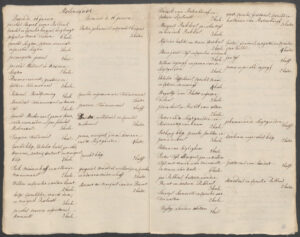
Before say 1800, taxes varied widely depending on the location. Several provinces instituted a mill tax; a tax on grinding grain. The tax could be levied in different ways. Often, a fixed sum was charged per head, with a reduced rate for children under 16. In some jurisdictions, the tax collector collected the taxes and recorded who paid what. In other jurisdictions, the tax was leased to the highest bidder, who would then collect the taxes and got to keep any profits above the paid sum. In … [Read more...]
Source – Records of the municipality
20 August 2021 by 2 Comments
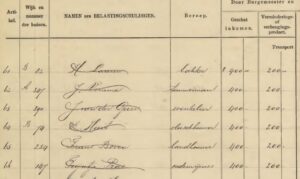
In 1812, the Netherlands had more than 1,100 different municipalities. Since then, many have merged so we have about 350 left. See the Gemeentegeschiedenis website for an overview of all the municipalities that ever existed. Each of these municipalities created a wide range of records. Typical categories include: Records created by mayors, aldermen, municipal council, such as minutes of meetings, correspondence, municipal reports Various departments within the municipality … [Read more...]
Cadastre – Original Indicator Tables
12 March 2021 by Leave a Comment
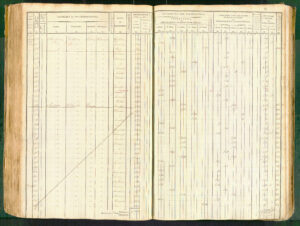
This is the second article in a series about using cadastral records. In the first article, we looked at overview and minute maps that were created when the cadastre was introduced in 1832. These maps show the cadastral municipalities, sections, and plots. This post will show you how to find out who owned each plot. Contents of an original indicator table The oorspronkelijke aanwijzende tafel [original indicator table] recorded the owners of each plot. The tables are organized per … [Read more...]
Cadastre: Overview Maps and Minute Maps
15 January 2021 by 2 Comments
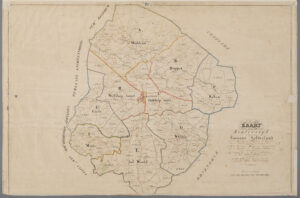
Several of you voted for cadastral records as the topic you would like me to write about in 2021, so here we go. This is the first article in a series. The cadastre was introduced in the Netherlands in 1832. The whole country was divided into cadastral municipalities, which did not always completely overlap with the civil municipalities. Each cadastral municipality was divided into sections, and each section into plots. The combination of cadastral municipality, section letter, and plot … [Read more...]
Source – Secret Register of Released Prisoners
9 October 2020 by Leave a Comment
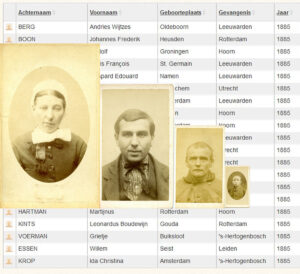
A source with an intriguing name is the "Geheim Register van Ontslagen Gevangen" or the Secret Register of Released Prisoners. This register was kept from 1882 to 1896 and included the photos, personal details, and overview of crimes of the prisoners who would be released in the upcoming month even though they were still considered dangerous. This included people who served multiple sentences, or who served a long sentence for a serious crime. … [Read more...]
Slave registers of Curacao now available online
17 August 2020 by 5 Comments
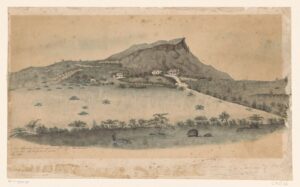
The slave registers of Curacao (1839-1863) and the emancipation registers of Curacao (1863) are now available via the website of the National Archives of Curacao and National Archives of the Netherlands. … [Read more...]