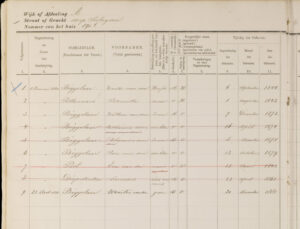
Verwant can be a noun or an adjective, and means relative or related, respectively. You may come across the term in population registers, where the relation to the head of household might read "niet verwant" [not related], sometimes abbreviated to "niet verw." or "n.v.w." This could indicate the person was a lodger or employee of the head of household. … [Read more...]
Dutch term – Ontslagen
27 March 2023 by Leave a Comment
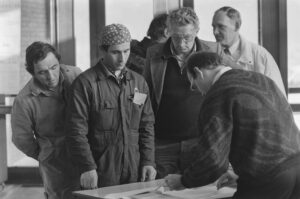
Ontslagen means "discharged." It can mean that someone was fired from a job, but also that they were discharged from a facility like a prison or beggar's colony. For example, there is the Geheim Register van Ontslagen Gevangenen, the Secret Register of Released Prisoners. … [Read more...]
Dutch term – Meisjesschool
20 March 2023 by Leave a Comment
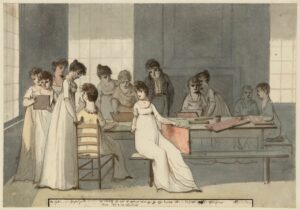
A meisjesschool is a school for girls. These schools started to appear in the 1800s to teach the daughters of the upper classes. Besides reading and arithmetic, they would be taught to draw, sew, and make music. Meisjesscholen were typically available in large cities only. … [Read more...]
Dutch term – Pakhuis
6 March 2023 by 1 Comment
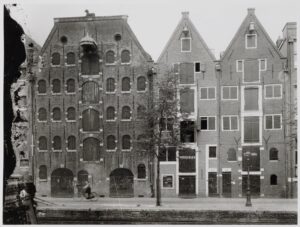
A pakhuis is a warehouse. Pakhuizen were typically owned or rented by merchants or craftsmen who stored their wares. You may come across the term in cadastral, court, or notarial records. You may also see the occupation pakhuisknecht, a hired hand who worked in a warehouse. … [Read more...]
Dutch term – Olieslager
27 February 2023 by Leave a Comment
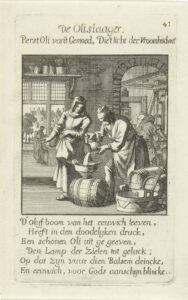
An olieslager is an oil miller, someone who works in a mill that presses vegetable oil, for example from rapeseed. … [Read more...]
Unusual death place case study: Thomas Cammenga
24 February 2023 by 3 Comments
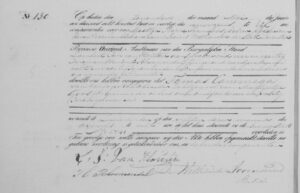
When Thomas Cammenga died on 5 May 1842, he did not die in his place of residence, Leeuwarden in Friesland, but in Deventer, Overijssel. His death record showed he died at the Bagijnenstraat.1 Deventer was 120 km/75 miles from Leeuwarden. Whenever we notice something odd like this, we have to ask ourselves why: Why did Thomas die in Deventer even though he lived in Leeuwarden? Let's go through some of the common reasons why somebody died away from home: Jail. Leeuwarden had its … [Read more...]
Dutch term – Gepensioneerd
20 February 2023 by 1 Comment
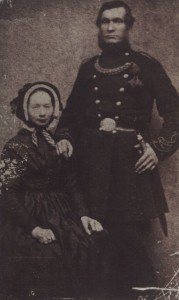
Gepensioneerd literally means "pensioned," having a pension ("pensioen"). In general use, it often means retired. Before say 1940, most jobs did not come with a pension after retirement. Government jobs, including the military, did often come with a pension. The pensioner would need to meet requirements for age and number of years in service. … [Read more...]
Dutch term – Zegel
13 February 2023 by Leave a Comment
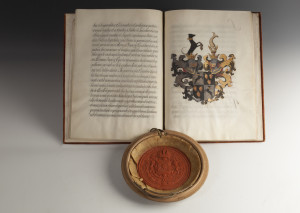
A zegel is a seal or stamp. In the Middle Ages, it became customary to attach a seal to charters as marks of identity and authority. Originally, seals would often show knights on horses. In the 1100s, this was gradually replaced by coats of arms. The following image shows a combination: Duke John II of Brabant is displayed as a knight on his horse, with his coat of arms on his shield, banner, and horse mantling. For examples of medieval seals, see the earliest generations in my Eleanor of … [Read more...]
Dutch term – Huisvrouw
6 February 2023 by Leave a Comment

Huisvrouw means housewife. Originally, the term was generically used for wife or goodwife. This could include women who had occupations, like midwives or laundresses. In the 1900s, the term shifted to mean a woman who did not work outside the home, including stay-at-home mothers. … [Read more...]
Dutch term – Begijn
30 January 2023 by Leave a Comment

A begijn is a beguine. Beguines were single women who lived in communities together. The beguine movement started in the 1100s and spread across Western Europe. Initially, beguines lived in houses together, but over time, they often lived in individual houses around a courtyard. Beguines were deeply religious women who often dedicated their lives to serving the community, like taking care of the ill or elderly. Unlike nuns, they did not have to renounce their personal possessions, but the … [Read more...]