Even after the introduction of the civil registration, but especially in earlier records, there may be spelling variations of a name. A woman may be called Elizabeth or Elisabeth, her last name might be written as Jansen or Janssen. Especially since most Dutch search engines only find exact matches, it is important to try different spelling variations or use wildcards. A search for Eli* Jans* would have found all four variations of the name. If you can't find a person, also search for … [Read more...]
Quick tip – Languages that may come in handy
30 April 2014 by 2 Comments
These languages will come in handy when researching your ancestors from the Netherlands. Dutch Not surprisingly, most records in the Netherlands have been written in Dutch. French During the French occupation (1795-1813), most government records were written in French, including early civil registration records. German During World War II (1940-1945), the Netherlands was occupied by Germany so some official records created at that time were in German. Also, in some parts of current-day … [Read more...]
Quick tip: There is no village called ‘Burgerlijke Stand’
23 April 2014 by 2 Comments
In some of the records at Familysearch, the place of birth is listed as 'Burgerlijke Stand' followed by the name of a municipality in the Netherlands. 'Burgerlijke Stand' means 'Civil Registration' and is not a location. The way it is included in the record sets on Familysearch makes it look like a village. When these records were imported by Ancestry.com, these errors were copied too. This particular mistake has now been fixed on Ancestry.com, but can still be found on Familysearch. Read … [Read more...]
King’s Day Giveaway: Dutch Roots
16 April 2014 by Leave a Comment
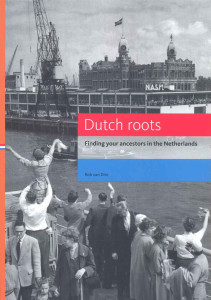
On 26 April, we will celebrate the first ever "King's Day" in honor of the birthday of King Willem-Alexander. Until last year, the national holiday to celebrate the monarch's birthday was "Queen's Day," a tradition started in 1891. King Willem-Alexander succeeded his mother, Queen Beatrix, on 30 April last year. This year, he will be visiting the towns of De Rijp and Amstelveen to celebrate his birthday. His actual birthday is 27 April, but the holiday is not celebrated on a Sunday so that is … [Read more...]
Quick tip – most farmers were tenants, not owners
9 April 2014 by Leave a Comment
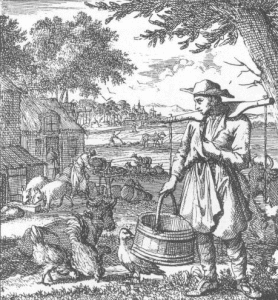
If your ancestors were farmers, please keep in mind that most farmers in the Netherlands were tenants, not owners. Most land was owned by a few wealthy families and institutions like churches or convents. You may be able to find information about your ancestors in the archives that these families and institutions created but you will not be able to find them in sales deeds or property tax records. … [Read more...]
Quick tip: read ‘Holland’ instead of ‘Reusel-De Mierden’
26 March 2014 by Leave a Comment
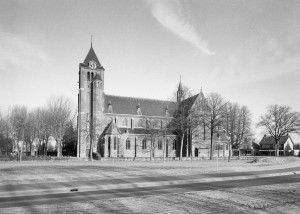
Do you have ancestors from Reusel-De Mierden, Noord-Brabant? Chances are, they are not from this place but the place name was introduced by mistaken when software tried to resolve the place name 'Holland'. Read Was your ancestor born in Reusel-De Mierden, Noord-Brabant? Guess again! for more information. … [Read more...]
Quick tip: Mind your immigrant ancestor’s neighbors
19 March 2014 by Leave a Comment
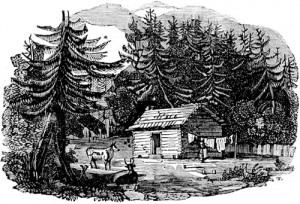
When you're trying to find the place of origin of your Dutch immigrant ancestor, be sure to check his neighbors too. Did any of them come from the Netherlands? On websites that allow you to search census records, like Ancestry.com or Ancestry.co.uk, you can often search for all people born in the Netherlands who lived in a certain place, regardless of their names. This should tell you who the Dutch immigrants in that community were. Your ancestor may be hard to trace but his neighbor may not … [Read more...]
Quick tip: find the origin of your name in name taking records
12 March 2014 by 1 Comment
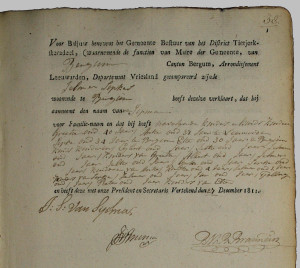
If your family is from the northern provinces, or Jewish, you may find them in name taking records. When the civil registration was introduced, people who did not have a last name yet were required to record their last name. In such cases, the name taking record is often the earliest record you will find for your name. Sometimes, clues about the origin of your name can be found in the name taking records. For example, a carpenter may had called himself Houtsma (hout = wood), an ancestor … [Read more...]
Quick tip: there is no letter y in the Dutch alphabet
5 March 2014 by 5 Comments
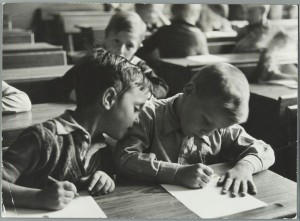
The Dutch alphabet has a letter ij, not a y. Dutch names with a ij typically get spelled with a y in English, for example Dijkstra/Dykstra, Wijnveen/Wynveen. Next time you're having problems finding a person in a Dutch search engine, check that you've used the Dutch spelling. … [Read more...]
Quick tip: Try to find evidence to disprove your case
26 February 2014 by Leave a Comment
When proving a theory, we look for evidence that supports it. But as diligent researchers, we should look just as hard for evidence that disproves our theory. In fact, searching for evidence that does not fit with our preconceptions can be far more informative than searching for supporting evidence, as demonstrated in this short video. … [Read more...]