"The past is a foreign country, they did things differently there."1 One of the fundamental differences is the way that people were named. In many parts of the Netherlands, people did not have a hereditary surname until 1811. But even after 1811, names could get changed, for instance if someone emigrated or if the clerk made an error. The next time you're stuck, ask yourself: what other name could this ancestor have used? Related articles: English versions of Dutch last … [Read more...]
Quick tip: The first of same-named siblings probably died young
16 July 2014 by 4 Comments
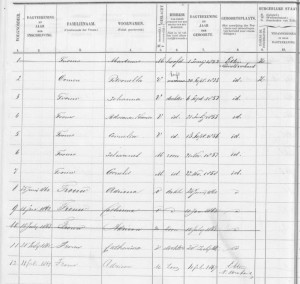
If you see multiple siblings with the same name, the first one probably died before the next one was born. Dutch parents typically named their children after relatives. By giving the new child the name of the deceased sibling, both the deceased sibling and the relative that that sibling had been named after were commemorated. There is one exception: If both grandfathers or grandmothers had the same name, in rare cases they are both named after, leading to two children of the same parents with … [Read more...]
Quick tip: Finding 20th century people
9 July 2014 by Leave a Comment
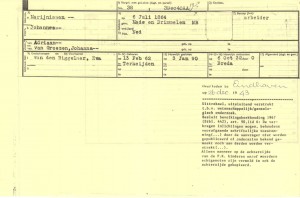
Finding people who lived in the 20th century can be difficult because of Dutch privacy laws. One of the best sources for 20th century information are the personal record cards, which are available for all Dutch residents who died in the Netherlands after 1938. They provide information about that person's dates and places of birth, marriage and death. Often they also provide information about the names and birth dates of the person's parents and children. … [Read more...]
Quick tip: check Dutch Reformed records for Catholics
2 July 2014 by Leave a Comment
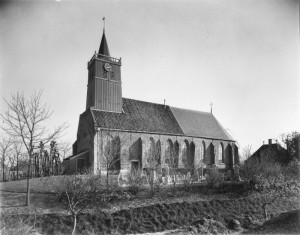
After the Eighty Year War (1568-1648), only marriages performed in the Dutch Reformed Church or before the Eldermen's court were considered legal. This means that even marriages between two Catholic people can often be found in Dutch Reformed church records. This does not mean they converted or pretended to be Dutch Reformed, they just went there to get married. Catholics considered the Dutch Reformed marriage as their civil union. For more information and examples, see always check all … [Read more...]
Quick tip: Free images of Dutch colonial past
24 June 2014 by 1 Comment
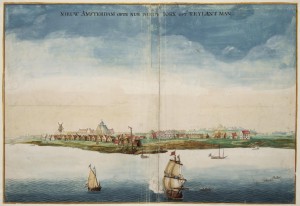
The National Archives and Royal Library of the Netherlands have just donated thousands of images of the colonial past of the Netherlands and its trade partners to the public domain. These images have been uploaded to Wikimedia and are free for everybody to use, without restrictions. Here are a few gems: View images from the Atlas of Mutual Heritage on Wikimedia … [Read more...]
Quick tip: Use Zoekakten.nl to find Dutch records on Familysearch
11 June 2014 by 1 Comment
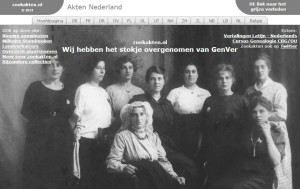
UPDATE: Zoekakten no longer works. See Free alternatives for Zoekakten. Zoekakten.nl is a new website that took over from the popular service Genver.nl. Zoekakten (literally: search records) provides you direct links to record sets of Dutch sources in Familysearch, such as birth, marriage and death records of the civil registration, population registers and baptismal, marriage and burial records from churches before 1811. To find a record, follow these steps: Select the two-letter … [Read more...]
Quick tip: Podcast interview with Yvette Hoitink
4 June 2014 by Leave a Comment

Dutch Genealogy's Yvette Hoitink was interviewed by Marian Pierre-Louis for the Genealogy Professional podcast series. Listen to the podcast and learn about Yvette's research services and find out what advice she has for other genealogists. The Genealogy Professional Podcast 25 - Yvette Hoitink The Genealogy Professional podcast series is a wonderful resource for professional and non-professional genealogists alike. Every week, another professional genealogist shares information about … [Read more...]
Quick tip – Your ancestors may have moved a lot
28 May 2014 by Leave a Comment
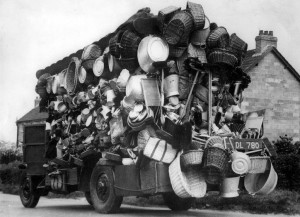
Your ancestors may have moved around a lot more than you think. Especially towards the end of the 19th century, when more and more people started living in cities, people moved a lot more frequently than we do today. Check this case study, for example, that shows how one woman moved 28 times in 20 years. … [Read more...]
Quick tip: naming patterns
21 May 2014 by 3 Comments
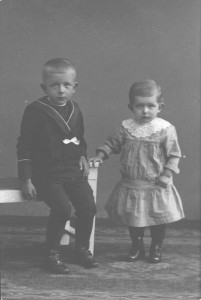
Most Dutch parents followed a strict pattern when naming their children: the first son was named after the paternal grandfather, the second son after the maternal grandfather; the first daughter was named after the maternal grandmother and the second daughter after the paternal grandmother. When you find a source that lists children in their birth order, this could be a big clue about the names of their grandparents. Even Dutch immigrants usually followed this pattern so the names of children … [Read more...]
Quick tip: Using the website WhoWasWho (video)
14 May 2014 by Leave a Comment
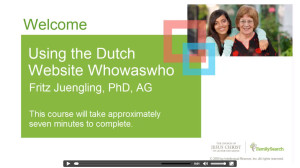
Familysearch has created a free video about using the largest genealogical database in the Netherlands: WieWasWie [WhoWasWho]. 7 minute video: Using the Dutch Website: Whowaswho … [Read more...]