Most Dutch genealogists quickly fall in love with WieWasWie, the website where archives from all over the country publish their genealogical data. But there are plenty of archives, historical societies and genealogists who publish genealogical sources elsewhere on the web. So if you can't find an ancestor on WieWasWie, try other sources as well. The website Digital Resources Netherlands and Belgium has a great overview of what else is available online. … [Read more...]
Quick tip: Mind the calendar!
1 October 2014 by Leave a Comment
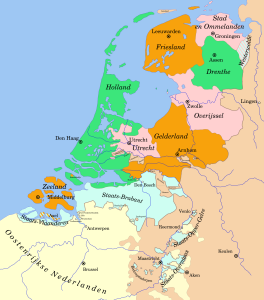
When you encounter a date in original records that is between 1582 and 1701, it could be in either the Julian or the Gregorian calendar, depending on the province where the record was created. This means the date you find could be as much as twelve days "off." Read more about the introduction of the Gregorian calendar in the Netherlands and the introduction dates per province. … [Read more...]
Quick tip – Dutch Genealogy Quiz
24 September 2014 by Leave a Comment
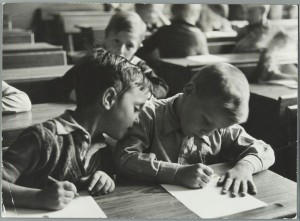
Are you an expert in Dutch Genealogy? Take the Dutch Genealogy Quiz and find out in three minutes! Regular readers of this blog and newsletter will recognize some of the topics. Don't worry if you get some answers wrong. I can see which questions people struggle with and promise to write articles about these topics in the next few weeks. Take me to the quiz! … [Read more...]
Quick tip – Introduction to Dutch history
17 September 2014 by 1 Comment

If you want to learn about Dutch history, you can read the 50 canonical articles at Canon van Nederland. These articles act as 'windows to the past' and were developed as the basis for the history curriculum in schools. Each window tells the story of one canonical event in the history of the Netherlands from prehistory to the modern day. Topics include Charlemagne, the Hanseatic league, Rembrandt, slavery and Anne Frank. Each article takes one landmark person, artifact or topic and shows how … [Read more...]
Quick tip – Was he really born there?
11 September 2014 by Leave a Comment
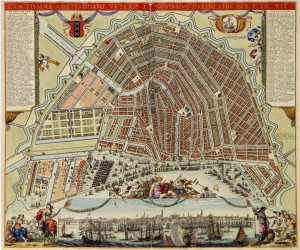
People who move a long way from their small village will often claim a larger city in the area as their place of birth since nobody would have heard of their real place of birth. If you can't find your ancestor in the city where he was supposed to be born, try looking in the villages around there. This is especially true after immigration. Many people just listed 'Rotterdam' or 'Amsterdam' as place of birth since those were the best known places in the new country. You may be counting … [Read more...]
Quick tip – Yvette Hoitink featured on the Forget-Me-Not Hour
3 September 2014 by 2 Comments
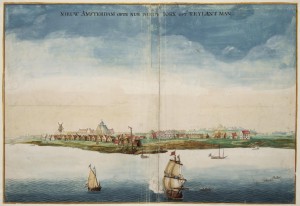
Yvette Hoitink is a guest of Jane E. Wilcox on the Forget-Me-Not-Hour, a radio show in New York that is also broadcast online. The show airs on 3 September at 11 AM New York time (5 PM Netherlands time). During the one-hour show, Yvette talks about finding Dutch colonial ancestors in the Netherlands. She gives tips about using clues in names to find the place of origin and explains the records that are available. Listen to the episode 'Dutch Research in Holland for Colonial NY Ancestors … [Read more...]
Quick tip – Catholic? Check for prayer cards
27 August 2014 by Leave a Comment
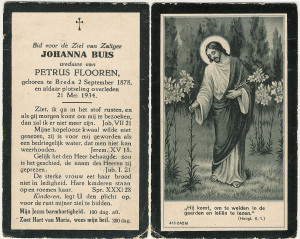
Were your ancestors Roman-Catholic? After their death, a prayer card ('bidprentje') may have been created. This card commemorates the deceased and often gives biographical information like the names of the spouse, date and place of birth and death. Read more about using prayer cards for your research … [Read more...]
Quick tip – Dutch Genealogy on Facebook
20 August 2014 by Leave a Comment

There are several Facebook groups and pages for people with Dutch ancestors: Dutch Genealogy Dutch in New Netherlands (New York area) 1609-1674 Genealogy Group Dutch Genealogy in Australia Dutch Genealogy Services The Facebook page for the company behind this website and newsletter. To keep in touch with Dutch culture, I also recommend the Stuff Dutch people like page. … [Read more...]
Quick tip: Endogamy did not start after immigration
13 August 2014 by 1 Comment
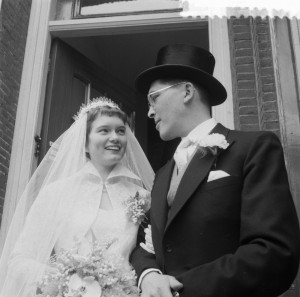
People whose ancestors live in small Dutch immigrant settlements have probably noticed that many of them were distant cousins. The size of these communities limited the pool of potential spouses. Endogamy (marrying within the community, also known as 'kissing cousins') is not unusual. What most people don't realize, is that many of these settlers came over as a group. Their community did not start across the ocean, but may well extend over several centuries. The places of origins were often … [Read more...]
Quick tip: addresses are a modern invention
30 July 2014 by 4 Comments
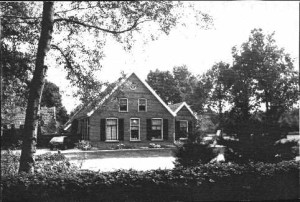
Addresses that consist of a street name and a number are a relatively modern invention. Until the 19th century, many houses in the Netherlands did not have addresses but only street names, and often unofficial ones at that. You may encounter descriptions like "the house at the end of the Lily Canal, where the Boars hangs out," followed by a list of neighbors so everybody knew where that house was. In the 19th century, many towns introduced a new system where the municipality was divided into … [Read more...]