
Bevrijding means 'liberation.' On 5 May 1945, the Netherlands was liberated from the German occupation. Every year on this day, we celebrate "Bevrijdingsdag" (Liberation Day) to commemorate this event. … [Read more...]
Dutch term – Bode
29 April 2014 by Leave a Comment
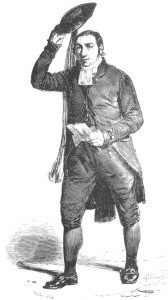
A bode was a messenger, which can sound like an errant boy but it was a far more important function than that. The best approximation is probably a bailiff, someone charged with delivering important documents and news and making sure that the other party receives it. They had a wide array of tasks, ranging from taking messages to organizing public tenders and contracts. Bodes were usually employed by government bodies, like city councils, poor administrations and the States-General. … [Read more...]
Dutch term – wijlen
21 April 2014 by Leave a Comment
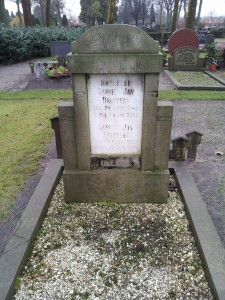
The term wijlen means 'the late,' or 'deceased.' You will often encounter the term in marriage records or death records, where one or both parents are deceased. The record might say "zoon van wijlen..." [son of the late...] or "dochter van wijlen..." [daughter of the late...]. Sometimes, the word is abbreviated to 'w' and you will see svw or zvw [soon/zoon van wijlen: son of the late] or dvw [dochter van wijlen: daughter of the late]. These abbreviations are most commonly found in church … [Read more...]
Dutch term – Brouwer
14 April 2014 by 2 Comments
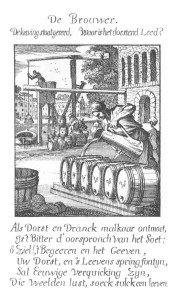
A brouwer is a brewer. Since most of the water was not safe to drink, most people drank beer. 'Small beer' only had a low alcohol percentage so it was safe to drink for children. In larger towns, brewers were organized in guilds. In smaller towns, they operated independently. In most places, brewers had to pay tax on the beer they produced. Some of these tax records can be found in local archives or city ledgers. Also, their measures and pints were sometimes calibrated by town officials to … [Read more...]
Dutch term – Grasmaand
7 April 2014 by Leave a Comment
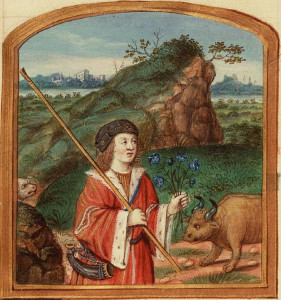
Grasmaand literally means "grass month" and is the old word for April. … [Read more...]
Dutch term – levenloos
31 March 2014 by 6 Comments
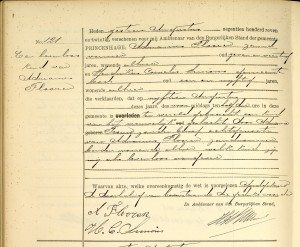
Levenloos literally means "lifeless" and is used to refer to stillborn children. In death records, you will often read "levenloze dochter" [stillborn daughter], "levenloze zoon" [stillborn son] or "levenloos kind" [stillborn child]. Since 1811, death records were created for stillborn children (children born after a pregnancy of more than six months). They did not have birth records, as these were reserved for children that were born alive. If a child died before the birth record was created, … [Read more...]
Dutch term – Parenteel
24 March 2014 by 2 Comments
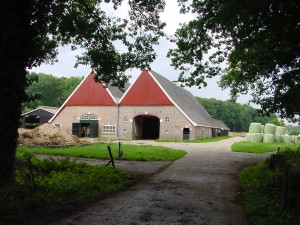
Parenteel is the Dutch word for an overview of descendants in the male and female lines. A parenteel can be represented in a narrative form or in a chart. It can include people with many different last names, as the descendants of daughters and their spouses are traced too. Some Dutch genealogists publish parentelen online, so a search for the term parenteel combined with a surname or place name of interest may lead you to these publications. Example: Parenteel of Egbert Mierdinck The largest … [Read more...]
Dutch term – ambtenaar
17 March 2014 by Leave a Comment
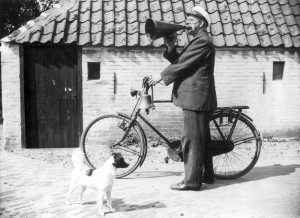
An ambtenaar is a civil servant or government employee. In civil registration records, you will often see an ambtenaar van de burgerlijke stand (clerk of the civil registration) officiating the marriage or registering the birth or death. During your research you can encounter ambtenaren in two ways: your ancestors may have been ambtenaren themselves but they also would have dealt with ambtenaren like clerks, teachers, soldiers, police officers or town criers in their every-day lives. The … [Read more...]
Dutch term – kerkenraad
10 March 2014 by Leave a Comment
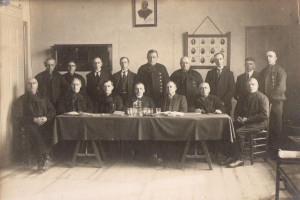
The word kerkenraad or kerkeraad means church council that was responsible for the administration of the church. The minutes of the church council can be a rich source of information about members of the church. Read more about using church council minutes for your research. … [Read more...]
Dutch term – Lentemaand
3 March 2014 by Leave a Comment
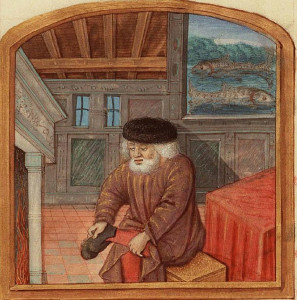
Lentemaand literally means 'Spring month' and is the old word for March. … [Read more...]