In cadastral records and land records, you will often find a description how the land was used. Here are the most common terms.
| Dutch term | English translation |
|---|---|
| armenhuis | poorhouse |
| boomgaard | orchard |
| bos | wood |
| bouwland | farmland |
| gemeentehuis | town hall |
| hakhout | coppiced wood |
| heide | heath |
| hooiland | hay land |
| huis | house |
| huis en erf | house and yard/lot |
| kerk | church |
| molen | mill |
| pastorie | vicarage |
| school | school |
| stadhuis | town hall |
| tuin | garden |
| veenland | peat |
| weg | road |
| weiland | meadow |
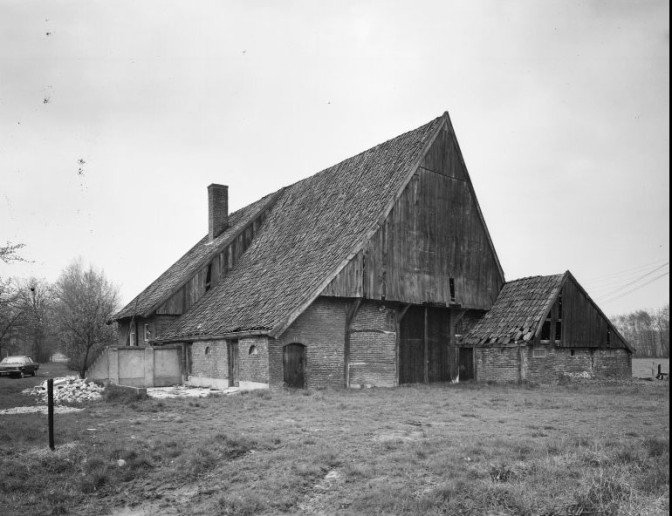
Onnink farm in Winterswijk. Credits: Rijksdienst Cultureel Erfgoed (CC-BY-SA)
 About Yvette Hoitink

I’ve been “reading” land sale announcements in Dutch newspapers associated with an ancestor. So this article is incredibly timely. To add to your list, I occasionally see the word rietland which means reedland.
But your article nor my big Dutch dictionary does not have the words “petland” or “mad” in it. What do they mean? Here’s the exact quote: “1-19-70 c. PETLAND, de 2 mad genaamd, onder Oostermeer.” Is the “c.” an abbreviation for centiere or one square meter? But what does “1-19-70” mean?
Thank you for all the information you provide in this blog. I appreciate it very much.