In the early 1900s, a new residence law came in effect to improve the living conditions of poor people. Under this law, houses could be onbewoonbaar verklaard [declared unlivable] and the residents had to move out.
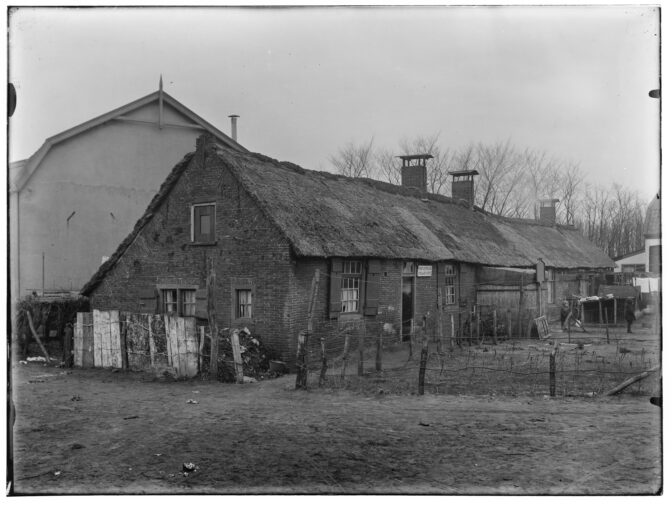
Houses declared unlivable in Amsterdam, 1924. Credits: Stadsarchief Amsterdam (public domain)
 About Yvette Hoitink

Hello, Yvette. Can you describe more about this type of house? When was it likely constructed? Is it made of peat bricks, even the roof? Did these types of houses have dirt floors?
This particular house was made of brick. If you click on the link in the caption below the photo, that will take you to the zoomable version at the Amsterdam City Archives. Based on the diagonal brick work beneath the roof and the narrow bricks, my guess is that his house dates from the mid to late 1700s. There are wall irons that fix the facade to a timber frame, so it could be older still, with a brick facade added later. The roof is made of thatch, but it looks very worn and probably was not water-tight anymore. Thatched roofs need to be repaired or replaced every twenty years or so. The layer of thatch was thin, so the last time it was thatched it was done on the cheap. Not a good place to live, for sure!
Thanks for your answer, Yvette. I love your page on Facebook and have learned a lot.