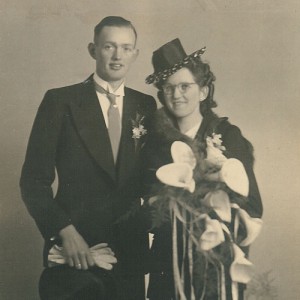
In the Netherlands, official records usually refer to women by their maiden names, even after their marriage. So when you're looking for a death record of a female ancestor, look for her maiden name rather than her married name. … [Read more...]
Quick tip: Use Genver to find Dutch records on Familysearch
25 September 2013 by 2 Comments
UPDATE 11 June 2014: The website Genver.nl has been discontinued, the service to find records is now available at Geneal-IX. Familysearch.org has a tremendous amount of digitized records from the Netherlands: Church records Civil registration records (births, marriages, deaths) Census records and population registers Not all records are available for all towns and finding out exactly what is available can be cumbersome if you just use the Familysearch website. … [Read more...]
Quick tip: Look in the margins of birth records
18 September 2013 by Leave a Comment
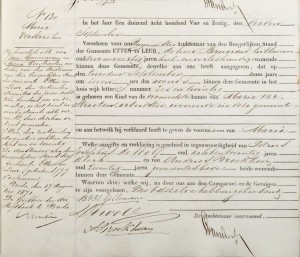
The margins of birth records sometimes contain interesting information. For example, if the child was born out of wedlock, and the mother later married and the husband recognized the child as his, this will be recorded in the margin of the birth record. So don't rely on an index, but always check the original document to see what information may be found there. … [Read more...]
Quick tip: Find Dutch genealogical collections at archives, not libraries or courthouses
11 September 2013 by 1 Comment

Unlike in the US, most genealogical records and collections in the Netherlands can be found in archives, not libraries or courthouses. Most libraries do not have a genealogical collection, just some published books about genealogy. Courthouses, municipalities and other governmental agencies are required by law to transfer their permanent records to an archive, usually after 20 years. If you want to consult original records, genealogical publications or newspapers, archives are your best bet. … [Read more...]
Quick tip: National Archives photos on Flickr
4 September 2013 by Leave a Comment
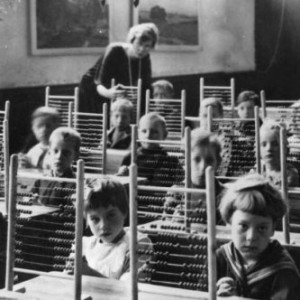
This week, school is starting again in the area of the Netherlands where I live. The National Archives of the Netherlands have a fabulous set of pictures about schools at their Flickr page. The photos have no known copyright and can be used freely. Also check out these other wonderful sets: World War I World War II Old occupations Land and water All sets … [Read more...]
Quick tip: Let your browser translate for you
28 August 2013 by 2 Comments
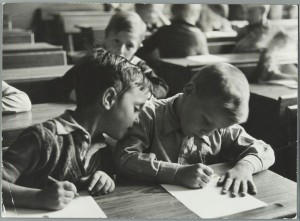
Some modern browsers, like Google Chrome, will automatically offer to translate a website for you if it's not in your language(s). You can use this to browse Dutch websites. Beware however, that sometimes names are accidentally translated as well. Mr. Koning could be represented as Mr. King, and a place name like Houten as Wooden. … [Read more...]
Quick tip: privacy laws
21 August 2013 by Leave a Comment
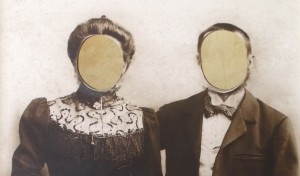
Privacy laws in the Netherlands are very strict. The law does not permit publication of information about people who may still be alive without their consent. As a rule of thumb, information for people born less than 100 years ago is not public and should not be available online. The same applies to official records. Birth records are public until 1912, marriage records until 1932 and death records until 1962. After these dates, only the persons themselves can access the records (or … [Read more...]
Quick tip: using genealogical search engines
14 August 2013 by 5 Comments

Did you know that most genealogical websites in the Netherlands use a different search strategy than websites in the US? Most Dutch websites only find results that are a perfect match for your query. Each term you fill in acts as a filter for the results set and limits the chance of finding anything useful. The more you fill in, the less you find! This is different than most international websites, where approximate matches are also shown, with the best matches appearing first. If you use a … [Read more...]
Quick tip: Free access to Dutch-American newspapers
7 August 2013 by Leave a Comment
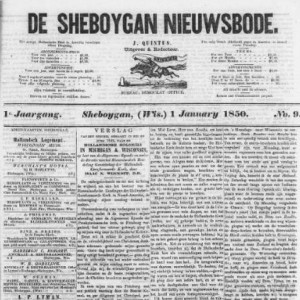
The Royal Library of the Netherlands has a website Delpher that provides free access to historical newspapers. Six Dutch-American newspapers have been added to the site: Sheboygan Nieuwsbode (1849-1861) De Grondwet (1883-1938) De Volksvriend (1892-1938) De Volksstem (1890-1911) Het Oosten (1914-1936) Onze Toekomst (1925-1927 and 1945-1952) The missing years will come online later this year. … [Read more...]
Quick tip: regional costumes
31 July 2013 by Leave a Comment
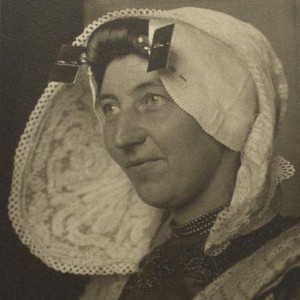
Do you have pictures of an ancestors in regional costume? Small variations in the headgear, color or patterns of the costume will tell an expert where he or she came from. From the elaborate ear-irons in Friesland and Zeeland to the dotted fabrics in northern Overijssel, different styles tell their own stories. How long did your ancestors continue to wear these costumes? … [Read more...]