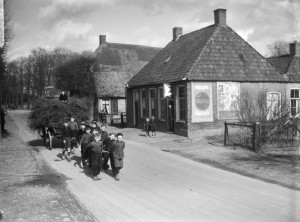
Pasen is the Dutch term for Easter. In the Netherlands, Easter Sunday and Easter Monday are official holidays and most people have the day off. Most of the Easter traditions that are celebrated in the Netherlands are pretty universal, like painting and hiding eggs. In the eastern part of the country there is a more unusual tradition: Easter fires (Paasvuren). For weeks before Easter, people will be busy collecting wood to create a high pile. This is then lit on Easter Sunday or Monday. The … [Read more...]
Dutch term – Achterneef
30 March 2015 by Leave a Comment
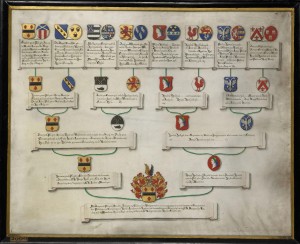
An achterneef (literally: behind cousin) is a male relative. The term covers the English terms great-nephew, first cousin once removed and second cousin. … [Read more...]
Dutch term – Begraven
23 March 2015 by Leave a Comment
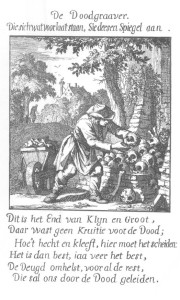
Begraven means to bury. People were usually buried two to five days after they died, sooner if there was an epidemic. Burials were recorded in the Begraafboek (burial book). … [Read more...]
Dutch term – Advocaat
20 March 2015 by Leave a Comment
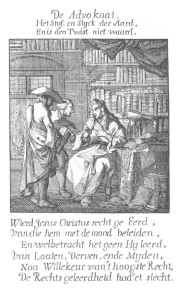
An advocaat is a lawyer. I am often surprised at the number of court cases my ancestors were involved in. Even some of my serf ancestors hired lawyers to defend their rights to cutting trees or taking over the farm against the landlord. Most lawyers would have had a university education. Since 1575, Leiden had a university where people could get a law degree. Other universities followed later. You will recognize these academically trained lawyers by the letters "J.U.D." behind their names … [Read more...]
Dutch term – Schoolmeester
9 March 2015 by 1 Comment
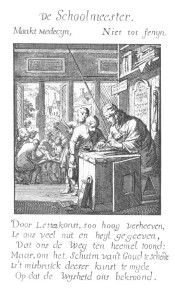
A schoolmeester is a school teacher. Most school teachers taught in small village schools, consisting of one room, where they were expected to teach reading, writing and arithmetic to their pupils. Reading was considered more important than writing, as they could then read the bible. Most children would only go to school for about six years. Children of farmers would be kept home in the summer to help with the harvest and in the winter they would not always be able to attend school if the … [Read more...]
Dutch term – Geslacht
2 March 2015 by Leave a Comment
The word geslacht has two meanings: Gender/sex. "Man" or "mannelijk" is male "Vrouw" or "vrouwelijk" is female "Beide" is both "Onbekend" is unknown. Family/house ("Het geslacht Hoitink" = the house of Hoitink). This meaning of geslacht is slightly archaic, a more contemporary way to say this would be "De familie Hoitink" [the Hoitink family]. … [Read more...]
Dutch term – Naastingsrecht
23 February 2015 by 2 Comments
Naastingsrecht was the right to have the first option of buying a property. Whenever a property was sold, a person who had naastingsrecht could match the purchase price and buy the property for himself, cancelling the original sale. Different parts of the Netherlands had different variations of this right. In most regions, next of kin had naastingsrecht. For instance, a younger brother could prevent his older brother from selling the family farm to a stranger by buying it himself. … [Read more...]
Dutch term – Weesmeester
16 February 2015 by Leave a Comment
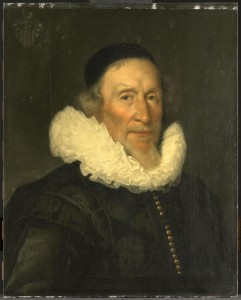
A weesmeester was a government official charged with overseeing the administration of the estates of orphans. They were usually appointed by the city government. Weesmeesters worked for the Weeskamer. Read the article about Weeskamers for more information. … [Read more...]
Dutch term – slager
9 February 2015 by 5 Comments
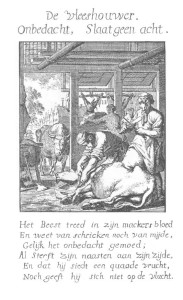
A slager is a butcher. An old term for slager is 'vleeshouwer' or 'vleeschhouwer' (literally: meat cleaver). Poor people did not often eat meat. One of the recurring themes in letters written by emigrants to the United States is their surprise that everyone is able to afford eating meat. These 'spekbrieven' [bacon letters] are one of the reasons why many relatives chose to follow them. … [Read more...]
Dutch term – Poorter
2 February 2015 by 2 Comments
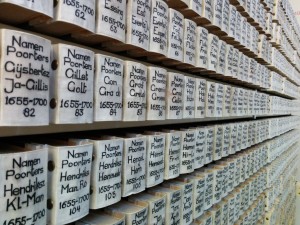
A poorter was a burgher or freeman of a chartered town. Being a poorter conveyed several privileges: Guild membership was often limited to poorters Poorters often were exempt from paying tolls Being a poorter was a requirement for many public offices People could become poorters by being born to a poorter, by marrying a poorter's daughter or by paying a fee. For some cities, the poorterboeken [burgher books] for people who paid to become poorters have survived and can give information … [Read more...]