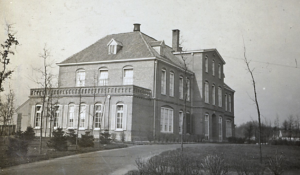
Here are a couple of ways you may find out that your relative was in an asylum: Asylum records. Some of these are digitized or indexed. You may stumble upon these records by searching. Death records, where the informant was an employee of the asylum, or the place of death is an asylum. Research the address if someone died away from home. Marriage supplements of children, if the person was unable to consent to their children's marriage because of their mental state. Court records, … [Read more...]
About this website
Creating a website like this is a fun activity. There are so many options, so many choices. What do visitors want? What do I want? In this blog I will describe some of the things I encounter in developing and maintaining this website.
Extreme Ancestors – Johanna van Groezen, wife, mother of two, widow in the same year
27 May 2022 by 2 Comments
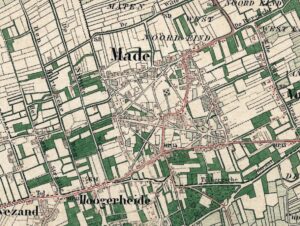
In this post in my Extreme Ancestors series, I want to introduce you to Johanna van Groezen, who became a wife, mother of two children, and a widow; all in the space of eight months. Johanna van Groezen and her first husband Adriaan Marijnissen are my third great-grandparents. Johanna van Groezen was twenty-one years old when she married Adriaan Marijnissen. They married in Made en Drimmelen in North Brabant on 6 February 1864. They both worked as laborers. He was 27 years old, she was … [Read more...]
Quick tip – Did they know the witness?
18 May 2022 by 1 Comment

You may encounter witnesses in several types of records: Baptismal records Church marriage records Aldermen's court marriage records Civil registration records of births, marriages, and deaths Notarial records. When you come across witnesses, ask yourself: would this be the type of event a random person would witness? Or is the person likely to have been a close connection to the person of interest? For example, a notary may have asked a neighbor to witness a will, but the … [Read more...]
Postgraduate Certificate in Family and Local History
13 May 2022 by 8 Comments
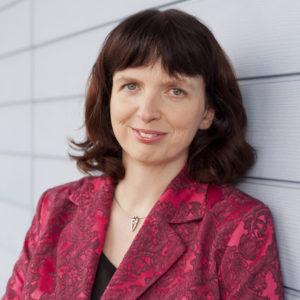
I have exciting news: I have received a Postgraduate Certificate in Family and Local History from the University of Dundee in Scotland. I started in September 2020. I actually met the requirements for the certificate a few months ago but thought I could not claim it yet because I did not receive any paperwork. The university just confirmed that I do indeed meet all the requirements. They don't send you a certificate if you continue on to the diploma, like I did, but that does not make it any … [Read more...]
Dutch Genealogy News for April 2022
6 May 2022 by 2 Comments
This is an overview of the new sources, websites, and projects that were announced last month. Sources The website Brabant in Beelden has added several videos of villages in Noord-Brabant to their website. Indexes of notarial records from the late 1800s have been added to the Westfries Archief website. Scans of index cards of The Hague church records have been added to the Haags Gemeentearchief website. The Indies Genealogical Society published an index of people who died in … [Read more...]
Quick tip – Research living people first
4 May 2022 by 4 Comments
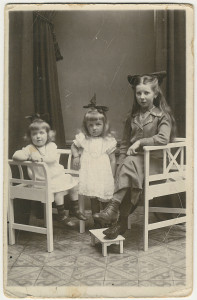
When you are just starting researching your family history, focus on the living people first. They have the stories that you won't find in records. The dead will keep! And if you're lucky, they may even be willing to take a DNA test. Start with the oldest generations, but do not forget to capture the stories of the younger generations too. I had been doing genealogy for over ten years when my grandmother asked me if I had ever found out when her aunt died. She had last heard from her more … [Read more...]
Ask Yvette – How to find a Dutch will
29 April 2022 by 2 Comments
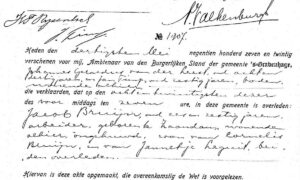
One of our Twitter followers, Karen de Bruyne, asked on Twitter how to find the will of her great-grandfather-in-law Jacob Bruijn, who died in The Hague on 28 May 1927. Since there are several ways to go about it, I thought I would write a blog post about it. Most people in the Netherlands did not have wills, either because there was not much to inherit, or because they were happy with the default way their estate would be inherited. Since 1811, wills were recorded by notaries. Before … [Read more...]
Factory industries in the Netherlands in 1875
22 April 2022 by 1 Comment
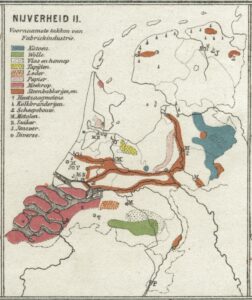
I came across this lovely map in the collection of the National Archives of the Netherlands, which shows the main types of factories in 1875. Translation of the legend: Katoen - Cotton Wolle - Wool Vlas en hennep - Flax and hemp Tapijten - Carpets Leder - Leather Papier - Paper Meekrap - Madder Steenbakkerijen - Brick factories Houtzaagmolens - Wood saw mills Kalkbranderijen - Lime kilns Scheepsbouw - Ship building Metalen - Metalworking Suiker - Sugar Jenever - Gin Diverse … [Read more...]
Ownership vs. Occupation
15 April 2022 by Leave a Comment
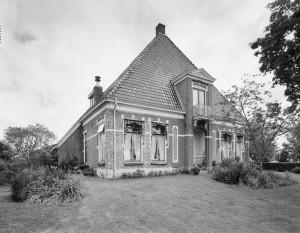
I listened to a presentation by Sue Adams about our farming ancestors, and she talked to the difference between ownership and occupation. You can own a house where you do not live, and you can live in a house you do not own. Similarly, you can own land you do not farm, or farm land you do not own. Ownership creates different records than occupancy. Typically, ownership creates more records, and tenants or people who lease land can be harder to trace. My recent article "Four Farms Four Names" … [Read more...]
Dutch term – DTB, DTBL
11 April 2022 by 1 Comment
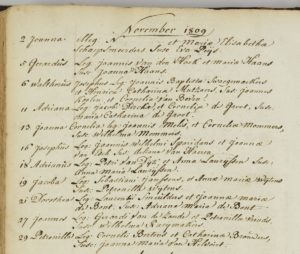
DTB is an abbreviation for Doop-, Trouw- en Begraafboeken [Baptismal, marriage, and burial books]. Sometimes, you see it as DTBL where the L stands for lidmaten [members]. You may come across the term in publications, finding aids, research guides, or source citations. Check this article for more Dutch genealogical abbreviations. … [Read more...]