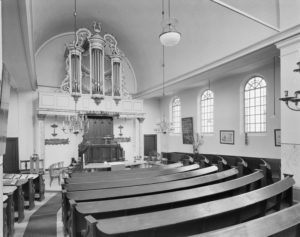
Church records of baptisms, marriages, and burials are the go-to sources for vital information before the introduction of the civil registration. After 1811, we usually don't bother since the civil registration records are often more reliable. But these church records can contain important information. When to check the church records Consulting as many records as you can about an ancestor is always a good idea, since you never know what you will find. There are certain situations when … [Read more...]
Quick tip – Don’t go back too far too soon
10 August 2016 by Leave a Comment
When we go back in time, we often hit a brick wall for a person for whom we only know the name. Perhaps we find a marriage record that lists the father, or we find a name with a patronymic that suggests who the father was. It is very hard to find records if you only know a name. Often, names are not unique. There may be multiple people in the town with the same name, perhaps named after the same grandparent. You will need to know more about your ancestor to be sure that the record you find … [Read more...]
Quick tip – Apply Lessons Learned to Old Problems
3 August 2016 by 1 Comment
The longer we do genealogy, the better we get. We'll learn about new sources and strategies that help us solve new problems that come across our paths. But we should not stop there: we should also periodically revisit our old problems and apply the lessons we have learned. Two years ago, I wrote an article about how to find the father of an illegitimate child. One of the strategies I discussed in the article is to analyze all the records from around the time of the birth. When I was … [Read more...]
Quick tip – Dutch Genealogical CD-ROMs and DVDs
27 July 2016 by Leave a Comment
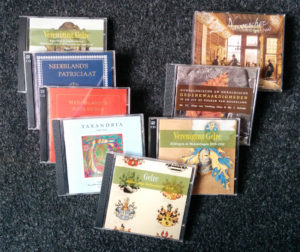
The Historic Future Foundation has digitized numerous Dutch genealogical magazines and publications which are available on CD-ROM or DVD. Their digital publications include: national magazines like Gens Nostra or the Nederlandsche Leeuw, regional magazines like the Brabantse Leeuw and Taxandria. year books by organizations like the Centraal Bureau voor Genealogie and Amstelodanum (Amsterdam historical society). series about upper-class families like the Nederlands Adelsboek … [Read more...]
Quick tip – Who owned the farm?
20 July 2016 by Leave a Comment
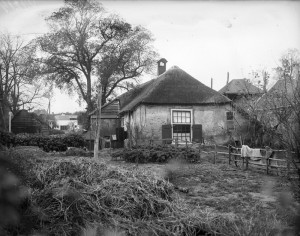
If your ancestors were farmers, try to find out who owned the farm. After 1832, you can check the Cadastre, before that time you can check real estate tax records or transport deeds in court records. Not many farmers owned their own farm. If they rented the farm from a rich or noble family, the archives of that family may have survived and may have records about your family. If they were serfs, the serf registers of the overlord may provide more information. For an example, read about two … [Read more...]
Quick tip – Visit Delft with Rick Steves
13 July 2016 by Leave a Comment
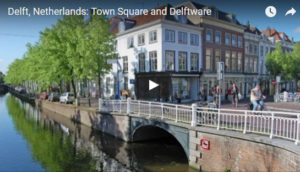
Rick Steves made a wonderful short video showing you the highlights of Delft. View video on Youtube. … [Read more...]
Quick tip – Emigrants sometimes went to a Notary
6 July 2016 by 1 Comment
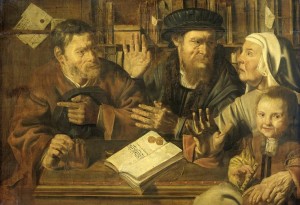
Before getting on board, an emigrant may have gone to a notary to: have a will drawn up (you never know if the ship will go down) give a power of attorney to a trusted friend or family member to handle their affairs enter into a work contract, including an agreement about the payment of the passage. This is especially true for richer emigrants, who had business affairs to put in order. They may have gone to a notary in their place of origin or to a notary in the their port of … [Read more...]
Quick tip – It’s Never Been Easier to Verify Information
29 June 2016 by 1 Comment

Did you find your ancestor in an online index or tree? It has never been easier to verify the information using original records. Here are five places where you can find images of online records. WieWasWie, database with civil registration records and much more. Not all have images attached. Requires a subscription to view the images. Persons index at Archieven.nl, database with indexes and images from many archives in the Netherlands. Open Archieven, contains indexes and scans of … [Read more...]
Quick tip – Parish versus Municipal Boundaries
22 June 2016 by Leave a Comment
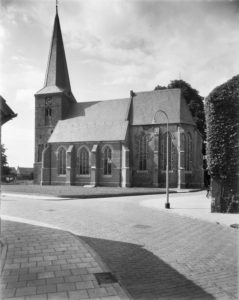
The boundaries of a parish may be quite different from the boundaries of a municipality. A parish may be spread over multiple municipalities, or there may be multiple parishes in one municipality. Sometimes, churches in different villages formed one parish together, even though these villages may have been in different municipal jurisdictions. Even national or provincial boundaries did not always form the boundaries of a parish. Two examples illustrate this: The parish of the Dutch … [Read more...]
Quick tip – Protestant was not the Dominant Religion Everywhere
15 June 2016 by 3 Comments
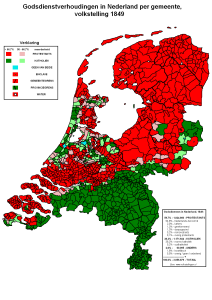
Many people think that the Netherlands was predominantly Protestant or Dutch Reformed, and that Catholics were a minority. While that may have been true for the country as a whole, there are several areas where almost everyone was Catholic. Areas that are predominantly Catholic include: Noord-Brabant Limburg Some parts of Overijssel (area around Oldenzaal) Some parts of Gelderland (area around Groenlo, area around Arnhem and Nijmegen) Some parts of Zeeland (eastern part of … [Read more...]