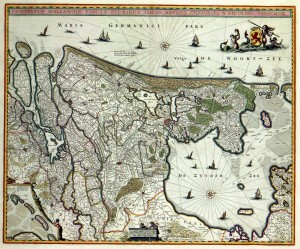
If you see "Holland" in a published source, like a book or an online tree, chances are that the person means the country of the Netherlands. If you see "Holland" in a Dutch record prior to 1840, Holland refers to the province by that name, in the west of the Netherlands. In 1840, the province was split into Noord-Holland and Zuid-Holland. As the most prosperous province and the center of international trade, the province overshadowed the other provinces; so much so that its name became … [Read more...]
Announcement – The Dutch in America Across the Centuries
22 July 2015 by Leave a Comment
Are you interested in Dutch immigration to the United States? Are you able to go to Albany, New York next September? If so, you're in luck, because there will be a conference, where researchers studying the New Netherland era and experts on the the 19th century immigration wave will come together to connect and compare information about the miscellaneous groups of Dutch immigrants who settled in America over time. I know several of the organizers and wish I could be there for what I'm sure will … [Read more...]
Quick tip – The last name may not have come from the father
15 July 2015 by 2 Comments
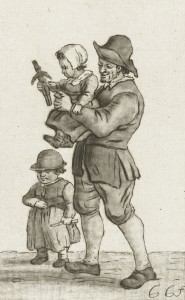
In genealogy, we are used to children having the same last name as their father. But there are several circumstances in which the child could have a different name: If the child used a patronymic, in which case the name of the child would be derived from the father's first name, not his last name (e.g. Pier Hessels, son of Hessel Jans). This mainly happens in the period before the introduction of the civil registration in 1811. If the child was illegitimate, in which case it would have the … [Read more...]
Quick tip – Are your translations accurate?
8 July 2015 by Leave a Comment
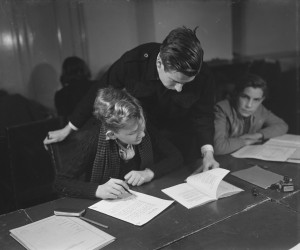
A client sent me a translated marriage record, identifying a nephew as a witness. She had searched for the nephew but could not find any siblings of the person of interest. When I looked at the original marriage record, the witness was called a neef, a term that is used for both nephew and cousin. As it turned out, the witness was a first cousin rather than a nephew. Are you sure your translations are accurate? When you have a brick wall, always go back to the original records to make sure … [Read more...]
Quick tip – The name may suggest the place of origin
1 July 2015 by Leave a Comment
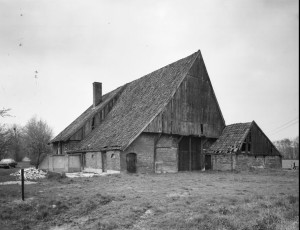
Different regions have different traditions, not only when it comes to naming children but also when it came to choosing surnames. Someone named Bauke Ferwerda is bound to be Frisian, as the suffix -a can mostly be found in the northern provinces and Bauke is a Frisian first name. Janna Geertruida Meerdink is undoubtely from the eastern part Gelderland. Most people in that area used double first names, and the -ink suffix is typical for farm names in the eastern part of the country. Read … [Read more...]
Quick tip – Find graves on photos of churches
24 June 2015 by 3 Comments
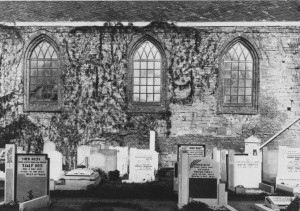
The website of the Rijksdienst voor Cultureel Erfgoed [Cultural Heritage Service] has many photos of churches, often going back to the early to mid 20th century. Some of these photos feature cemeteries. The quality of the photos and scans is often high enough to read the text on the markers. Earlier this year, I found a 1950s photo of a church that the ancestors of my client attended. When I zoomed in, I saw the graves of the family I was researching. I could not believe what I was … [Read more...]
Quick tip – How to find Dutch genealogy records online
17 June 2015 by 1 Comment
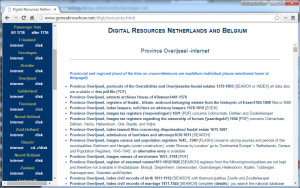
The website Digital Resources Netherlands and Belgium offers links to websites that publish archival records, whether in the form of scans, indexes or transcripts. The links are organized per province. Click the link 'Internet' under the name to see what sources are available online. They also offer links to passenger lists and image collections, which include newspaper websites. … [Read more...]
Quick tip – Check marriage records of siblings
10 June 2015 by Leave a Comment
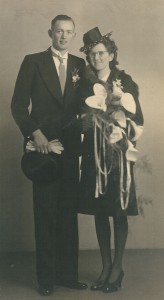
When looking for more information about your ancestor, be sure to check the records of the siblings. Marriage records of the siblings can be very informative. There are two situations when checking marriage records of siblings is especially helpful: If your ancestor married just before the introduction of the civil registration and their siblings married after the introduction of the civil registration. Marriage records created by the civil registration are much more informative than the … [Read more...]
Quick tip – Check for logical migration patterns
3 June 2015 by 2 Comments

If you find a source that shows that your family originally came from elsewhere, check that the migration path they followed is logical. A few things to watch out for: People usually went from rural areas to urban areas. It's rare to find people moving from an urban area to a rural area, or from one rural area to another rural area. Before say 1850, most people did not move around a lot. Exceptions exist, like skippers, people who worked for fairs and traveling salesmen. Before say 1750, … [Read more...]
Quick tip – Adultery may not have been the real ground for divorce
27 May 2015 by Leave a Comment

Until 1971, adultery was one of the few grounds that the law recognized to grant a divorce. Many people who found themselves incompatible lied about having an affair to be able to get a divorce. So if your ancestors were divorced and you find 'overspel' [adultery] listed as the ground in the divorce proceedings, it may not have been the truth. The real reason is probably not recorded. … [Read more...]