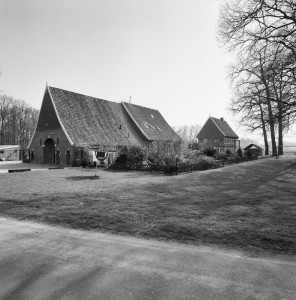
Kwartierherhaling, literally "repetition of quarters," means pedigree collapse: the situation where the same people appear in multiple places in your pedigree chart. That means you descend from the same person or couple in different ways. If your ancestors are from small towns in the Netherlands, sooner or later you'll run into kwartierherhaling. In general, the more recently your ancestor lived in a small village, the higher the collapse. On my father's side, who was from the village of … [Read more...]
Dutch term – Schout
6 May 2019 by 1 Comment

In many parts of the Netherlands, the schout used to be the term for mayor or sheriff. The schout represented the overlord and oversaw the administration and court in a district. His role combined those of a modern mayor, judge, and police commissioner. … [Read more...]
Source – Rent Registers
3 May 2019 by Leave a Comment
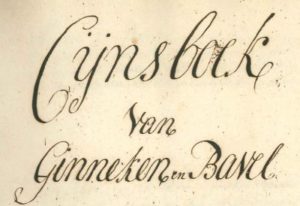
"Cijnzen" or rents are rights to annual proceeds. The rights could be attached to land or property, certain official functions, or rights in common grounds. In the Middle Ages up until say the 1700s, rents were often paid in kind, for example in grain. Dominion rents Rents could be attached to a domain, the area belonging to an overlord. For example, the overlord could give land to a family in exchange for an annual payment. These rents were perpetual. Rents could also be required to pay in … [Read more...]
Dutch term – Notaris
22 April 2019 by Leave a Comment
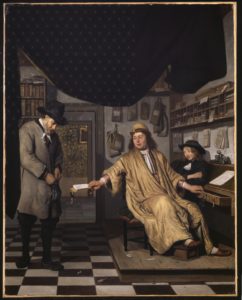
A notaris is a notary. In many parts of the Netherlands, notaries were the record creators for many aspects of our ancestors' lives, for example when they wanted to draw up a prenuptial agreement, a contract to sell property, a work contract, or a will. See the article about notarial records for more information. … [Read more...]
Dutch term – Doodsoorzaak
15 April 2019 by Leave a Comment
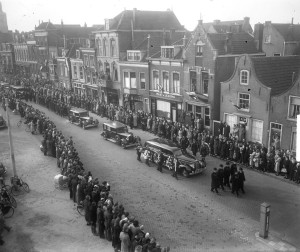
The doodsoorzaak is the cause of death. Dutch civil registration death records don't record the cause of death. See How to find the cause of death for some other possibilities. … [Read more...]
Dutch term – Noaber
1 April 2019 by Leave a Comment
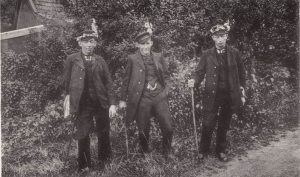
In the Low Saxon dialect spoken in the eastern parts of the Netherlands, a noaber is a neighbor. The duties of a noaber were quite extensive. When a new person moved into the neighborhood, they would expect to be invited for a strong drink. They would help with renovations of the house. During childbirth, female neighbors would assist the midwife and help take care of mother and child after birth. If a person died, the neighbors would help to dress the deceased and put him in his coffin. … [Read more...]
Dutch term – Naarderschap
25 March 2019 by Leave a Comment
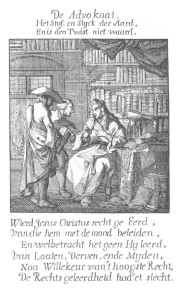
"Naarderschap" is a term you may find in court records if somebody claims the right of first purchase because of kinship to the seller. They could purchase the property by matching the price that other buyers were willing to pay. See also Naastingsrecht. … [Read more...]
Dutch term – J.M. and J.D.
18 March 2019 by Leave a Comment
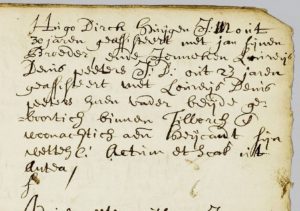
Two abbreviations you may often find in older marriage records are J.M. and J.D. "J.M." stands for Jonge Man, literally: young man. "J.D." stands for Jonge Dochter, literally: young daughter. They refer to the marital status of the person, indicating they are single and this is their first marriage. The word jong/young has no relation to their age. Sometimes, you find J.G. [Jong gezel, approximately: young journeyman or companion] instead of J.M., but the meaning is the same: a … [Read more...]
Dutch term – Broodzegel
4 March 2019 by Leave a Comment
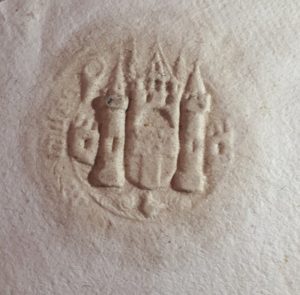
A broodzegel (literally: bread seal) is an old way to seal documents using bread and paper. In the late Middle Ages, smaller wax seals were sometimes covered with paper to help preserve the imprint. Sometimes, bread or dough was used instead of wax. Such a seal would be called a broodzegel. Source: Photo and information from Stadsarchief Rotterdam Facebook post; citing 1-01_2162: Records relating to the case between Gorinchem, Schoonhoven and Rotterdam versus Dordrecht about … [Read more...]
Dutch term – Elders
25 February 2019 by 2 Comments
Elders means "somewhere else." You can encounter the term in church records, court records, or notarial records, to indicate that somebody is absent, or in a phrase like elders getrouwd [married somewhere else]. … [Read more...]