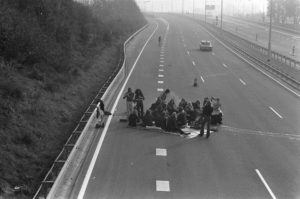
Zondag is the Dutch word for Sunday. During the oil crisis in 1973, there were autoloze zondagen [carless Sundays] where no cars were allowed to drive to conserve energy. … [Read more...]
Dutch term – Concordans
22 October 2018 by 1 Comment
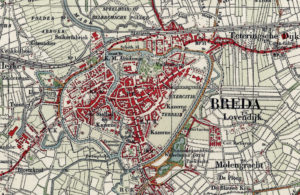
A concordans is a translation table that gives you a mapping of a former numbering system to a newer numbering system. For example, a concordans may exist to show how old addresses translate to new addresses. I used such a table in my research into my great-grandmother Cornelia Francisca van den Heuvel to show that address C 453 in Breda was the same as Leuvenaarstraat 158. It is rare to find such translation tables for addresses, so I got lucky. Concordansen are sometimes provided in … [Read more...]
Dutch term – Chirurgijn
15 October 2018 by Leave a Comment
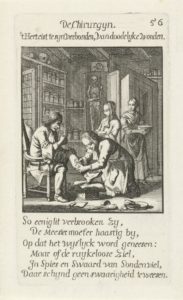
A chirurgijn is a barber or surgeon. In most towns most of the minor ailments were treated by a chirurgijn rather than a doctor with an academic educations. Chirurgijns learned their trade as apprentices. Larger cities had chirurgijnsgildes or surgeon guilds, that regulated entry to the trade and oversaw apprenticeships and master exams. Treatments provided by chirurgijns included blood letting, treatments of sores and skin conditions, and setting broken bones. They were also barbers who … [Read more...]
Dutch term – Niet beschikbaar
1 October 2018 by 3 Comments
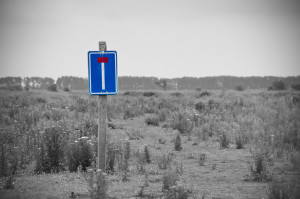
When you are using a Dutch website, you may come across the term niet beschikbaar, which means "not available." For example, you may see an image "bestand nog niet beschikbaar" [file not available yet] in an image bank where the description of the photo or map is available online, but the image itself isn't, either because of copyrights or because it hasn't been scanned yet. You can also see niet beschikbaar in finding aids if the record is not available to the public because of poor material … [Read more...]
Dutch term – Dinsdag
18 September 2018 by Leave a Comment
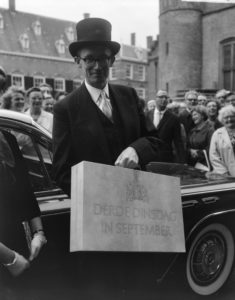
Dinsdag is the Dutch word for Tuesday. The "Derde Dinsdag" [Third Tuesday] in September is the start of the parliamentary year, when the Crown announces the plans. … [Read more...]
Dutch term – Recht van Windvang
10 September 2018 by Leave a Comment
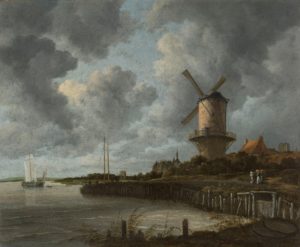
The recht van windvang is the right to catch the wind. It's a right of a windmill owner to prevent owners of neighboring properties to build high structures that interfere with the operation of the mill. … [Read more...]
Dutch term – Trein
27 August 2018 by 2 Comments
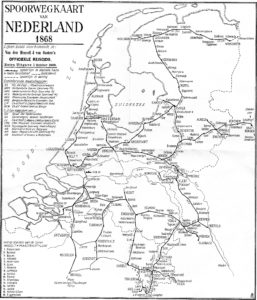
A trein is a train. The first railroad in the Netherlands was opened in 1839, between Amsterdam and Haarlem. Other railroads quickly followed and by the end of the 1800s, passenger travel by rail had supplanted travel by barge. Many emigrants leaving through the ports of Rotterdam, Amsterdam, or Antwerp took the train to the harbor. … [Read more...]
Dutch term – Alhier
13 August 2018 by 2 Comments
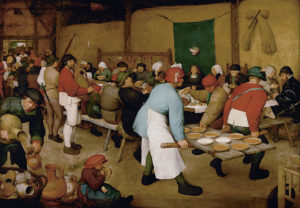
Alhier means in this location, meaning the place where the record was created. You can often encounter the term in marriage records, where the bride and groom were from alhier. … [Read more...]
Dutch term – Bejaard
30 July 2018 by Leave a Comment
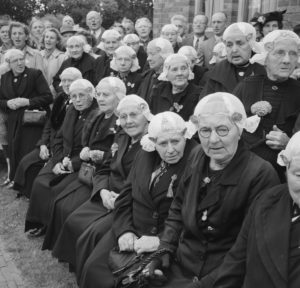
In modern Dutch, the term bejaard means "senior" and a bejaarde is a senior citizen. Before say 1800, the term bejaard or bejaerd was used to indicate that somebody had reached the age of majority. You can encounter the term in marriage records, which may call somebody an onbejaarde man [man who is not of age] or bejaerde dogter [woman/daughter who is of age]. … [Read more...]
Dutch term – Fries
16 July 2018 by 3 Comments
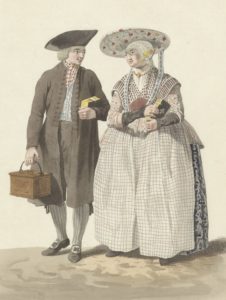
Fries means Frisian; from Friesland. The word is used as a noun to indicate a person from Friesland, or as an adjective for all things Frisian. For research in Friesland, try AlleFriezen, a website with many indexes and scans of Friesland records. BTW, in English, "Frisian" is used as the general adjective for Fries, while "Friesian" is used for the horses. So don't call someone a Friesian unless it's a horse. … [Read more...]