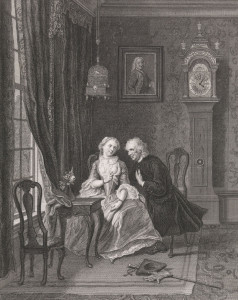
A bruid is a bride. Most women married for the first time in their mid to late twenties. If you see a woman who got married before the age of twenty, you will often find one of these circumstances to be the case: The bride is pregnant The bride is an orphan The groom is a widower with young children and the bride is his former maid. Of course, there could be several other reasons why people married young, but in my experience one of these three situations usually applies. … [Read more...]
Becoming a full-time genealogist
8 August 2014 by 9 Comments

For the past several years, I have combined a job as project manager at the National Archives in The Hague with being a freelance genealogist. There are only a few genealogists in the Netherlands who report in English and there are many people of Dutch descent who don't speak Dutch. As you can imagine, the demand for my services has been much higher than the time I had available. I really enjoy helping people from all over the world find their ancestors from the Netherlands so I have decided to … [Read more...]
Dutch name: Ten Hoeve
6 August 2014 by 36 Comments
Dutch Names is a new series of videos on Dutch Genealogy, where you can learn how to pronounce a Dutch name and learn about the origins of that name. The first episode features the name Ten Hoeve. Do you want me to feature your Dutch name in a future episode? Please leave a comment. Watch the video on Youtube View the slides on Slideboom … [Read more...]
Dutch term – Oogstmaand
4 August 2014 by Leave a Comment
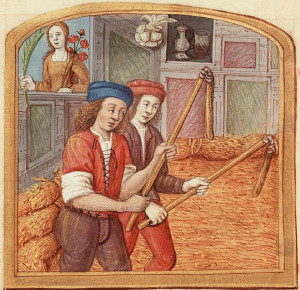
Oogstmaand literally means "harvest month" and is the old word for August. … [Read more...]
News from the Netherlands – July 2014
1 August 2014 by Leave a Comment
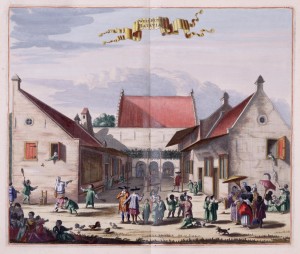
‘News from the Netherlands’ is a monthly series to inform you about the best new websites, projects and books that help you find and understand your Dutch ancestors. Archives news The Zeeuws Archief, the Zeeland archives, have started a scanning-on-demand service. Visitors can queue records for digitization, which will be added to the Zeeuws Archief website where they can be accessed via pay-per-view. [Source: Zeeuws Archief] Archives from the municipality of Oud-Beijerland will now be … [Read more...]
Quick tip: addresses are a modern invention
30 July 2014 by 4 Comments
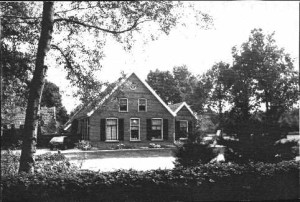
Addresses that consist of a street name and a number are a relatively modern invention. Until the 19th century, many houses in the Netherlands did not have addresses but only street names, and often unofficial ones at that. You may encounter descriptions like "the house at the end of the Lily Canal, where the Boars hangs out," followed by a list of neighbors so everybody knew where that house was. In the 19th century, many towns introduced a new system where the municipality was divided into … [Read more...]
Dutch term – Trekschuit
28 July 2014 by Leave a Comment
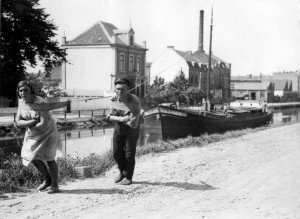
Trekschuit literally means "pull barge" and is a low-bottomed ship that was dragged along canals and rivers. In the waterlogged country that is The Netherlands, trekschuiten were one of the main forms of transportation for people and goods over longer distances, as roads were often so muddy that they were useless for most of the year. Most trekschuiten were powered by horses, who walked along the rivers and canals on specially created paths. In some cases, the people who operated the … [Read more...]
Column: One tree
25 July 2014 by 1 Comment
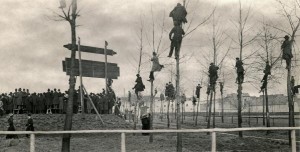
Familysearch allows you to collaborate on an integrated family tree that joins everyone, like a Wikipedia for deceased persons. The idea is that genealogists can reach consensus about people: about the dates and places of events, but more importantly about relationships between people. Users can cite or upload sources to support their conclusions. At first, I was enthusiastic. It seemed wonderful to collaborate on interesting puzzles with several genealogists, based on sources we would all … [Read more...]
Quick tip: names change
23 July 2014 by 3 Comments
"The past is a foreign country, they did things differently there."1 One of the fundamental differences is the way that people were named. In many parts of the Netherlands, people did not have a hereditary surname until 1811. But even after 1811, names could get changed, for instance if someone emigrated or if the clerk made an error. The next time you're stuck, ask yourself: what other name could this ancestor have used? Related articles: English versions of Dutch last … [Read more...]
Dutch term – Toegang
21 July 2014 by Leave a Comment

The Dutch word toegang literally means "access" or "entrance." In archival jargon, it means a finding aid that describes the content of a record group. For example, you can have a toegang on the records of the Dutch East India Company. Another word for toegang is inventaris. In source citations or search forms, you can encounter the word toegang or toegangsnummer (finding aid number). This refers to the name and number of the record group. The record group number of the Dutch East India … [Read more...]