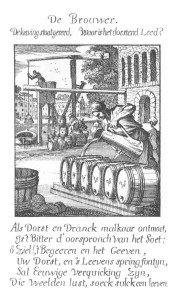
A brouwer is a brewer. Since most of the water was not safe to drink, most people drank beer. 'Small beer' only had a low alcohol percentage so it was safe to drink for children. In larger towns, brewers were organized in guilds. In smaller towns, they operated independently. In most places, brewers had to pay tax on the beer they produced. Some of these tax records can be found in local archives or city ledgers. Also, their measures and pints were sometimes calibrated by town officials to … [Read more...]
Using risk management strategies to do genealogy efficiently
11 April 2014 by 1 Comment
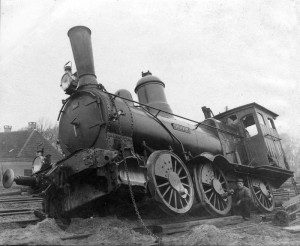
As a project manager, I am used to assessing and managing risks. I will determine the biggest threats to my project, assess how likely they are to occur and how much of an impact they would have if they do occur. The combination of these factors will tell me which risks I need to focus my attention on: risk = likelihood x impact. The same two factors that make up risk can also be used to reduce risk. By taking measures, I can decrease the likelihood that the risk occurs or minimize the … [Read more...]
Quick tip – most farmers were tenants, not owners
9 April 2014 by Leave a Comment
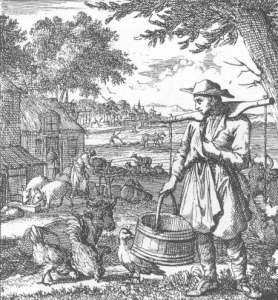
If your ancestors were farmers, please keep in mind that most farmers in the Netherlands were tenants, not owners. Most land was owned by a few wealthy families and institutions like churches or convents. You may be able to find information about your ancestors in the archives that these families and institutions created but you will not be able to find them in sales deeds or property tax records. … [Read more...]
Dutch term – Grasmaand
7 April 2014 by Leave a Comment
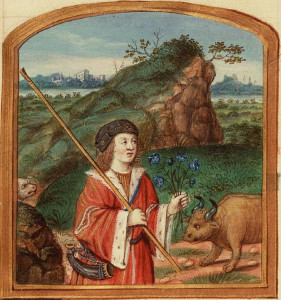
Grasmaand literally means "grass month" and is the old word for April. … [Read more...]
Case study – Using population registers to tell a story
4 April 2014 by 3 Comments
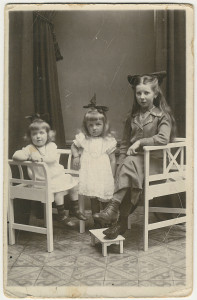
When you find enough evidence to answer your initial research questions, it is tempting to move on to another family. But you can discover a whole lot more if you make the effort to find all available records. In this case study, I will show you how you can find out more about the lives of your ancestors using information from Population Registers. Example: Maria Gommeren When I first researched my great-great-grandmother Maria Gommeren (1864-1918), I stopped looking for records once I proved … [Read more...]
Dutch term – levenloos
31 March 2014 by 6 Comments
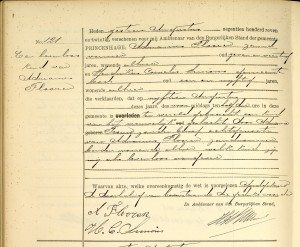
Levenloos literally means "lifeless" and is used to refer to stillborn children. In death records, you will often read "levenloze dochter" [stillborn daughter], "levenloze zoon" [stillborn son] or "levenloos kind" [stillborn child]. Since 1811, death records were created for stillborn children (children born after a pregnancy of more than six months). They did not have birth records, as these were reserved for children that were born alive. If a child died before the birth record was created, … [Read more...]
Five reasons to hire a professional genealogist
28 March 2014 by Leave a Comment
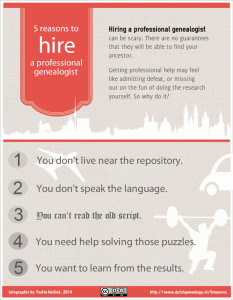
Most of my clients hire me for a combination of these five reasons. Why would you consider hiring a professional genealogist? Or what is holding you back? If you have ever hired a professional genealogist, what was your main reason for doing so? (Feel free to reuse this image. A link back to this blog post is appreciated.) … [Read more...]
Quick tip: read ‘Holland’ instead of ‘Reusel-De Mierden’
26 March 2014 by Leave a Comment
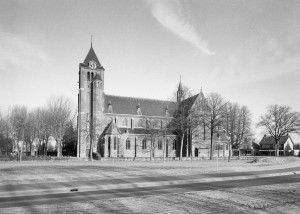
Do you have ancestors from Reusel-De Mierden, Noord-Brabant? Chances are, they are not from this place but the place name was introduced by mistaken when software tried to resolve the place name 'Holland'. Read Was your ancestor born in Reusel-De Mierden, Noord-Brabant? Guess again! for more information. … [Read more...]
Dutch term – Parenteel
24 March 2014 by 2 Comments
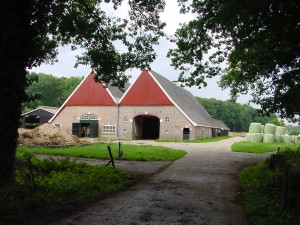
Parenteel is the Dutch word for an overview of descendants in the male and female lines. A parenteel can be represented in a narrative form or in a chart. It can include people with many different last names, as the descendants of daughters and their spouses are traced too. Some Dutch genealogists publish parentelen online, so a search for the term parenteel combined with a surname or place name of interest may lead you to these publications. Example: Parenteel of Egbert Mierdinck The largest … [Read more...]
Column – Thought process
21 March 2014 by Leave a Comment
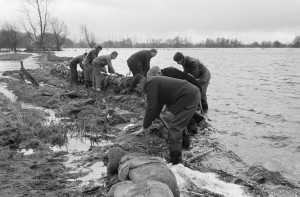
Shortly after I started doing genealogy, a fellow researcher urged me to always document my sources. "You think now that you will remember where you've found everything, but there comes a time that you will have gathered so much that you won't remember the source." Wise words that I took to heart and that have proved to be invaluable. … [Read more...]