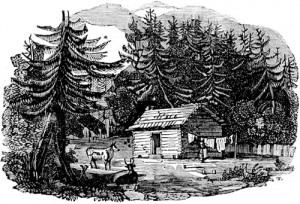
When you're trying to find the place of origin of your Dutch immigrant ancestor, be sure to check his neighbors too. Did any of them come from the Netherlands? On websites that allow you to search census records, like Ancestry.com or Ancestry.co.uk, you can often search for all people born in the Netherlands who lived in a certain place, regardless of their names. This should tell you who the Dutch immigrants in that community were. Your ancestor may be hard to trace but his neighbor may not … [Read more...]
Dutch term – ambtenaar
17 March 2014 by Leave a Comment
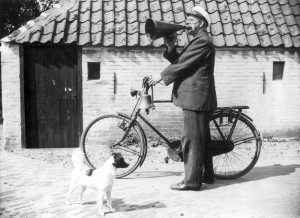
An ambtenaar is a civil servant or government employee. In civil registration records, you will often see an ambtenaar van de burgerlijke stand (clerk of the civil registration) officiating the marriage or registering the birth or death. During your research you can encounter ambtenaren in two ways: your ancestors may have been ambtenaren themselves but they also would have dealt with ambtenaren like clerks, teachers, soldiers, police officers or town criers in their every-day lives. The … [Read more...]
Tribute to Henk Hoitink (1914-2000)
13 March 2014 by 8 Comments
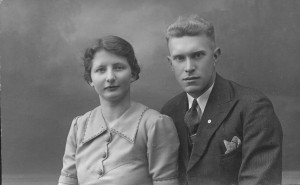
A hundred years ago today, a boy was born in Winterswijk, Gelderland. His parents, Gerrit Jan Hoitink and Willemina Berendina van Nijkerken, had just been married the year before. They named their son Hendrik, after Gerrit Jan's father, as was the local tradition. Informally, they called him Henk. Henk Hoitink was my grandfather. Henk grew up in the village of Winterswijk, where his father worked for the railroad as a shunter. Winterswijk was an important railroad hub in those days, … [Read more...]
Quick tip: find the origin of your name in name taking records
12 March 2014 by 1 Comment
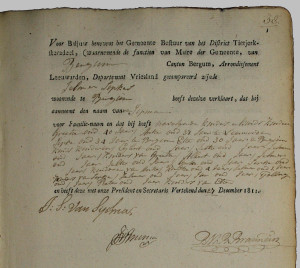
If your family is from the northern provinces, or Jewish, you may find them in name taking records. When the civil registration was introduced, people who did not have a last name yet were required to record their last name. In such cases, the name taking record is often the earliest record you will find for your name. Sometimes, clues about the origin of your name can be found in the name taking records. For example, a carpenter may had called himself Houtsma (hout = wood), an ancestor … [Read more...]
Dutch term – kerkenraad
10 March 2014 by Leave a Comment
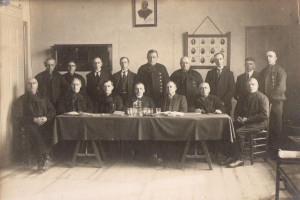
The word kerkenraad or kerkeraad means church council that was responsible for the administration of the church. The minutes of the church council can be a rich source of information about members of the church. Read more about using church council minutes for your research. … [Read more...]
Review: Dutch Roots by Rob van Drie
7 March 2014 by 2 Comments
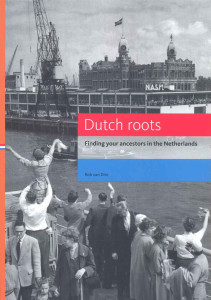
Dutch Roots: Finding your ancestors in the Netherlands is a book written by one of the best-known genealogy educators in the Netherlands, Rob van Drie. Rob's experience shows in this 190-page book, that contains a comprehensive overview of the most important sources for genealogical research in the Netherlands. It is the first book about Dutch genealogy that is published in English. Contents The chapter titles are: Basic information Emigration Civil registration Population … [Read more...]
Quick tip: there is no letter y in the Dutch alphabet
5 March 2014 by 5 Comments
The Dutch alphabet has a letter ij, not a y. Dutch names with a ij typically get spelled with a y in English, for example Dijkstra/Dykstra, Wijnveen/Wynveen. Next time you're having problems finding a person in a Dutch search engine, check that you've used the Dutch spelling. … [Read more...]
Dutch term – Lentemaand
3 March 2014 by Leave a Comment
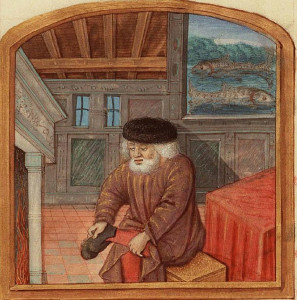
Lentemaand literally means 'Spring month' and is the old word for March. … [Read more...]
Three Things I Learned About DNA at WDYTYA Live
28 February 2014 by 17 Comments

Last week, during Who Do You Think You Are? Live! in London, I attended a DNA workshop about Autosomal DNA. Autosomal DNA is the DNA on your non-sex chromomes (22 pairs). I have done autosomal testing with FamilyTreeDNA and 23andme and am always looking for information that helps me to interpret the results. Here are three things that I learned. 1. You need much larger segments than I thought If your DNA overlaps with another person who tested, you can see how long your matching segments … [Read more...]
Quick tip: Try to find evidence to disprove your case
26 February 2014 by Leave a Comment
When proving a theory, we look for evidence that supports it. But as diligent researchers, we should look just as hard for evidence that disproves our theory. In fact, searching for evidence that does not fit with our preconceptions can be far more informative than searching for supporting evidence, as demonstrated in this short video. … [Read more...]