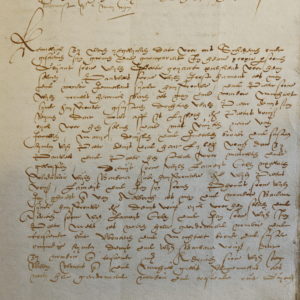
A boedelscheiding is an estate division. This often happened after someone died. An estate division record will include details about the estate and will list who got what. These records can typically be found in notarial records, or in voluntary court records before 1811 in regions where there were no notaries. If there was not much to divide, the estate may have been divided informally without there being an official record. … [Read more...]
Dutch Genealogy News for September 2022
7 October 2022 by Leave a Comment
Here is an overview of all the new sources, news, and projects announced last month. Sources 60,000 birth records from the Gouda region have been added to the Middle Holland Regional Archives website. The information is also available at Open Archives. Indexes of church records and notarial records for several towns in east North-Brabant have been added to the Brabants Historisch Informatie Centrum website. Several records regarding the creation of the province of Flevoland have been … [Read more...]
Quick tip – Check the surrounding records
5 October 2022 by 1 Comment
If you find your ancestor in a record, it may pay off to check the surrounding records too. Examples: Browsing the surrounding birth or baptismal records may show if your ancestor was a twin or triplet Browsing the previous and next civil registration or notarial records may show if they had the same witnesses, which suggests they were witnesses of convenience rather than people who had a personal connection to the parties. Checking the previous and next notarial records may show … [Read more...]
Quick tip – 400 Years of Dutch-American Stories
28 September 2022 by Leave a Comment
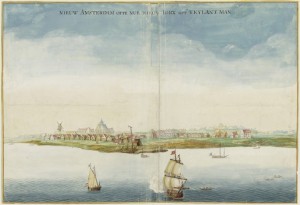
The National Archives of the Netherlands publishes a monthly series of stories about the 400 years of Dutch-American history. Past issues include stories about the name New Amsterdam, a woman named Mayken van Angola who was freed from slavery, and Dutch-American relations. … [Read more...]
Dutch term – Beschikbaar, beschikbaarheid
26 September 2022 by Leave a Comment
Beschikbaar means available; beschikbaarheid means availability. You may come across the terms in finding aids and texts discussing how to consult records. For example, a finding aid may include a section about availability to discuss where the records are kept, how they can be accessed, whether they are available online, or whether there are access restrictions to consider. … [Read more...]
Researching Military Ancestors in the Netherlands – Before 1795
23 September 2022 by 1 Comment
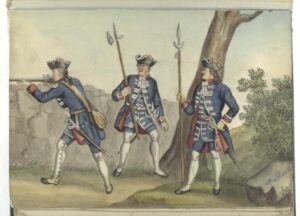
I often get questions about finding military ancestors, and thought I would write a few posts about that. I will start with the early period, before 1795. Before 1795, most soldiers were professional soldiers, not conscripts. The Dutch Republic (1588-1795) hired both Dutch and foreign men. Often, whole regiments were hired, including from Scotland, Switzerland, and Germany. The regiments would be stationed in garrison towns throughout the republic, changing every few years. Some soldiers … [Read more...]
Dutch term – Grondwerker
19 September 2022 by Leave a Comment
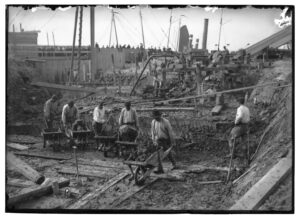
A grondwerker (literally: ground worker) was a digger. Diggers could be employed by builders, to dig foundation trenches, or by canal builders. It was hard, low-paying work. … [Read more...]
Dutch term – Koninkrijk
12 September 2022 by Leave a Comment
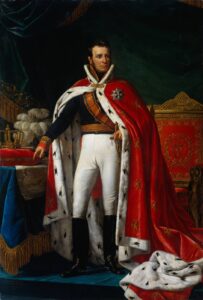
Koninkrijk means kingdom. The Netherlands was the Dutch Republic until 1795, when the French occupied the country. It became the Kingdom of Holland in 1806, with Louis Napoleon as its first king. It was part of the French empire from 1810 to 1813. After the defeat of the French, it became the Kingdom of the Netherlands in 1813. The House of Orange has supplied the monarchs ever since. Kings of Holland Louis Napoleon (1806-1810) Kings and Queens of the Netherlands Willem I … [Read more...]
Dutch Genealogy News for August 2022
9 September 2022 by Leave a Comment
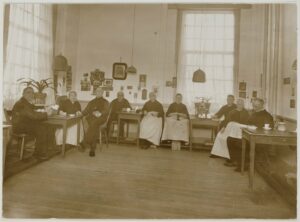
Here is an overview of the new sources, websites, and other news announced last month. Sources 450,000 records from population registers 1900-1938 from Zeeland have been added to the Zeeuws Archief website. Several church, court, and notarial records from the east of Noord-Brabant have been added to the Brabants Historisch Informatie Centrum website. Transcriptions of church, tax, and population registers of Nieuw- en Sint Joosland have been added to HoGenDa. Transcriptions of … [Read more...]
Quick tip – Hear the dialects of your ancestors
7 September 2022 by 3 Comments
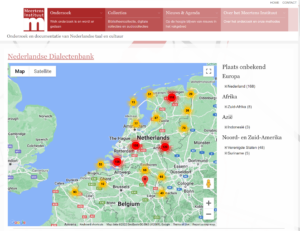
In the Netherlands, every region, sometimes every town, has its own particular dialect. If you want to hear how the people in your ancestors' region sounded, you can listen to audio clips at the Meertens Institute website. Click on the + before the province Click on the name of the town, which will open a pop-up with a list of recordings. Click on "Afspelen" [play] Most of the clips are anonymous. You can also click Kaart [map] to see the recordings on a map or click the Opnames … [Read more...]