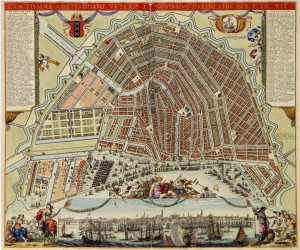
Amsterdam has been the largest city in the Netherlands since the late Middle Ages. The records are vast: the Amsterdam City Archives keeps more than 50 kilometers (over 30 miles) of records. A small but growing part of these records are available online. Here are the best free websites for genealogy research in Amsterdam. Amsterdam City Archives The Amsterdam City Archives keeps the records of the municipality of Amsterdam and the municipalities it annexed (Buiksloot, Nieuwendam, … [Read more...]
Dutch term – Lente
23 March 2020 by 1 Comment
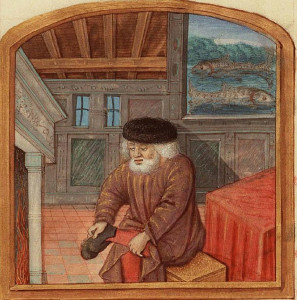
Lente or voorjaar is the Dutch word for Spring. Spring was traditionally the time for sowing the crops for the coming season. Work contracts were often renewed in Spring as well. This is the reason why so many farmers got married in May. They'd serve their contract out and then start their own farm and family. … [Read more...]
Effects of Corona on Dutch Genealogy
20 March 2020 by 4 Comments
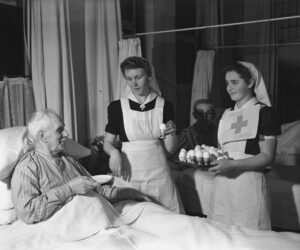
The Dutch government has implemented several measures to contain the spread of the corona-virus. This affects people researching their ancestors from the Netherlands in different ways: Archives are closed. On-site research is not possible. Scanning-on-demand may not be possible. Many archives sent their staff home. Even if you can still order scans, orders may not be fulfilled but will be in the queue until people get back to work. Some archives do still offer this service but this … [Read more...]
Dutch term – Weeshuis
16 March 2020 by 2 Comments
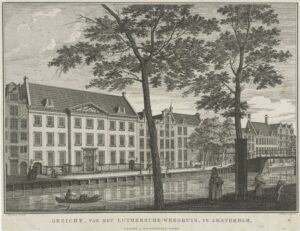
A Weeshuis (literally: orphan's house) is an orphanage. Only larger cities had a special orphanage. In smaller cities, orphans were often found families to live with, who would receive a fee for their upkeep. Archives of weeshuizen often include the records of the orphans they took care of. This could tell you when they were admitted, what education they received (often a trade like shoe making for boys and seamstress for girls), and when they were discharged. In the case of abandoned … [Read more...]
Quick tip – Check if the Archives are Open
13 March 2020 by Leave a Comment
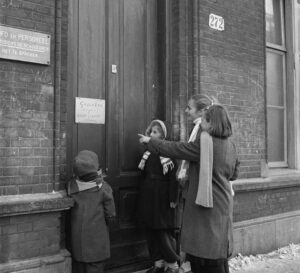
If you are planning to do on-site research in the Netherlands, check their website or contact the archive to make sure they are open. Most archives have announced their reading rooms are closed until further notice, to prevent spreading COVID-19. Check the opening hours ("openingstijden") and look for news announcements mentioning COVID-19 or corona. … [Read more...]
Dutch Genealogy Services – COVID-19 Measures
12 March 2020 by 1 Comment
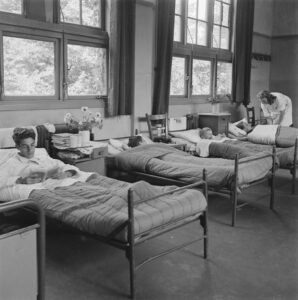
The Dutch government announced new measures to contain the spread of COVID-19 (corona virus). Large events are cancelled, people with a cold, cough, or fever are asked to quarantine themselves, and all people in the Netherlands are asked to work from home as much as possible. Dutch Genealogy Services will abide by these instructions. That means that on-site research in archives and libraries will be postponed until after the isolation period (until 31 March 2020 at least). Thankfully, many … [Read more...]
Ask Yvette – How to Record Transgender People?
8 March 2020 by 2 Comments

In the Netherlands, it's legal for transgender persons change their gender and names on their birth records and in the population registration. You need to be at least sixteen years old and need a declaration by a gender specialist before you can go to the municipality to have your information changed, so it's not an easy process. In recent years, the requirement to have gender confirmation surgery was dropped, so transgender people can now have their gender changed without undergoing forced … [Read more...]
Quick tip – AncestryHour Interview with Yvette Hoitink
7 March 2020 by Leave a Comment

Yvette Hoitink was interviewed by Daniel Loftus for the first episode of "Meet who you tweet" at AncestryHour. Daniel is a young genealogist from Ireland and Ambassador for Youth for #AncestryHour, the weekly Twitter meetup for genealogists across the world. Go to the interview. … [Read more...]
Dutch Genealogy News for February 2020
6 March 2020 by Leave a Comment
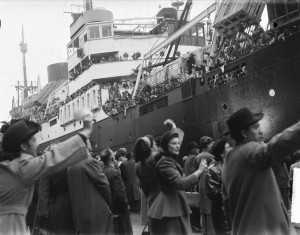
Here is an overview of the new sources, projects, and news about archives that were announced last month. Online sources Over 24,000 more magazines and 5,000 books from 1940-1960 are now available via Delpher, after the Royal Library came to an agreement with representatives of copyright holders. Scans and indexes of population registers of Terneuzen in Zeeland (1850-1938) have been added to the Zeeuws Archief website. Scans of population registers from the province of Groningen … [Read more...]
Quick tip – Why did they not marry in May?
4 March 2020 by Leave a Comment
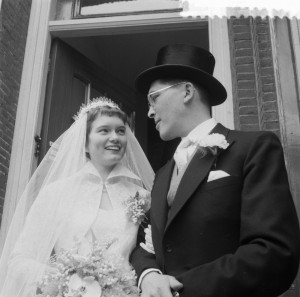
If your ancestors were farm workers in the 1800s, and did not marry in May, check the birth date of their oldest child. Most work contracts ran from May to May. Farm workers who planned on getting married, often married in May so they could then move in together and maybe lease their own farm. When there was a baby on the way, it was customary to marry as soon as possible and not to wait until May. So if you find that your farming ancestors married in a different month, check the birth … [Read more...]