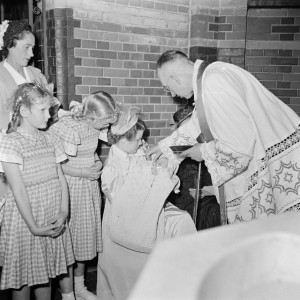
I was tagged in a Facebook post asking how to deal with variations of surnames in your genealogy software. Genealogy software typically requires us to choose one name as the default to use in reports and lists, and allows us to enter alternative names. I use three different strategies to select which name to use as the main name, depending on when the person was born. I record other names and major spelling variations as alternative names. Born after the civil registration The civil … [Read more...]
About this website
Creating a website like this is a fun activity. There are so many options, so many choices. What do visitors want? What do I want? In this blog I will describe some of the things I encounter in developing and maintaining this website.
Which archive keeps the records for your Dutch ancestors?
17 March 2023 by 1 Comment
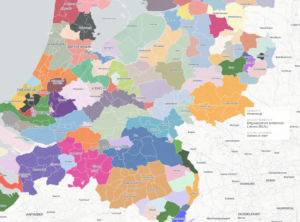
In the Netherlands, most government records about our ancestors are created and kept at three different levels: Municipal level Provincial level National level. All these authorities have agreements with archives to keep the records that are over twenty years old. Municipalities either have their own city archives, or collaborate in a regional archives. Each provincial capital has an archive for records created at the provincial level, but that archive often also keeps records of … [Read more...]
Quick tip – Check the calendar
15 March 2023 by Leave a Comment
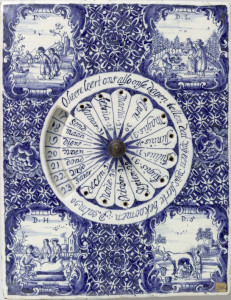
If you are dealing with a date between 1582 and 1701, please check the calendar. Different places in the Netherlands changed from the Julian to the Gregorian calendar at different times. The change made the calendar jump forward by 10 or 11 days. Sometimes, you can resolve a conflict in dates by checking the calendar. Someone born in Brabant on 5 December 1699 could be baptized in Gelderland on 1 December 1699, for example, because Gelderland was still using the Julian calendar which was 11 … [Read more...]
Dutch Genealogy News for February 2023
10 March 2023 by Leave a Comment
Here is an overview of the new sources, websites, and projects that were announced last month. Sources Arjan Buikstra is indexing records of crew members who sailed for the Rotterdam Admiralty (1763-1795). The indexed can be searched on his website. The West-Brabants Archief digitized records relating to the madder industry. Madder was a plant root that was used as red dye. See the announcement for links to the finding aids with the images. The Zeeuws Archief digitized the records of … [Read more...]
Quick tip – Do online research first
1 March 2023 by Leave a Comment
If you are planning a trip to the Netherlands, do not assume you can do on-site research. Many of the most popular genealogical records can now be found online, as explained in this article. Archives typically no longer allow you to consult records that have been put online. … [Read more...]
Quick tip – Handbook of dates
15 February 2023 by 1 Comment
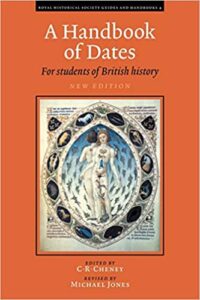
In the course of my Family and Local History studies at the University of Dundee, I purchased a recommended book: C.R. Cheney, ed., A Handbook of Dates for Students of British History, revised (Cambridge: Cambridge University Press, 2004). While the title indicates it is meant for students of British history, most of the content is usable in the Netherlands too. Some of the topics I find especially useful for research in the Netherlands are: French Republican calendar, with the names of … [Read more...]
Dutch Genealogy News for January 2023
10 February 2023 by 1 Comment
This is an overview of the new sources, websites, projects and other news that was announced last month. Sources Birth, marriage, and death records of the country of Suriname have been scanned. They can be consulted on the National Archives of Suriname website. The civil registration only includes free people. Slavery was abolished in Suriname in 1863 so from then on, the registration includes the entire population. Notarial records of Delft have been scanned and partially indexed. They … [Read more...]
Quick tip – Search finding aids as well as indexes
1 February 2023 by Leave a Comment
Archives have different types of information on their website. The genealogical indexes are often found in a different section than the finding aids with the archival descriptions or catalogs. These descripts are often quite generic and describe whole series, like minutes of court records, incoming correspondence, or tax records. If you are lucky, the archival descriptions in the finding aids will also include names of people. Some archivists have made the effort to add the names of parties to … [Read more...]
Five Ways to Identify Old Places Names in the Netherlands
27 January 2023 by 1 Comment
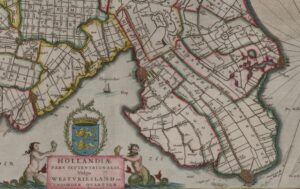
When you come across a place of origin in a records, you may not be able to find that town on a modern map. Spellings and names changed. Here are five strategies to find out what place is meant. 1: Check contemporary maps You can look at a map from the period, like in the world atlas by Blaeu from 1665. This shows you the names the towns had in the 1600s. Many people did not move that far so I start by looking at a map of the area where the record was created that mentioned the town. I widen … [Read more...]
Quick tip – Read between the lines
18 January 2023 by 2 Comments
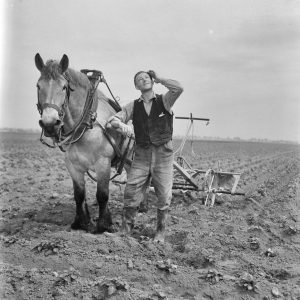
I am having fun with an 1827 inventory of the assets belonging to an ancestor. I love reading between the lines to see what the items tell us about my ancestor. Here are some things I noticed. He owned multiple plots of land, had different crops in the field, and had several types of grain stored. Agriculture was likely his main source of income. He owned three cows, one calf, no bulls. Three cows is not enough to live off, so they were probably for their personal use and for the manure … [Read more...]