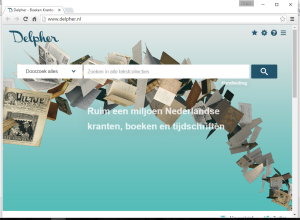
The Koninklijk Bibliotheek, the Royal Library of the Netherlands, is making Dutch newspapers, books and magazines availble for free at Delpher. Delpher has the following sections: Boeken basis [basic books] Boeken Google [Google books], books scanned in collaboration with Google Kranten [newspapers] Tijdschriften [magazines] Radiobulletins [radio bulletins] Searching Delpher Good things to try are: Full name of your ancestor in quotes, e.g. "Arend Kastein" Name of your … [Read more...]
Quick tip – Use bond letters to find out where your ancestor came from
16 March 2016 by Leave a Comment
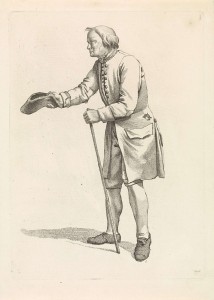
If you can't find a Dutch ancestor from the 1700s, it could be that they originally came from elsewhere. At that time, you had to provide a bond letter (borgbrief or akte van indemniteit) from your previous place of residence before you could settle elsewhere. This letter assured the new town that you would not be a burden to them, because the old town agreed to take care of you if you were unable to support yourself. They are a wonderful source of information about migrations. Read more … [Read more...]
Quick tip – Don’t search too broadly too soon
9 March 2016 by Leave a Comment
If you are stuck, it is tempting to start searching broadly. You might use Google or a national database like WieWasWie to see where your ancestors' name pops up. However, this strategy often does not give you the result you're hoping for. You may find dozens of namesakes all over the country, without any way to tell if any of them is your ancestor. Or, even riskier, you may find just one namesake, and be tempted to conclude that this must be the one. However, the index may be incomplete, so … [Read more...]
Quick tip – The Netherlands: Beyond Amsterdam
2 March 2016 by 1 Comment
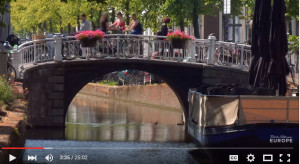
If you want to learn about the history of the Netherlands and our fight against the sea, watch this 25-minute YouTube Video by Rick Steve. The Netherlands: Beyond Amsterdam (YouTube) … [Read more...]
Quick tip – Was that last name a patronymic?
24 February 2016 by 3 Comments
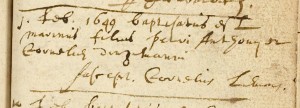
If the last name of your ancestor ends in -s, -se, -sen, or -en, it could originally have been a patronymic; a name derived from the name of the father. Common examples are Jansen [son of Jan], Pieters [son of Pieter] or Cornelissen [son of Cornelis]. Other names are more difficult to recognize as a patronymic, such as "Flooren" [son of Floris], "Dielen" [son of Egidius], or Celen [son of Marcel]. Patronymics were common in most parts of the Netherlands. In the northern provinces, most people … [Read more...]
Quick tip – Do the names of the children match?
17 February 2016 by Leave a Comment
In the Netherlands, children were often named after family members. When you have a theory about who the parents were, make sure to check for repetition of names. If the names of the children of your brick wall ancestor do not appear in the family you think he belongs to, you may have the wrong family. Read more about naming traditions. … [Read more...]
Quick tip – No Cousin is Too Distant to Have the Information You Need
10 February 2016 by Leave a Comment
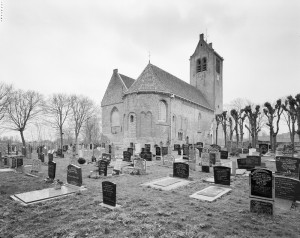
When corresponding with cousins about genealogy, we tend to stick to the close ones: first or second cousins, maybe a third cousin, with the occasional once or twice removed. I recently solved a puzzle using a letter shared to me by a fifth cousin twice removed. I was trying to resolve a conflict in death dates. Her grave said a woman died on 6 December 1879, while I had reliable evidence that her husband was already remarried as her widower by then. The modern design of the grave marker … [Read more...]
Quick tip – That Frisian female might be male!
3 February 2016 by Leave a Comment
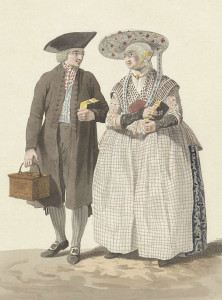
If you do research in Friesland, you will notice that the names there are quite different from the rest of the Netherlands. Friesland has its own language, Frisian (Fries) which comes with its own unique set of names. Some Frisian male names look like female names to those of us who are not from Friesland. Some of these names are used as female names in other parts of the country. If you're unsure whether the person is male or female, check the record to see what the role is (bruidegom/groom, … [Read more...]
Quick tip – Occupations ran in the family
20 January 2016 by 4 Comments
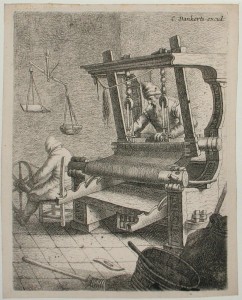
Occupations often ran in the family. The eldest son usually inherited the father's business, and would step in his father's footsteps. Guilds often had friendly terms for children of members, with reduced fees for apprenticeships and membership. Even younger sons who could not take over their father's business often found similar work. The son of a shoemaker might become a tailor, for example. Of course, there are exceptions. The younger sons of farmers may have moved to the village or the … [Read more...]
Quick tip – Check the records of neighboring towns
6 January 2016 by Leave a Comment
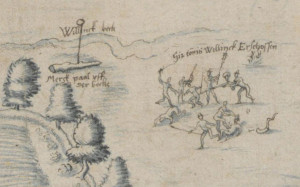
When you're looking for records about your ancestors, don't just limit yourself to the town where he or she lived but also check out the records of the neighboring towns. One of my most amazing finds was a map I found in a German archive, created about a boundary dispute. It showed how my ancestor Tonnis Willinck being shot and killed, around 1593. If I had limited myself to Winterswijk records, I would never have found the image. Read the whole story about the image of Tonnis Willinck's … [Read more...]