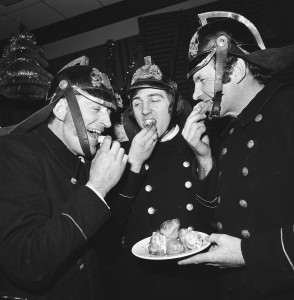
Different areas in the Netherlands have different New Years' traditions. Making a lot of noise is pretty universal. I recall my grandfather showing me his too-short finger on New Year's Eve to warn me about the danger of fireworks. It had cost him the tip of his finger so he only had half a nail. Another one of my ancestors was fined for shooting his gun at midnight on New Years' Eve, the precursor of modern-day fireworks. In the eastern part of the Netherlands, people baked New Years' … [Read more...]
Quick tip – Emigrants often used agents
23 December 2015 by 3 Comments
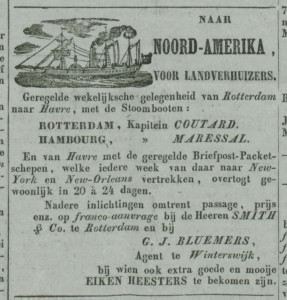
Did you ever wonder how your emigrant ancestors bought their tickets and how they knew where to find a ship to go to America? By the end of the 1840s, many shipping companies had agents in most of the emigration hot spots. Emigrants would be able to purchase tickets form these agents, who would arrange for their travel to the harbor and for the trip across the Atlantic. Agents often advertised in newspapers to make people aware of their services. By searching newspapers for the town where your … [Read more...]
Quick tip – Napoleonic army records available online
16 December 2015 by 6 Comments
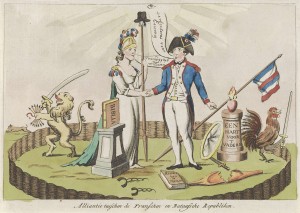
During the French occupation (1795-1813), many Dutch young men were conscripted into Napoleon's army. The French department of Defense has now made scans of the military records for this period online on the "Mémoire des hommes" [Memory of the men] website. The website contains military records of other French soldiers as well, including those who served in World War I, but these won't include many Dutch men. An indexing project is underway, but scans can already be browsed. Go to the … [Read more...]
Quick tip – Emigrant names were often phonetic equivalents
2 December 2015 by Leave a Comment
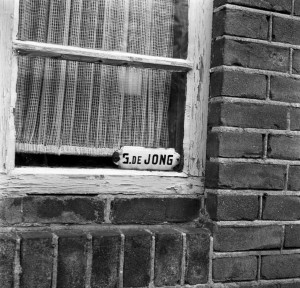
If you're trying to figure out what the original name of your immigrant ancestor was, don't just focus on official translations, but also figure out what names may have sounded the same. For example, a woman named Jessica in Australia may well have been called Tjitske. A man named Dick (short for Richard) in the United States may well have been Dirk (short for Theodorus) in the Netherlands, even though the official translation would have been Theodore. A Dutch woman named Aaltje may have … [Read more...]
Quick tip – Share Your Family Stories
25 November 2015 by Leave a Comment
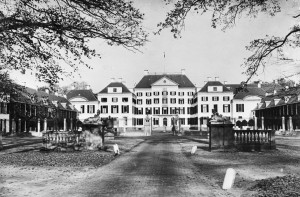
Two weeks ago, I shared a story on this site's Facebook page. Here's what I wrote: My grandfather lived in one of the wings of this castle when he served on the staff of Prince Bernhard during the last months of World War II. Apeldoorn was liberated at the end of 1944 and became the headquarters while the resistance and allied forces were planning to reconquer the west of the country, which took until May 1945. My grandfather told us a story how the Queen was upset one day that the soldiers … [Read more...]
Quick tip – Deaths are recorded in the place of residence
18 November 2015 by 3 Comments
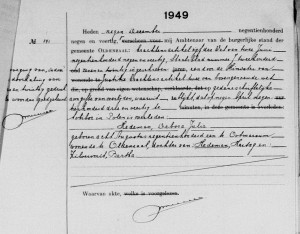
If a person died in a different location than where he lived, the civil registration of his place of residence would also record his death. Often, they would receive a copy of the death record that was created in the place of death, and would then record that copy in their own death registers. This was also done after World War II, to record all the Dutch Jews who were murdered in Eastern Europe. Sometimes it took many years to find out where and when a person died, so many towns have death … [Read more...]
Quick tip – Orphans left records too
11 November 2015 by Leave a Comment
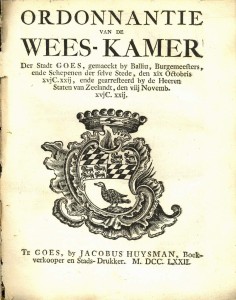
If children were orphaned, guardians were appointed. Before 1811, some regions had special weeskamers (orphan chambers), in other regions these appointments were handled by the court. After 1811, all guardianship appointments were handled by the court. Read more about using guardianship records to learn about your orphaned ancestors. … [Read more...]
Quick tip – Religion affected more than just the church they attended
4 November 2015 by 1 Comment
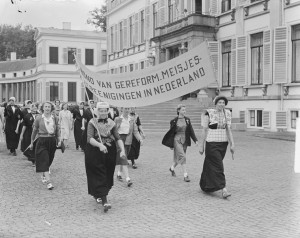
Religion did not just determine where people went to church, but also whom they hung out with. It determined where children went to school, what choirs they sang in and what gym clubs they joined. People met their partners in church and formed friendships and family bonds that survived emigration to other countries. See this overview of popular destinations per religion to see where some groups went. … [Read more...]
Quick tip – Witches in Flanders
28 October 2015 by Leave a Comment
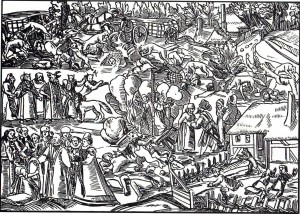
The website Witches in Flanders offers a great deal of information about witch trials in Flanders. It includes lists of witch trials and convicted witches in the 1500s and 1600s. Several people who were accused of witchcraft fled north to the Protestant parts of the Netherlands, where witchcraft was often considered a Catholic superstition. Others were not so lucky and were burned at the stake. … [Read more...]
Quick tip – Most people did not have crests
21 October 2015 by Leave a Comment
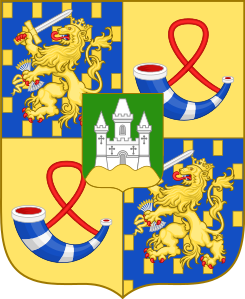
If you're looking for your family crest, you might be disappointed. Most families did not have family crests. If your ancestors were poor farmers and laborers, like the majority of families, they would not have had a family crest. Read more on how to find out if you have a family crest. … [Read more...]