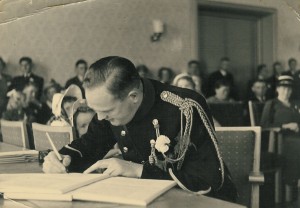
The Dutch word getuige means witness. Getuigen can be found in many different types of documents, such as birth and marriage records or baptismal records. In original records and transcriptions, the word is often abbreviated to get. … [Read more...]
Dutch term: Persoonskaart
30 September 2013 by 3 Comments
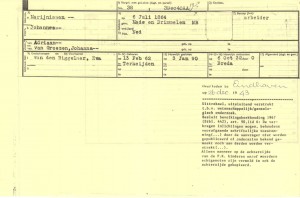
A persoonskaart is a personal record card, introduced in 1939 to register who lived where. Persoonskaarten are one of the most important sources for research in the 20th century, because they are one of the few records that can be obtained within 50 years after a person's death. Read the article about Personal record cards for more information. … [Read more...]
Dutch term: burgemeester
23 September 2013 by Leave a Comment
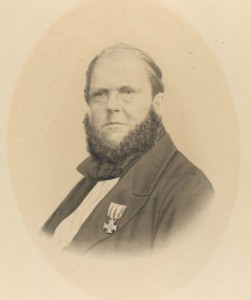
The term burgemeester means 'mayor'. Before 1795, when the French occupied the Netherlands and introduced new laws, most towns had more than one mayor. These were elected officials. Since 1795, each municipality only has one mayor. Mayors are appointed by the crown. In early records of the civil registration, it is not unusual for a mayor of a small town to act as the clerk registering the births, marriages and deaths in the civil registration records. … [Read more...]
Dutch term: inventaris
16 September 2013 by Leave a Comment
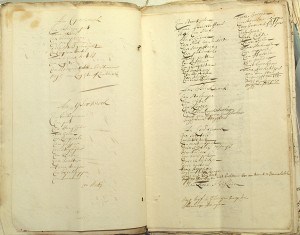
An inventaris is an inventory. In a genealogical context, it can have two different meanings: A finding aid or catalog of a collection, for example the inventaris of the archive of the Dutch East India Company. A call number of a file within a catalog is called an inventarisnummer (inv.nr.). An inventory of an estate of a person, usually a deceased person. … [Read more...]
Dutch term: patroniem
9 September 2013 by Leave a Comment
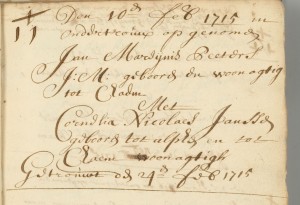
A patroniem is the Dutch word for 'patronymic,' a name derived from the father's name. Examples are Jansen (son of Jan), Marijnissen (son of Marijn or Marinus) or Damen (son of Daam or Adam). In some provinces where patronymics were common, like Friesland and Noord-Brabant, you may encounter the word patroniem in search engines. If this is the case, be sure to use try that field, because you will not get any results by searching for a patroniem in the achternaam (surname) field. See the … [Read more...]
Dutch term: nummerwisselaar
2 September 2013 by 2 Comments
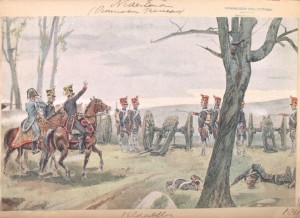
A nummerwisselaar or number changer was a person that was hired as a replacement for military service. Often, this was somebody who signed up in the same year, but whose number did not come up. They literally "exchanged numbers" so one man served instead of the other. In most cases, a contract between the (father of the) draftee and his substitute was drawn up before a public notary. It stipulated the terms, often involving a sum of money to be paid immediately and another sum after the … [Read more...]
Dutch term: tussenvoegsel
26 August 2013 by 2 Comments
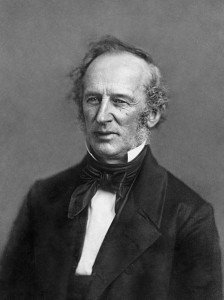
A tussenvoegsel (literally: something put in between) is a prefix of a surname. Common prefixes are De (the) or Van den (from the). Tussenvoegsels are ignored when determining the alphabetical order, so De Vries can be found under the V. See the article about prefixes in surnames for more information. … [Read more...]
Dutch term: Landverhuizer
19 August 2013 by Leave a Comment
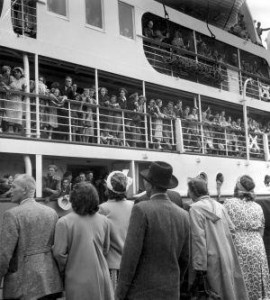
The word landverhuizer means somebody who moved to another country. It's the term most 19th century records use when referring to emigrants. Knowing this term can help to find lists of emigrants ("staten van landverhuizers") in catalogs of repositories. Read more about landverhuizers in the column "Land movers." … [Read more...]
Dutch term: schoonvader
12 August 2013 by Leave a Comment
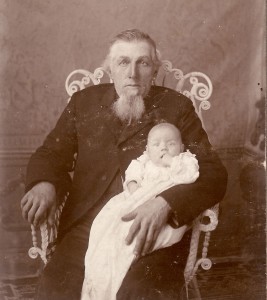
The current meaning of the term schoonvader is "father-in-law." In earlier records, the term is used more generally and can also mean stepfather. Just think of the term as "father by marriage," the marriage being either the one to the spouse (making his/her father the schoonvader) or the mother (making her husband the schoonvader). … [Read more...]
Dutch term: ondertrouw
5 August 2013 by 2 Comments
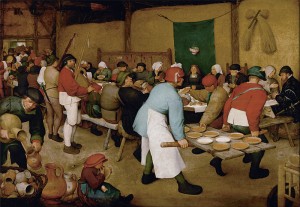
"Ondertrouw" is the event when the banns for a marriage are published. Following the ondertrouw, the marriage is announced three times, at least a week apart (usually on 3 consecutive Sundays). If nobody objects, the marriage is usually performed shortly after the third publication of the banns. Banns were published in the place where the bride and groom lived. If they only lived there shorter than 6 months, they also needed to be published in their previous place of residence. It is not … [Read more...]