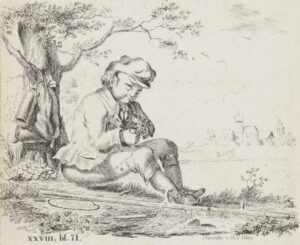
This week's term isn't Dutch at all, it's German. Hollandgänger literally means Holland-goer. It's a German term to describe seasonal workers who would come to the Netherlands to work. They'd walk to the Netherlands in spring, work here all summer, and then return to their families in Germany in the autumn. Most of these people were poor farm laborers from Westphalia, Münsterland, Osnabrück, or East-Friesland. Some of these workers met their partners in the Netherlands and stayed here. … [Read more...]
Source: Municipal Reports
21 February 2020 by 1 Comment
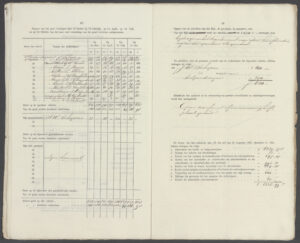
Since 1851, municipalities were required to write annual reports about the state of the municipality. These reports rarely give information about individual ancestors, but can be a great source of information about their circumstances. Topics you can find in municipal reports: Population Elections Names of the municipal council members Names of mayor and aldermen Finances Municipal property and works Health Police National and local militia Education … [Read more...]
Dutch term – Woonplaats
17 February 2020 by Leave a Comment
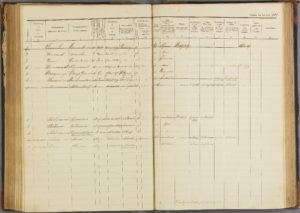
Woonplaats literally means "living place" and is the place of residence. After the introduction of the civil registration, deaths were always recorded in the woonplaats as well as in the place of death. A copy of the death record would be forwarded to the place of residence. This is useful if your ancestor died elsewhere, for example because they were in a hospital out of town, or died at sea. See the record analysis example - death record. You may also encounter the term woonplaats in … [Read more...]
Dutch term – Opzichter
10 February 2020 by Leave a Comment
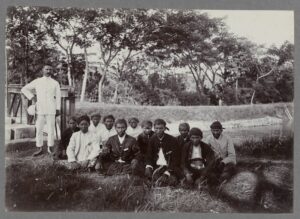
An opzichter is an overseer. If you find that your ancestor was an opzichter, that can be a clue to find more records about him. Opzichters were hired by various organizations like hospitals or prisons. In former Dutch colonies, you can find overseers on plantations or managing enslaved people. The organizations the overseers worked for may have created records that shed more life on your ancestors' lives, or for the people they oversaw. If you are looking at a death record and the … [Read more...]
Dutch term – Archiefbeschrijving
27 January 2020 by Leave a Comment
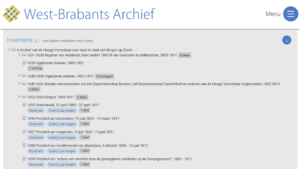
An archiefbeschrijving is an archival description. To describe their holdings, archives create archival descriptions. Descriptions can be high-over ("incoming correspondence 1800-1810") or detailed ("accounts of the orphans of Laureijs Smulders, 1606"). Archival descriptions are typically organized per record group and published in the form of finding aids or catalogs. Most archives in the country have published their archival descriptions online. In a growing number of cases, scans are … [Read more...]
Dutch term – Zoeaaf
13 January 2020 by Leave a Comment
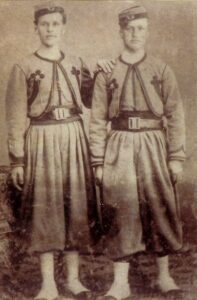
A zoeaaf is a zouave, a member of the infantry forces of the Papal states. In the mid 1800s, the Papal states were threatened by forces in Italy who wanted all the states to join under one nation. In 1860, pope Pius IX sent out a call to young unmarried Catholic men to join the infantry force and defend the papacy. The zouave papal infantry force existed from 1861 and 1870. The men volunteered for a period of two years, and some extended. In total, about 11,000 men enlisted with the … [Read more...]
Dutch term – Schaats
6 January 2020 by Leave a Comment
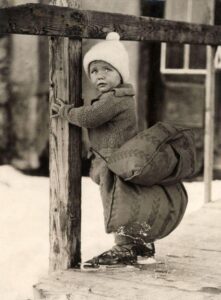
A schaats is a skate. Skating is a popular sport in the Netherlands, and has been for a long time. Many parts of the Netherlands are very boggy, and are drained by creeks and levies. In winter, skating was an efficient way to get around. When I was about ten years old, I'd skate to school if the weather allowed it. There were several ponds between me and my school. I'd bring skate protectors to walk from one pond to the other and would have my shoes in my backpack to wear in school. … [Read more...]
Dutch term – Feestdag
23 December 2019 by Leave a Comment
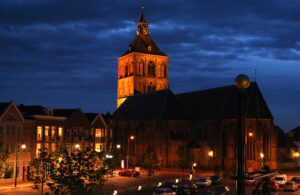
A feestdag (literally: feast day) is a holiday. Traditionally, feestdagen played an important role in our ancestors' lives, and not just the ones many of us know today like Christmas and Easter. Roman Catholic churches had patron saints. The holidays associated with these saints often remained important days for the town, even after the reformation in protestant areas. It might be the day of the annual fair, or when guilds held their elections. My home town of Oldenzaal has a basilica … [Read more...]
Dutch term – Baljuw
2 December 2019 by Leave a Comment
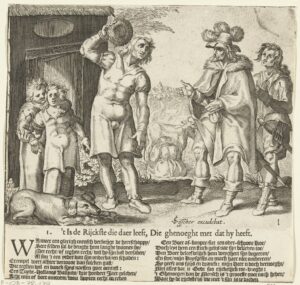
A baljuw [bailiff] was an official who represented the ruler of the region and had the highest jurisdiction. They usually received a fixed salary and a share of the fines. Other terms for this function are drost or drossaard. Baljuws were appointed by the ruler. You can sometimes find these appointments in the records created by the ruler, such as the lord of a domain or the count or duke of the province. … [Read more...]
Source – Bankruptcy files
29 November 2019 by Leave a Comment
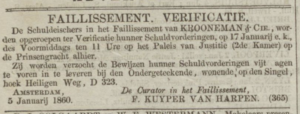
If someone is unable to meet his financial obligations, the court can be asked to declare him bankrupt. The court appoints a curator who inventories the debts and assets of the bankrupt person, who the creditors are, and how they can best be paid. When everything is settled, which could take years, the bankruptcy is ended. Bankruptcy files Records are created of all the actions that happen after somebody is declared bankrupt. Together, these form a bankruptcy files. These files are part of the … [Read more...]