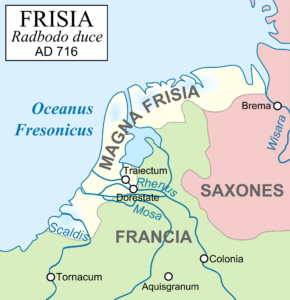
In the early Middle Ages, the whole area between the Zwin and Weser rivers was called Frisia/Friesland. The current province of Friesland in the Netherlands is in the middle of that region, but the former area of Frisia was much larger. To this day, part of the province of Noord-Holland is known as "West-Friesland" [West Frisia] and part of northern Germany is known as "Ostfriesland" [East Frisia]. So West-Friesland is in the province of Noord-Holland, not in the province of Friesland. … [Read more...]
Dutch term – Gemeenteverslag
25 May 2020 by Leave a Comment
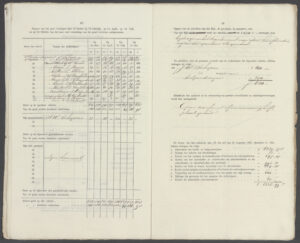
A gemeenteverslag is a municipal report. Since 1851, municipalities were required to write an annual report about the state of the municipality. These can be a great source of background information about your ancestors. See source: municipal report for more explanation about this source and how to use them. … [Read more...]
Dutch term – Onecht kind
11 May 2020 by 1 Comment
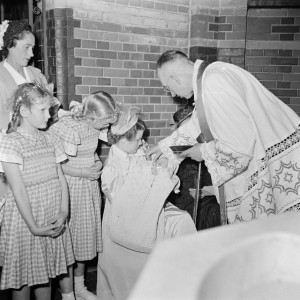
An onecht kind is a child born out of wedlock. You may encounter the term in baptismal records or court records. Here are tips for finding the father of an illegitimate child. … [Read more...]
Dutch term – Slachtoffer
4 May 2020 by Leave a Comment
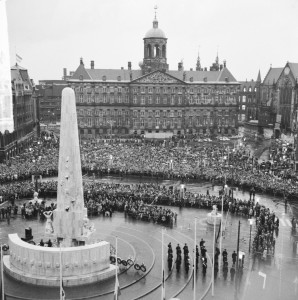
The word slachtoffer means "victim" or "casualty." On 4 May, the Dutch commemorate the casualties since World War II. The 4 May date was chosen because 5 May is Liberation Day, the anniversary of the liberation of the Netherlands on 5 May 1945. We commemorate before we celebrate. Two years ago, I was at the National Genealogical Society conference in Grand Rapids on 4 May. You can read the speech I gave at the banquet to jointly commemorate the victims. … [Read more...]
Dutch term – “Ut Supra”
27 April 2020 by Leave a Comment

The term ut supra means "as above." It's actually not Dutch at all but Latin. It's used in records sometimes as a shorthand when the writer doesn't want to keep repeating the same information. When you see the term, you have to look at the previous entries to see what information it replaces. Example This question came up in the Dutch Genealogy Facebook Group, where David P. Slager jr. asked about the meaning of "ut supra" in the following marriage record: It's a marriage record for … [Read more...]
Dutch term – Fout
20 April 2020 by Leave a Comment
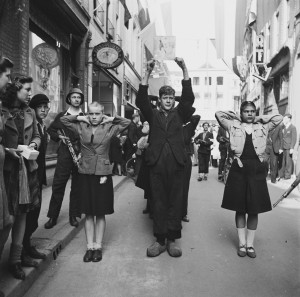
Fout means "wrong" or "error." Dutch records are pretty reliable in general but we should always look for multiple independently created original records to prevent one error from leading us astray. In World War II, the word fout got a special meaning. It was used to indicate people who collaborated with the Germans. Many of them were prosecuted for collaboration after World War II. Their court records can be found in the Central Archives for Special Jurisdiction at the National Archives in … [Read more...]
Dutch term – Binnenlandse Strijdkrachten
13 April 2020 by 2 Comments
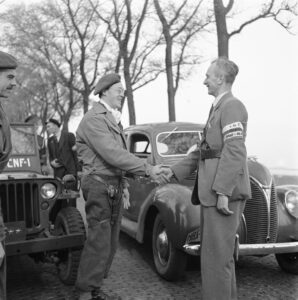
Binnenlandse Strijdkrachten or Domestic Armed Forces was a resistance organization in World War II. During World War II, there were many resistance local organizations working all over the country. When the liberation of the Netherlands started in September 1944, these organizations merged to form the Binnenlandse Strijdkrachten. Head of the organization was Prince Bernhard, the husband of crown princess Juliana. My grandfather Jan Marijnissen joined the Binnenlandse Strijdkrachten in … [Read more...]
Dutch term – Dwangarbeider
30 March 2020 by Leave a Comment
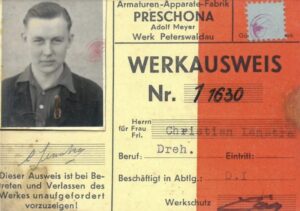
A dwangarbeider is a forced laborer. During World War II, many able men from the Netherlands were forced to work in Germany. The German factories and other places of employment needed laborers since so many of their own men were fighting in the army. Local labor offices in the Netherlands coordinated the placement. Both my grandfathers were required to go to Germany as forced laborers. My paternal grandfather Henk Hoitink went into hiding on my grandmother's farm (his fiancée at the time) … [Read more...]
Dutch term – Lente
23 March 2020 by 1 Comment
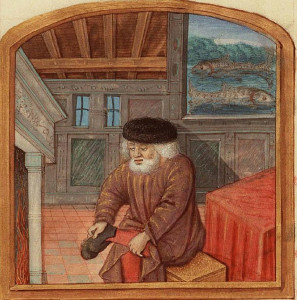
Lente or voorjaar is the Dutch word for Spring. Spring was traditionally the time for sowing the crops for the coming season. Work contracts were often renewed in Spring as well. This is the reason why so many farmers got married in May. They'd serve their contract out and then start their own farm and family. … [Read more...]
Dutch term – Weeshuis
16 March 2020 by 2 Comments
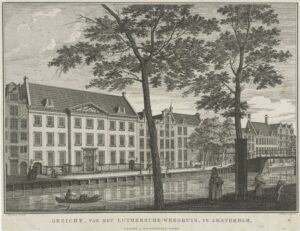
A Weeshuis (literally: orphan's house) is an orphanage. Only larger cities had a special orphanage. In smaller cities, orphans were often found families to live with, who would receive a fee for their upkeep. Archives of weeshuizen often include the records of the orphans they took care of. This could tell you when they were admitted, what education they received (often a trade like shoe making for boys and seamstress for girls), and when they were discharged. In the case of abandoned … [Read more...]