
The schepenbank is the bench of aldermen, or the aldermen's court. The schepenen were the officials who set on the bench. The schepenbank would serve as the magistrate and as a court of law. The term Schepenbank was not used in all regions. Other terms include nedergerecht (Friesland) or vierschaar (Zeeland). Schepenbanken with higher jurisdiction were entitled to adjudicate all court cases, including capital cases. Schepenbanken with lower jurisdiction only adjudicated less severe cases. … [Read more...]
Dutch term – Kaart
13 July 2015 by Leave a Comment
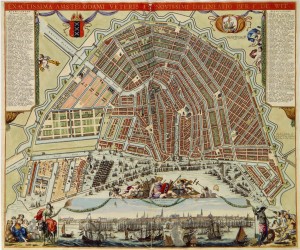
A kaart is a map or a card. In the 17th century, Amsterdam was the map making capital of the world so there are some gorgeous maps waiting for you to see where your ancestors lived. For example, check the Blaeu Atlas at the Erfgoed Leiden website or read about the the facsimile edition of the City Atlas of Frederik de Wit. … [Read more...]
Dutch term – Fiets
4 July 2015 by Leave a Comment

As the Tour de France starts in the Netherlands this week, this is a good time to learn the meaning of a quintessentially Dutch word: fiets (bicycle). Introduction of bikes Fietsen were introduced in the Netherlands in the last part of the 19th century. They were quickly adopted and became the most popular mode of transportation. Fietsen were not just used for personal transportation, but also by businesses (a 'bakfiets' with a container on the front wheel can be used to carry many goods) and … [Read more...]
Dutch term – Gevangenis
29 June 2015 by Leave a Comment

A gevangenis is a prison. The modern prison system was introduced in 1811. Many people went to jail, often for petty crimes. Prison records can tell you if any of your ancestors ever went to jail. Read more about prison records. … [Read more...]
Dutch term – Wasvrouw
22 June 2015 by Leave a Comment

A wasvrouw was a laundress. It was an occupation for poor women, who were usually single or widowed. … [Read more...]
Dutch term – Meerderjarig
15 June 2015 by 5 Comments
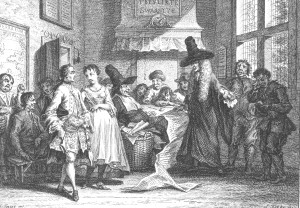
Meerderjarig means 'of age,' having reached the age of majority. What the age of majority was, depends on the time and place. Youngsters could also be declared to be of age by the court, usually with consent of the parents or guardians. Age of majority in the Netherlands Period Age of majority Before 1811 Depends on the region, usually 25. 1811-1838 21 1838-1901 23 1901-1988 21 Since 1988 18 Source Pieter Nieuwland, Friezen Gezocht … [Read more...]
Dutch term – Gewaarmerkte kopie
8 June 2015 by Leave a Comment
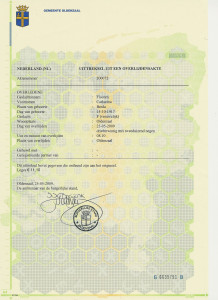
A gewaarmerkte kopie is a certified copy. When ordering a record, like your own birth record, you may be asked if you want a regular copy or a certified copy. Certified copies will be printed on special paper and will have a seal by the municipality guaranteeing authenticity. For genealogical purposes, a regular photocopy will suffice. In fact, a regular photocopy can be more reliable for genealogical purposes than a certified copy since certified copies are sometimes extracted and retyped … [Read more...]
Source – Baptismal record
5 June 2015 by 1 Comment
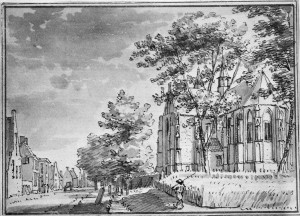
Before 1811, baptismal records are the main source for information about an ancestor's birth date. Baptismal records should have been kept since the Trente council of 1545-1563, but for most areas they only survive since the early to mid 1600s. Most children were baptized within days of being born. In some churches, children were baptized the next Sunday. Others baptized them the same day, or may have waited several weeks. Anabaptists and similar religious only baptized adults, so in that … [Read more...]
Dutch term – Begrafenis
1 June 2015 by Leave a Comment
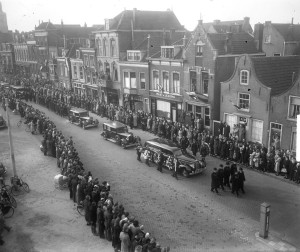
A begrafenis is a burial. Before 1811, the church records of burials are often the best source for the burial date. Some registers include the death date as well. After 1811, death records of the civil registration show when a person died, but they do not contain information about the burial. That information can sometimes be found in family announcements in newspapers or in the burial administration of the churches. … [Read more...]
Dutch term – Voogd
25 May 2015 by Leave a Comment
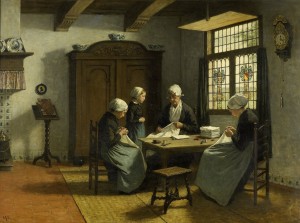
A voogd is a guardian. Before 1811, guardians were usually appointed by the Weeskamer (orphan chamber). After 1811, they were appointed by the court. You can find guardianship appointments in the court records. … [Read more...]