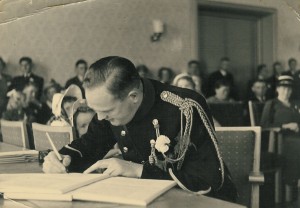
The huwelijksbijlagen or huwelijkse bijlagen are the marriage supplements: the documents that a bride and groom had to submit to prove their identity and eligibility to get married. See the article Marriage supplements: gateway to more information about your ancestors for more information about these records and how to use them for your own research. … [Read more...]
Dutch term – Brief
11 May 2015 by 2 Comments
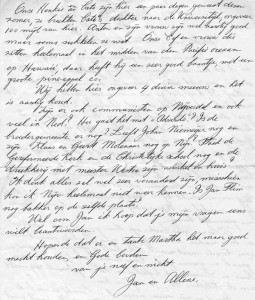
A brief is a letter. Brieven are a great source of information. Personal letters written by emigrants to their family back home can give you a great idea of what their pioneering life was like. I've also found valuable information in official correspondence, for example in the correspondence of the municipality where my ancestor lived. In municipal correspondence, I've found letters about people who were sent to the pauper colonies or an insane asylum, and appointments of city officials like … [Read more...]
Dutch term – Dodenherdenking
4 May 2015 by Leave a Comment
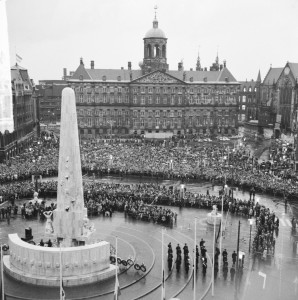
Dodenherdenking means commemoration of the dead. On May 4th, we commemorate all the war victims since the outbreak of World War II. The next day, on May 5th, we celebrate our liberty. The dates are chosen because 5 May 1945 was the day of the German capitulation, which ended World War II in the Netherlands. On Dodenherdenking, the whole country respects a two-minute silence at 8 PM. Commemorations are organized through out the country, where wreaths are laid at war monuments and other places … [Read more...]
Finding collaborators in World War II
1 May 2015 by 6 Comments
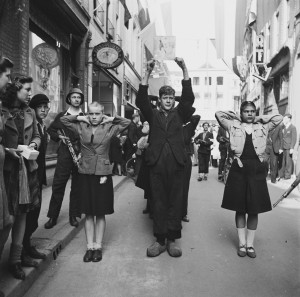
With the 70th anniversary of our liberation coming up next week, I thought I would discuss one of the most important record groups for research into World War II. During World War II, several Dutch citizens collaborated with the German occupation: some joined the National Socialist Movement (NSB), others betrayed Jews or were romantically involved with German soldiers. After the War was over, hundreds of thousands of Dutch citizens were prosecuted for collaboration or treason. If convicted, … [Read more...]
Dutch term – Kerk
27 April 2015 by Leave a Comment
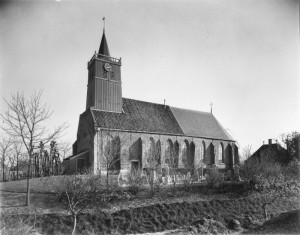
A kerk is a church. Before 1811, the records that the churches kept of baptisms, marriages and burials are the main sources for vital events. … [Read more...]
Dutch term – Oorkonde
20 April 2015 by Leave a Comment
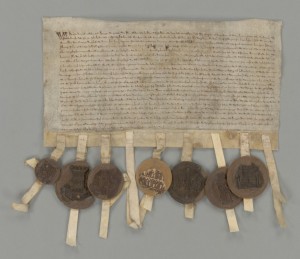
An oorkonde is a charter; a record with seals hanging from the bottom. In the Middle Ages, most transactions went unrecorded, but the ones that were, were recorded in charters. Oorkondes are usually written on vellum or parchment, made from animal skin. With the invention of paper made from rags, charters went out of style although they continued to be used for special occasions, like nobility titles are records of abdication. You can find medieval charters in the archives of old towns … [Read more...]
Dutch term – Archiefvormer
13 April 2015 by Leave a Comment
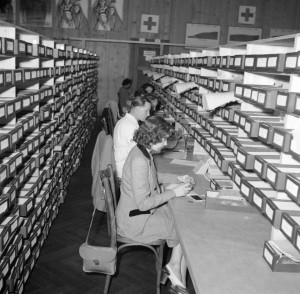
An Archiefvormer is the creator of an archive. Examples of archiefvormers are municipalities, churches, societies, foundations and private persons. Thinking about which archiefvormers your ancestor may have been in contact with is a great way to discover unknown records. Read the article Find your ancestors by understanding how records are created for more information. If you check the finding aid (inventaris), you can see who the archiefvormer was. Most online finding aids will allow you … [Read more...]
Dutch term – Pasen
5 April 2015 by Leave a Comment
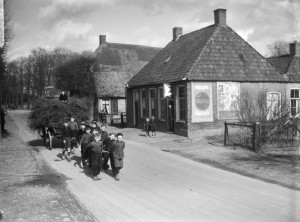
Pasen is the Dutch term for Easter. In the Netherlands, Easter Sunday and Easter Monday are official holidays and most people have the day off. Most of the Easter traditions that are celebrated in the Netherlands are pretty universal, like painting and hiding eggs. In the eastern part of the country there is a more unusual tradition: Easter fires (Paasvuren). For weeks before Easter, people will be busy collecting wood to create a high pile. This is then lit on Easter Sunday or Monday. The … [Read more...]
Dutch term – Achterneef
30 March 2015 by Leave a Comment
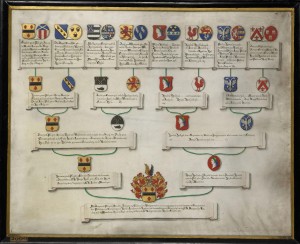
An achterneef (literally: behind cousin) is a male relative. The term covers the English terms great-nephew, first cousin once removed and second cousin. … [Read more...]
Dutch term – Begraven
23 March 2015 by Leave a Comment
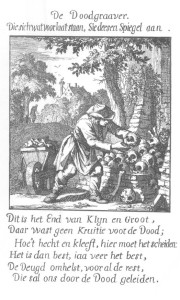
Begraven means to bury. People were usually buried two to five days after they died, sooner if there was an epidemic. Burials were recorded in the Begraafboek (burial book). … [Read more...]