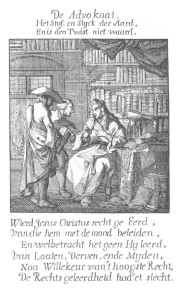
An advocaat is a lawyer. I am often surprised at the number of court cases my ancestors were involved in. Even some of my serf ancestors hired lawyers to defend their rights to cutting trees or taking over the farm against the landlord. Most lawyers would have had a university education. Since 1575, Leiden had a university where people could get a law degree. Other universities followed later. You will recognize these academically trained lawyers by the letters "J.U.D." behind their names … [Read more...]
Dutch term – Schoolmeester
9 March 2015 by 1 Comment
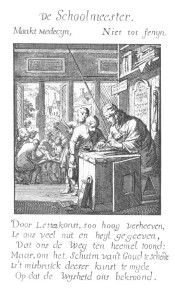
A schoolmeester is a school teacher. Most school teachers taught in small village schools, consisting of one room, where they were expected to teach reading, writing and arithmetic to their pupils. Reading was considered more important than writing, as they could then read the bible. Most children would only go to school for about six years. Children of farmers would be kept home in the summer to help with the harvest and in the winter they would not always be able to attend school if the … [Read more...]
Dutch term – Geslacht
2 March 2015 by Leave a Comment
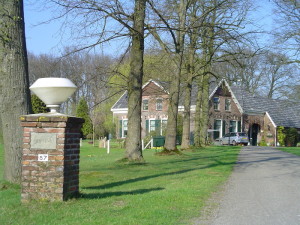
The word geslacht has two meanings: Gender/sex. "Man" or "mannelijk" is male "Vrouw" or "vrouwelijk" is female "Beide" is both "Onbekend" is unknown. Family/house ("Het geslacht Hoitink" = the house of Hoitink). This meaning of geslacht is slightly archaic, a more contemporary way to say this would be "De familie Hoitink" [the Hoitink family]. … [Read more...]
Dutch term – Naastingsrecht
23 February 2015 by 2 Comments
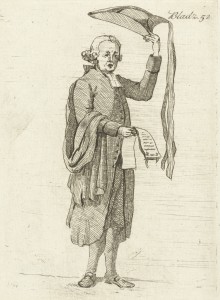
Naastingsrecht was the right to have the first option of buying a property. Whenever a property was sold, a person who had naastingsrecht could match the purchase price and buy the property for himself, cancelling the original sale. Different parts of the Netherlands had different variations of this right. In most regions, next of kin had naastingsrecht. For instance, a younger brother could prevent his older brother from selling the family farm to a stranger by buying it himself. … [Read more...]
Dutch term – Weesmeester
16 February 2015 by Leave a Comment
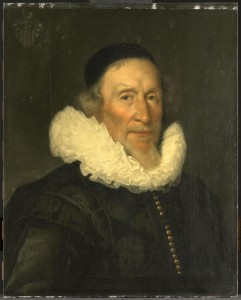
A weesmeester was a government official charged with overseeing the administration of the estates of orphans. They were usually appointed by the city government. Weesmeesters worked for the Weeskamer. Read the article about Weeskamers for more information. … [Read more...]
Dutch term – slager
9 February 2015 by 5 Comments
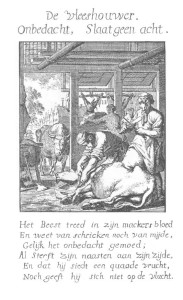
A slager is a butcher. An old term for slager is 'vleeshouwer' or 'vleeschhouwer' (literally: meat cleaver). Poor people did not often eat meat. One of the recurring themes in letters written by emigrants to the United States is their surprise that everyone is able to afford eating meat. These 'spekbrieven' [bacon letters] are one of the reasons why many relatives chose to follow them. … [Read more...]
Dutch term – Poorter
2 February 2015 by 2 Comments
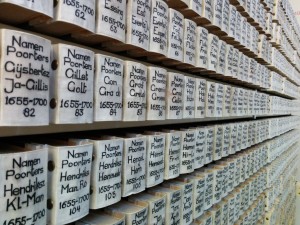
A poorter was a burgher or freeman of a chartered town. Being a poorter conveyed several privileges: Guild membership was often limited to poorters Poorters often were exempt from paying tolls Being a poorter was a requirement for many public offices People could become poorters by being born to a poorter, by marrying a poorter's daughter or by paying a fee. For some cities, the poorterboeken [burgher books] for people who paid to become poorters have survived and can give information … [Read more...]
Case study – the origins of Jan Dirkse van Eps
30 January 2015 by 12 Comments
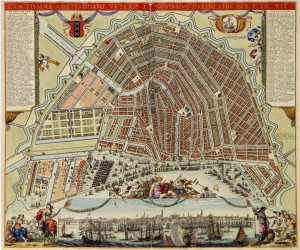
One of my clients asked me to research the origins of her Dutch colonial ancestor, Jan Dirkse van Eps. She graciously allowed me to share the research I did for her on my website, to make it available to other Van Eps descendants. As this article is based on the research report I wrote for her, it will also give you an insight into my work process and the type of research that I do. Unfortunately, the terms of the Amsterdam City Archives website do not allow me to reproduce the scans of the … [Read more...]
Dutch term – Echtscheiding
26 January 2015 by Leave a Comment

Echtscheiding (or scheiding) is the Dutch name for divorce. Up until the last part of the 20th century, divorce was pretty rare in the Netherlands. There are several ways to find out if a couple got divorced. The most common one is to look in the margins of the marriage record, where the divorce will be noted. The divorce will also be recorded in the marriage register, with a reference to the court ruling. You can use this to find the ruling in the court records, which may give more … [Read more...]
Dutch term – Koopman
19 January 2015 by 7 Comments
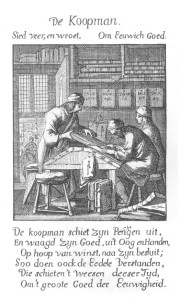
A koopman was a merchant, with the plural being kooplieden. Kooplieden could trade in all sorts of goods, ranging from spices from the Far East, timber from the Baltic or fur from the Americas. Others traded in domestic products like grain, cloth or glassware. One of the nice things about having a koopman in your tree is that they left much more records than the average person: purchase contracts, partnership agreements, declarations of debts, powers of attorney and a range of other … [Read more...]