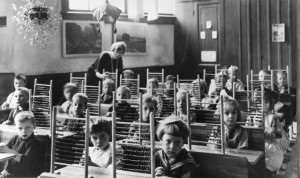
Volkstelling is the Dutch word for census. The first national census was held in 1795 but some local censuses go back to the 16th century. Between 1830 and 1930, a national census was held every ten years. Since then, there have only been four censuses: 1947, 1956, 1960 and 1971. Since the Dutch government keeps the information about its citizens up to date, there is no need to take a census anymore. The census was officially abolished in 1991. For genealogical purposes, Dutch census … [Read more...]
Dutch term: metselaar
20 January 2014 by Leave a Comment
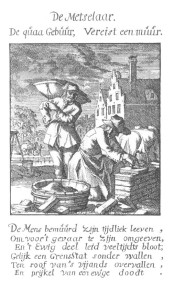
A metselaar is a bricklayer. Since the Netherlands doesn't have many quarries, and all the more mud, brick was and is a popular building material. Brick has been used for buildings since the Middle Ages, first for churches and later for houses too. To prevent fire, many chartered towns issued ordinances that required people to use brick instead of wood or wattle and daub to build their houses. … [Read more...]
Sources for Dutch genealogy – post 1811 cheat sheet
17 January 2014 by 6 Comments
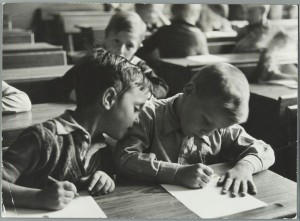
Looking for information about Dutch ancestors in the 19th or 20th century (after the introduction of the civil registration)? This cheat sheet will tell you which sources to consult. … [Read more...]
Dutch term: Register van naamsaanneming
13 January 2014 by 2 Comments
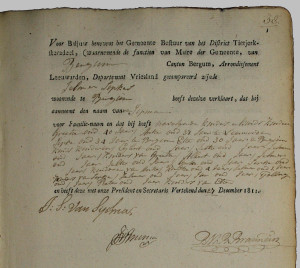
A register van naamsaanneming is a register of name taking. In 1811/1825, people that did not have a last name yet, like people from the northern provinces or Jews, had to register their new name. See the article about name taking records for more information. … [Read more...]
Looking for prostitutes
10 January 2014 by 9 Comments
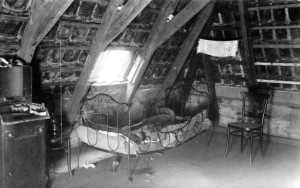
Last week, I went looking for prostitutes. Dead ones. Found them too. Now that I have your attention, let me explain how this came about. … [Read more...]
Dutch term: Louwmaand
6 January 2014 by Leave a Comment
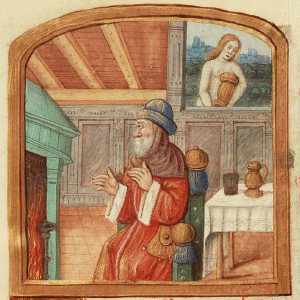
Louwmaand is the old name for January. The origin of the word louw is unknown. … [Read more...]
Dutch term: Nieuwjaar
30 December 2013 by 2 Comments
The term Nieuwjaar means 'new year.' If you want to wish people in the Netherlands 'Happy new year,' you say 'Gelukkig Nieuwjaar!' The new year did not always start on January 1st. During the French occupation (1795-1815), the year started on 22 September. During the Middle Ages, some people used the Christmas style while others used the Eastern style calendar, named after the day that was considered the first day of the year. The Eastern calendar is particularly cumbersome since the timing … [Read more...]
Dutch term: Kerstmis
23 December 2013 by Leave a Comment

The word Kerstmis means Christmas. Traditionally, Christmas was celebrated in the Netherlands by going to to church and celebrating at home by having extra nice food. Dutch people did not give each other gifts for Christmas, as that was done on St. Nicholas' Eve (5 December). Over the last couple of years, Christmas has grown in popularity in the Netherlands so today it is not just a holiday but also a time when many people share gifts. … [Read more...]
Source: church council minutes
20 December 2013 by 4 Comments
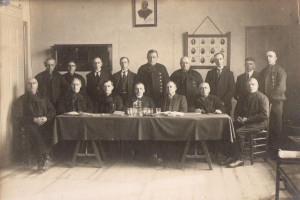
Protestant or Reformed churches have a church council that administers the church. The church council consists of the minister, the elders and deacons. Some churches also appointed guardians who were responsible for the management of the church estates. Especially in earlier centuries, the council was involved with all aspects of the lives of their parishioners, ranging from the baptisms of children to the admonishment of sinners. The minutes of the church council can be a real treasure … [Read more...]
Dutch term: stamboom
16 December 2013 by 1 Comment
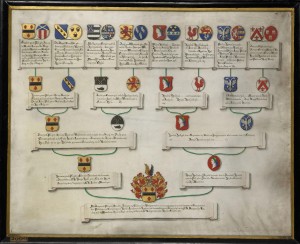
A stamboom is a family tree. Dutch genealogists will say that they practice stamboomonderzoek [family tree research] when they are asked about their hobbies. Searching for your family name in combination with the word stamboom in a search engine may lead you to Dutch publications about your family. … [Read more...]