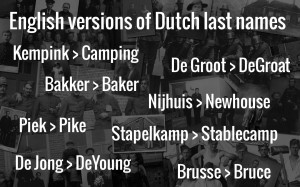
When Dutch people arrived in the United States or other English-speaking countries, often their names got changed. This was either done on purpose, to make the name easier to write and remember, or by accident because the clerk didn't know how to spell the name and wrote it down phonetically. For this reason, a single family name can often be found in many different spellings in different documents. This article gives an overview of the types of changes that names underwent and also gives a … [Read more...]
Dates and times
9 May 2005 by Leave a Comment
List of terms you need to translate dates and times. Note on dates: Dutch dates are written in the form dd-mm-yyyy, so 2-5-1920 means 2 May 1920. … [Read more...]
Patronymics
9 May 2005 by 3 Comments
'Patronymic' literally means 'father's name'. It means that someone calls himself after his father, for example a son of Jan would call himself 'Jansen'. This is similar to the English name 'Johnson'. … [Read more...]
Family relationships
5 May 2005 by Leave a Comment
This page lists the Dutch words for family members and their English translation. … [Read more...]
Using birth records (geboorteaktes) to find your Dutch ancestors
25 April 2005 by 44 Comments
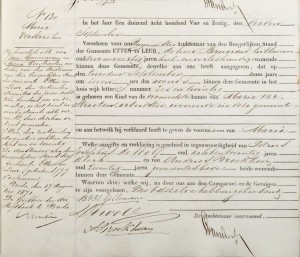
Birth records (Dutch: geboorteakte) are a part of the civil registration and were kept since 1811 (or slightly earlier for some parts of the Netherlands). A birth record lists the following data: Place, date and time of birth Names of parents Name, profession and age of the one registering the birth (often the father) Names, profession and age of the witnesses Often: address where the birth took place … [Read more...]
Marriage record
25 April 2005 by 6 Comments
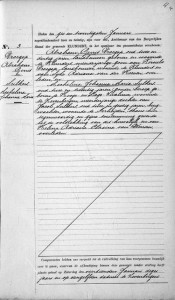
Marriage records are a part of the civil registration, introduced in 1811 or slightly earlier in Limburg and Zeeuws-Vlaanderen. Marriage records contain the following information: Name, age, profession and place of birth and residence of the bride and groom Names of their parents, and if they are still alive their professions and place of residence If any: names of previous spouses (either divorced or deceased) Name, age, profession and place of residence for 4 witnesses … [Read more...]
Death record
25 April 2005 by 13 Comments
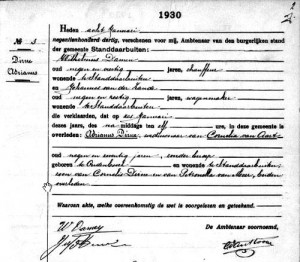
Death records are a part of the civil registration. A death record lists the following data:Place, date and time of death Names of parents Names of spouses Name, profession and age of the one registering the birth Names, profession and age of the witnesses Often: address where the death took place … [Read more...]
Visiting archives
19 April 2005 by Leave a Comment
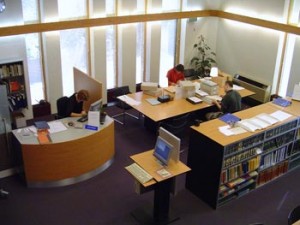
IntroductionArchives in the Netherlands are public and accessible for free. The employees are available to ask questions, but they do not do the research for you. Most of them understand English, but it is wise to bring someone along who speak Dutch to interpret the documents for you. Some archives have a genealogical correspondent who will do research for a fee. … [Read more...]
Civil registration
19 April 2005 by 22 Comments
For the nineteenth and twentieth century, the civil registration is the primary genealogical resource. All the births, marriages and deaths (BMD) were recorded. Usually, only using the civil registration you can compile a 'backbone' of a pedigree that goes back to the late 1700's. … [Read more...]
Church records
19 April 2005 by 5 Comments
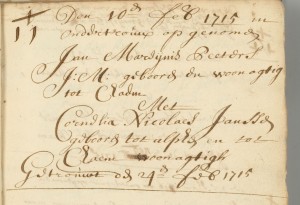
For the seventeenth and eighteenth century, church records provide the most complete records for genealogical research. The church recorded the baptisms, marriages and burials of their members. Many of those records have survived to this day. … [Read more...]