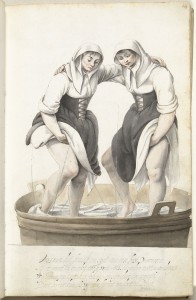
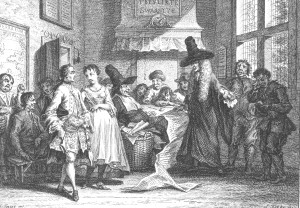
A wasvrouw was a laundress. It was an occupation for poor women, who were usually single or widowed. … [Read more...]
Ask Yvette – How to capitalize Dutch names with prefixes
19 June 2015 by 13 Comments
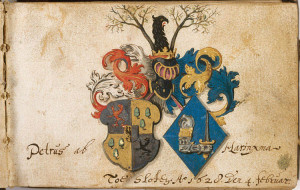
Many Dutch names have prefixes like Ter, Van or Van der. People have asked me if and how they should be capitalized. Here's what the current rules are for Dutch (they're different in Belgium and other parts of the world). A prefix that is preceded by another part of the name is not capitalized. Parts of the name are first names, initials, other prefixes or other last names. Abbreviated prefixes are always lowercase. In other cases, the prefix is capitalized. Examples of Dutch names with … [Read more...]
Quick tip – How to find Dutch genealogy records online
17 June 2015 by 1 Comment
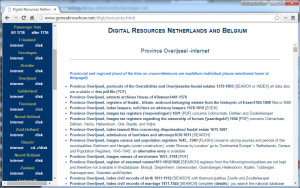
The website Digital Resources Netherlands and Belgium offers links to websites that publish archival records, whether in the form of scans, indexes or transcripts. The links are organized per province. Click the link 'Internet' under the name to see what sources are available online. They also offer links to passenger lists and image collections, which include newspaper websites. … [Read more...]
Dutch term – Meerderjarig
15 June 2015 by 5 Comments
Meerderjarig means 'of age,' having reached the age of majority. What the age of majority was, depends on the time and place. Youngsters could also be declared to be of age by the court, usually with consent of the parents or guardians. Age of majority in the Netherlands Period Age of majority Before 1811 Depends on the region, usually 25. 1811-1838 21 1838-1901 23 1901-1988 21 Since 1988 18 Source Pieter Nieuwland, Friezen Gezocht … [Read more...]
Popular destinations per religion
12 June 2015 by 29 Comments
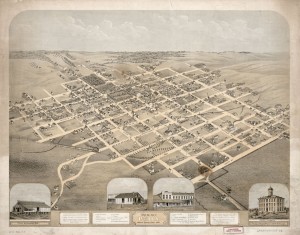
People who emigrated, usually did so in groups of like-minded people. One thing that bound them was religion. If your ancestor was Roman Catholic, he probably went where other Roman Catholics lived and where you find one Christian Reformed emigrant, you will probably find several. Here are some destinations I found in my own research of 19th century emigrants, plus destinations that readers supplied in the comments: Destinations of Dutch Reformed emigrants Chicago, Illinois Clymer, New … [Read more...]
Quick tip – Check marriage records of siblings
10 June 2015 by Leave a Comment
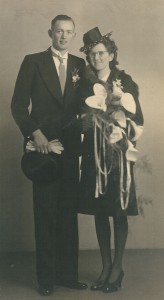
When looking for more information about your ancestor, be sure to check the records of the siblings. Marriage records of the siblings can be very informative. There are two situations when checking marriage records of siblings is especially helpful: If your ancestor married just before the introduction of the civil registration and their siblings married after the introduction of the civil registration. Marriage records created by the civil registration are much more informative than the … [Read more...]
Dutch term – Gewaarmerkte kopie
8 June 2015 by Leave a Comment
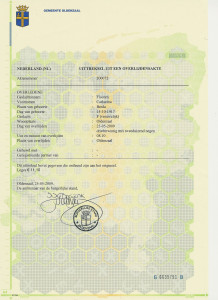
A gewaarmerkte kopie is a certified copy. When ordering a record, like your own birth record, you may be asked if you want a regular copy or a certified copy. Certified copies will be printed on special paper and will have a seal by the municipality guaranteeing authenticity. For genealogical purposes, a regular photocopy will suffice. In fact, a regular photocopy can be more reliable for genealogical purposes than a certified copy since certified copies are sometimes extracted and retyped … [Read more...]
Source – Baptismal record
5 June 2015 by 1 Comment
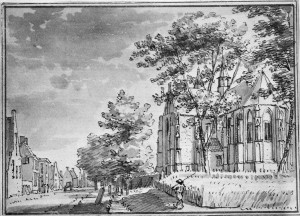
Before 1811, baptismal records are the main source for information about an ancestor's birth date. Baptismal records should have been kept since the Trente council of 1545-1563, but for most areas they only survive since the early to mid 1600s. Most children were baptized within days of being born. In some churches, children were baptized the next Sunday. Others baptized them the same day, or may have waited several weeks. Anabaptists and similar religious only baptized adults, so in that … [Read more...]
Quick tip – Check for logical migration patterns
3 June 2015 by 2 Comments
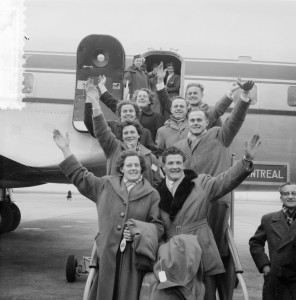
If you find a source that shows that your family originally came from elsewhere, check that the migration path they followed is logical. A few things to watch out for: People usually went from rural areas to urban areas. It's rare to find people moving from an urban area to a rural area, or from one rural area to another rural area. Before say 1850, most people did not move around a lot. Exceptions exist, like skippers, people who worked for fairs and traveling salesmen. Before say 1750, … [Read more...]
Dutch term – Begrafenis
1 June 2015 by Leave a Comment
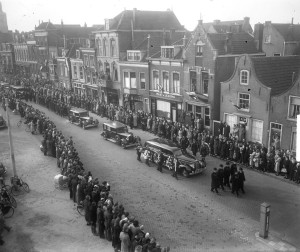
A begrafenis is a burial. Before 1811, the church records of burials are often the best source for the burial date. Some registers include the death date as well. After 1811, death records of the civil registration show when a person died, but they do not contain information about the burial. That information can sometimes be found in family announcements in newspapers or in the burial administration of the churches. … [Read more...]