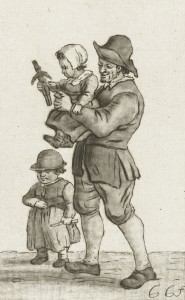
In genealogy, we are used to children having the same last name as their father. But there are several circumstances in which the child could have a different name: If the child used a patronymic, in which case the name of the child would be derived from the father's first name, not his last name (e.g. Pier Hessels, son of Hessel Jans). This mainly happens in the period before the introduction of the civil registration in 1811. If the child was illegitimate, in which case it would have the … [Read more...]
Dutch term – Kaart
13 July 2015 by Leave a Comment
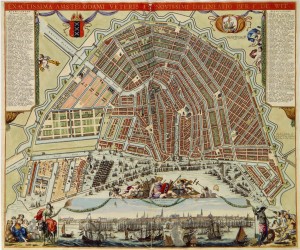
A kaart is a map or a card. In the 17th century, Amsterdam was the map making capital of the world so there are some gorgeous maps waiting for you to see where your ancestors lived. For example, check the Blaeu Atlas at the Erfgoed Leiden website or read about the the facsimile edition of the City Atlas of Frederik de Wit. … [Read more...]
Column – Safe?
10 July 2015 by 1 Comment
"My family tree is safe, I use Dropbox." Such cloud solutions, that automatically stores files online, are popular among genealogists. You don't have to remember to make a copy and can access the files from all your computers, tablets and phones. Your files are safe. Are they? Ensuring future accessibility of your files requires two things: the file must be available, and you must be able to open it. One problem with cloud solutions like Dropbox is that they do not make a back-up … [Read more...]
Quick tip – Are your translations accurate?
8 July 2015 by Leave a Comment
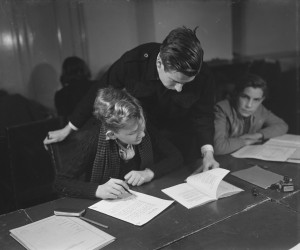
A client sent me a translated marriage record, identifying a nephew as a witness. She had searched for the nephew but could not find any siblings of the person of interest. When I looked at the original marriage record, the witness was called a neef, a term that is used for both nephew and cousin. As it turned out, the witness was a first cousin rather than a nephew. Are you sure your translations are accurate? When you have a brick wall, always go back to the original records to make sure … [Read more...]
Dutch term – Fiets
4 July 2015 by Leave a Comment
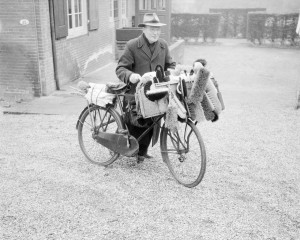
As the Tour de France starts in the Netherlands this week, this is a good time to learn the meaning of a quintessentially Dutch word: fiets (bicycle). Introduction of bikes Fietsen were introduced in the Netherlands in the last part of the 19th century. They were quickly adopted and became the most popular mode of transportation. Fietsen were not just used for personal transportation, but also by businesses (a 'bakfiets' with a container on the front wheel can be used to carry many goods) and … [Read more...]
Ask Yvette – Resources for Jewish genealogy in the Netherlands
3 July 2015 by 5 Comments
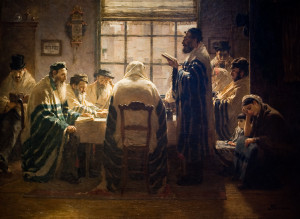
Several people have asked me how to find their Jewish ancestors in the Netherlands. I have researched several Jewish families, but don't read Hebrew so I cannot access all records. Here are some resources that have been useful in my research. Please share your own tips in the comments. Regular records Since the introduction of the civil registration (in 1811 in most parts of the country), Jews were recorded in the regular administrations of births, marriages and deaths and the population … [Read more...]
Quick tip – The name may suggest the place of origin
1 July 2015 by Leave a Comment
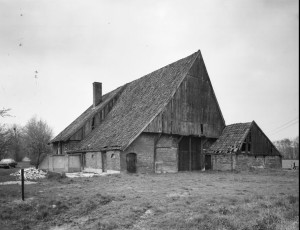
Different regions have different traditions, not only when it comes to naming children but also when it came to choosing surnames. Someone named Bauke Ferwerda is bound to be Frisian, as the suffix -a can mostly be found in the northern provinces and Bauke is a Frisian first name. Janna Geertruida Meerdink is undoubtely from the eastern part Gelderland. Most people in that area used double first names, and the -ink suffix is typical for farm names in the eastern part of the country. Read … [Read more...]
Dutch term – Gevangenis
29 June 2015 by Leave a Comment

A gevangenis is a prison. The modern prison system was introduced in 1811. Many people went to jail, often for petty crimes. Prison records can tell you if any of your ancestors ever went to jail. Read more about prison records. … [Read more...]
11 Myths About Dutch Genealogy
26 June 2015 by 1 Comment
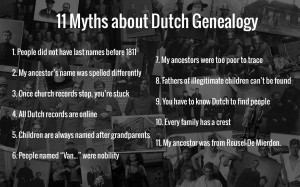
Here are some misconceptions I've encountered that people have about researching their ancestors. Some of them are probably true for other parts of the world too! 1: People did not have last names before 1811 This myth has some truth, as he civil registration of births, marriages and deaths was introduced in 1811 and required everybody to have a surname. But most people already had surnames before 1811. Read more: Find the origin of your name in name taking … [Read more...]
Quick tip – Find graves on photos of churches
24 June 2015 by 3 Comments
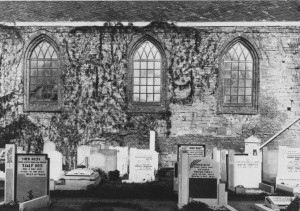
The website of the Rijksdienst voor Cultureel Erfgoed [Cultural Heritage Service] has many photos of churches, often going back to the early to mid 20th century. Some of these photos feature cemeteries. The quality of the photos and scans is often high enough to read the text on the markers. Earlier this year, I found a 1950s photo of a church that the ancestors of my client attended. When I zoomed in, I saw the graves of the family I was researching. I could not believe what I was … [Read more...]