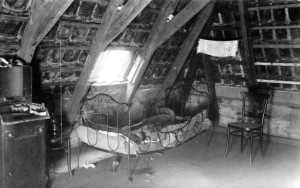
Last week, I went looking for prostitutes. Dead ones. Found them too. Now that I have your attention, let me explain how this came about. … [Read more...]
Quick tip – test the new Brabant archives website
8 January 2014 by Leave a Comment
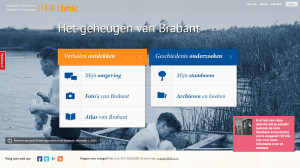
Christian van der Ven, archivist at the Brabant Historical Information Center, just commented on this week's column. He revealed that they are working on a new website, which is now available as a beta. The new website already contains more genealogical sources than the old, so it's well worth a test drive. Check the 'Mijn stamboom' [my family tree] section for the genealogical data. Be sure to send your feedback using the Feedback button! I can already anticipate one question: will there be … [Read more...]
Dutch term: Louwmaand
6 January 2014 by Leave a Comment
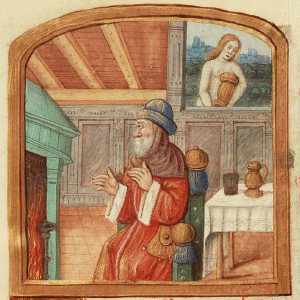
Louwmaand is the old name for January. The origin of the word louw is unknown. … [Read more...]
Column: for granted
3 January 2014 by 8 Comments
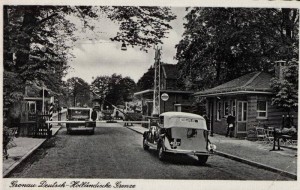
The other day, I was fortunate to discover that two resources that I needed for my research were put online. The Tilburg Regional Archives put up the population registers of Terheijden, a town where some of my maternal ancestors come from. Shortly afterwards, I noticed that the Gelderland Archives put the death duties files online, which allowed me to trace the real estate owned by dozens of paternal ancestors. Once again, I realized how lucky I am to have online access to all these sources. … [Read more...]
Quick tip: resolutions for 2014
1 January 2014 by Leave a Comment
Happy 2014 everybody! Here are some suggestions for resolutions for this year that will help you with your Dutch research. Come visit the Netherlands and see where your ancestors lived Learn Dutch and understand the records. The Dutch Terms section of this site has some basic terms to get you started. Learn to use Dutch websites like WieWasWie Read The island of the center of the world by Russell Shorto to get some idea of what New York was like when it was Dutch (review) Hire me to … [Read more...]
Dutch term: Nieuwjaar
30 December 2013 by 2 Comments
The term Nieuwjaar means 'new year.' If you want to wish people in the Netherlands 'Happy new year,' you say 'Gelukkig Nieuwjaar!' The new year did not always start on January 1st. During the French occupation (1795-1815), the year started on 22 September. During the Middle Ages, some people used the Christmas style while others used the Eastern style calendar, named after the day that was considered the first day of the year. The Eastern calendar is particularly cumbersome since the timing … [Read more...]
Looking back on 2013
27 December 2013 by 4 Comments

The end of the year is fast approaching. And what a year it has been! One of my first highlights of the year was attending Who Do You Think You Are Live in London in February. I was able to stay with an American friend/cousin who was living in the UK at the time. I had not seen her in person since 1997 and was so happy to see her again and finally get to meet her two children. Attending Who Do You Think You Are also gave me the opportunity to meet some great genealogists from around the … [Read more...]
Quick tip: Beware that you don’t translate names
25 December 2013 by 1 Comment
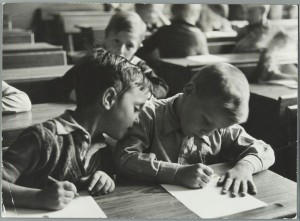
Many genealogists who don't speak Dutch use Google Translate or Chrome to translate Dutch websites into English. But sometimes, these programs translate more than you want. A person named Van der Molen might become From the Mill or a Dhr. Timmerman becomes Mr. Carpenter. The same could happen with geographical names: a village called De Rijp might become The Ripe and a street address Haven 5 might become Harbor 5. Next time you see an English name in a translated text, check the original … [Read more...]
Dutch term: Kerstmis
23 December 2013 by Leave a Comment
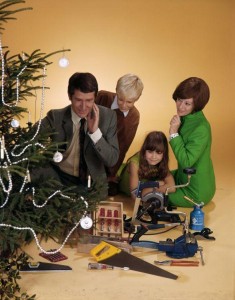
The word Kerstmis means Christmas. Traditionally, Christmas was celebrated in the Netherlands by going to to church and celebrating at home by having extra nice food. Dutch people did not give each other gifts for Christmas, as that was done on St. Nicholas' Eve (5 December). Over the last couple of years, Christmas has grown in popularity in the Netherlands so today it is not just a holiday but also a time when many people share gifts. … [Read more...]
Source: church council minutes
20 December 2013 by 4 Comments
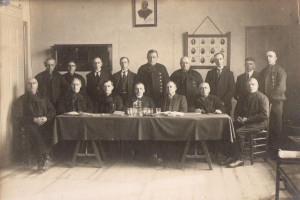
Protestant or Reformed churches have a church council that administers the church. The church council consists of the minister, the elders and deacons. Some churches also appointed guardians who were responsible for the management of the church estates. Especially in earlier centuries, the council was involved with all aspects of the lives of their parishioners, ranging from the baptisms of children to the admonishment of sinners. The minutes of the church council can be a real treasure … [Read more...]