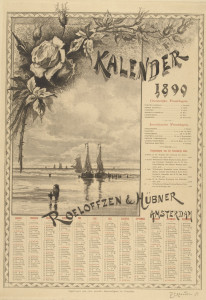
In the Netherlands, and many other countries, dates are written day-month-year. So 3-11-2021 is 3 November 2021, not March 11. Many original records spell out the month to avoid confusion, but you may encounter dates with numbers for the month in genealogical publications. … [Read more...]
About this website
Creating a website like this is a fun activity. There are so many options, so many choices. What do visitors want? What do I want? In this blog I will describe some of the things I encounter in developing and maintaining this website.
Quick tip – Your ancestor was not born in Elders
27 October 2021 by Leave a Comment
In some online trees, you will see "Elders" as the place of birth. This is typically the result of a person who does not speak Dutch finding the reference in a Dutch record. However, "Elders" is not a placename, it means "elsewhere." … [Read more...]
Ask Yvette – Is my last name Dutch?
22 October 2021 by 1 Comment
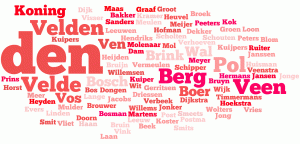
One of the questions I get asked frequently in person is whether a certain surname is Dutch. That can be tricky to answer, especially if a name got spelled differently after emigration. To find out where your name comes from requires genealogical research to trace the line that bears the last name back to its place of origin. That being said, here are a few resources to see if a last name occurs in the Netherlands: Database of surnames in the Netherlands. This is the first place to … [Read more...]
Quick tip – Intermediate course on Dutch handwriting
13 October 2021 by Leave a Comment
FamilySearch has created an intermediate course for learning how to read Dutch handwriting. In the course, Fritz Juengling discusses strategies and tools for learning how to read Dutch records. The free online course consists of sixteen videos. … [Read more...]
The three most relevant archives
8 October 2021 by Leave a Comment
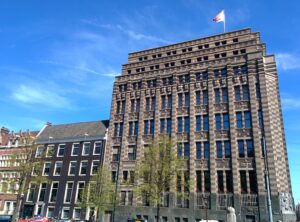
When you are researching, there are archives/repositories at three different levels that may hold relevant records for you. They correspond with the three levels of government: municipality, province, and country. Local or regional archives Each municipality turns over their records to a local or regional archive. Examples of local archives are the Amsterdam City Archives or the Oldenzaal city archives. These municipalities have their own archivist rather than using the services of a regional … [Read more...]
Dutch Genealogy News for September 2021
1 October 2021 by Leave a Comment
This is an overview of the new sources, projects, and other news announced last month. Sources The authorization records of Harlingen 1762-1805 [appointments of guardianships] have been imaged and indexed and can be found on AlleFriezen. The town records of Oosterhout in Noord-Brabant 1328-1813 have been scanned. They can be accessed via the finding aid on the website of the Regional Archives of Tilburg. Several Amsterdam notarial records have now been automatically transcribed and … [Read more...]
Quick tip – The suffix ‘-je’
22 September 2021 by Leave a Comment
In the Dutch language, the suffix '-je' indicates a diminutive. Depending on the preceding word, it can be -je, -kje, -tje, -pje, or -etje; sometimes with an -n at the end. In Low Saxon dialects in the north-east of the Netherlands, -ke, -ske, -ken, -sken, or -chien are used. The diminutive suffix is used for nouns and names. Many female names are diminutive forms of male names. The diminutive form of a name is also used for a young child, so studying the name in context is necessary to … [Read more...]
The legal status of women in the Netherlands in 1664
17 September 2021 by 2 Comments
Here are some details about the legal status of women in the Netherlands in 1664, as discussed in a book about Romano-Dutch Law. Legally, there is not much difference between men and unmarried women. [This is how the section of the book on rights of women starts, and then goes on to state several differences!] The minimum age to marry is 14 for men and 12 for women, with parental permission. Without parental permission, the minimum age to marry is 25 for men and 20 for women. Being … [Read more...]
Quick tip – Mind the long S
8 September 2021 by Leave a Comment
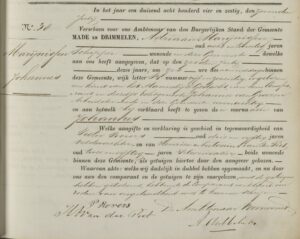
Up until well into the twentieth century, there were two different ways to write the letter 's' in Dutch (and other languages): the regular 's' and the long 's'. The long 's' looks like an 'f' without the crossbar. The long 's' is used in different situations. In words with double 's,' the second 's' is often written in the long form. When transcribing names or words with a long 's', make sure to transcribe it correctly as an 's.' For example, the name of my ancestor in the birth record … [Read more...]
Dutch Genealogy News for August 2021
3 September 2021 by 1 Comment
Here is an overview of the new sources, websites, and news about archives announced last month. Sources Population registers (family cards) of The Hague and Loosduinen for the period 1913-1939 are now available in better quality at the website of the The Hague City Archives. The index was corrected and new full-color scans were made. Scans including people born less than 100 years ago are not shown. Census records and population registers of Boxtel between 1810 and 1938 are now … [Read more...]