When we find our ancestor in one record, we can often use it as a stepping stone to finding other records. The record can be like a loose thread to unravel a greater yarn. Here are some examples: A marriage record may have a note in the margin about a divorce. It should name the court and date of the divorce. You can use this to find the case file in the court records. A marriage record has supplements that are abstracts of other records. You can use these to find the originals. It … [Read more...]
Quick tip – Cadastral records don’t always show the current owner
29 May 2019 by Leave a Comment
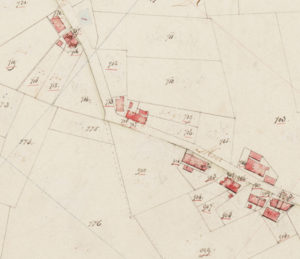
In cadastral records, you may encounter the situation where your ancestor appears as owner of real estate long after his death. This happens if the estate remains undivided, for example if there is a surviving spouse. Sometimes, the cadastral records are corrected to show the heirs, but sometimes the deceased owner remains on the books. See the article about Laurens Smulders for an example. … [Read more...]
Quick tip: Find magazines and journals on Delpher
22 May 2019 by Leave a Comment
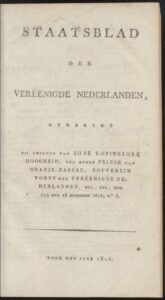
Many out-of-copyright magazines have been scanned and are available via Delpher. Delpher has digitized over 5.7 million pages from 470 magazines since the 1800s. Some categories are: Government publications, such as the Staatsblad van het Koningrijk der Nederlanden [National journal of the Kingdom of the Netherlands], where new laws and regulations are published. Professional journals, just as Nieuwe bijdragen ter bevordering van het onderwijs en de opvoeding [new attributions for the … [Read more...]
Quick tip – Use the Dutch Genealogy Search function
15 May 2019 by Leave a Comment

Do you have a question about Dutch Genealogy? This website contains almost a thousand articles about Dutch sources, terms, and research strategies. Try searching for your term in the search box in the top right corner of the website. Examples: English versions of Dutch first names Using search engines How to find my immigrant ancestor in the Netherlands How to find the father of an illegitimate child How to capitalize Dutch names with prefixes Cheat sheet for records after … [Read more...]
Quick tip – Search without the last name
1 May 2019 by 1 Comment
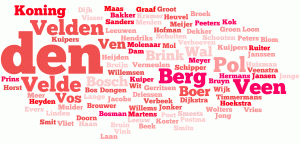
If you can't find the person you're looking for, try searching without the last name. Before 1811, last names were not fixed in many parts of the country. People may appear in records using farm names (in the eastern part of the country) or patronymics (everywhere else), or even under a different last name. By searching for other characteristics, such as the first name of the person you're looking for and their father's first name, you may find people even if they're hiding under a different … [Read more...]
Quick Tip – Dutch Genealogy at The Genealogy Show in Birmingham, UK
24 April 2019 by 1 Comment

Mark your calendars: on 7 and 8 June 2019, The Genealogy Show will be held in Birmingham, UK. There will be two talks featuring research in the Netherlands: On Friday 7 June, John Boeren will give a presentation about "How to Start Your Research in the Netherlands." On Saturday 8 June, Yvette Hoitink will give a presentation about "Dutch Genealogy 101: Finding Your Ancestors from the Netherlands." Please check The Genealogy Show's website for the full program, which include … [Read more...]
Quick tip – “Alhier” and “Elders” are not place names
10 April 2019 by 2 Comments
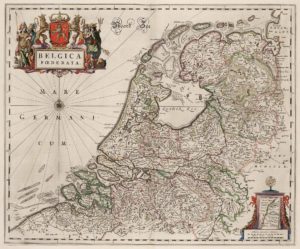
Sometimes, you will encounter the term alhier and elders in a record to indicate a place of origin or residence. These are not place names, but mean "in this location" and "somewhere else," respectively. Hattip to Ellee Brooks who gave the "elders" tip in a comment. … [Read more...]
Quick tip – Is that an every-name index?
27 March 2019 by Leave a Comment
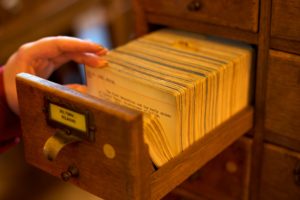
Not all indexes include everybody in the record. Examples of indexes that miss people are: Indexes of baptisms, that include the child and parents but not the witnesses Indexes of deeds, that only index the grantor but not the grantee, or list both the grantor and grantee, but not the neighbors mentioned in the record Indexes of wills, that only include the first testator, but not the spouse. Why indexes may be incomplete Indexing is time-consuming, and there's far more … [Read more...]
Quick Tip – Browse the Whole Book
13 March 2019 by Leave a Comment
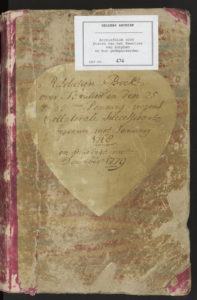
When you're researching a family, indexes may help you to find the exact record you need. But it can be worthwhile to browse the whole book. Here are some things I learned from browsing the whole book: I've found records of my ancestors that I didn't find in the index, either because the name was spelled differently in the record, or because the indexer made a mistake. My ancestors were mentioned as the owners of neighboring property in many deeds that were only indexed by the buyer … [Read more...]
Quick tip – Transfer your DNA to Other Companies
27 February 2019 by Leave a Comment

If you have recent Dutch ancestors, you may not have a lot of matches when you take a DNA test since DNA testing is not that popular in the Netherlands. To increase your chances of finding Dutch cousins, transfer your DNA results to other websites such as MyHeritage, FamilyTreeDNA, and GedMatch. Testing at Ancestry and 23andMe can also increase your chances of finding matches, since those companies don't accept uploads. See the article Dutch DNA Testing Strategy for more information. … [Read more...]