Automatic translators like Google Translate can be a big help if you don't speak Dutch. However, many older records use terms that no longer exist in modern Dutch, or that have shifted meaning. Automatic translators are also notoriously bad at translating words that may have multiple meanings. An example is the sentence: "Zijn neef was zijn getuige" which Google translates as "His cousin was his witness." However, the Dutch word "neef" can mean both cousin and nephew, which can make a big … [Read more...]
Quick tip – Use Past and Next Places in Population Registers
30 October 2019 by Leave a Comment
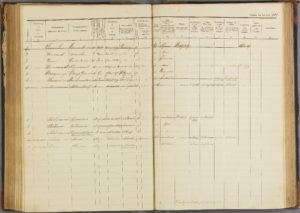
Population registers are a wonderful way to trace where our ancestors were living between 1850 and 1920. The registers give an overview of the people in the household. If someone moved into the household, the register should indicate the previous place of residence. If they moved within the municipality, the previous place will be indicated as their former address or the book and page number. If the person came from elsewhere, it will list the name of the municipality or … [Read more...]
Quick tip – Dutch Emigrants to Australia database
16 October 2019 by Leave a Comment

The National Archives has a database of Dutch emigrants to Australia between 1946 and 1991. The database may only be used for historical research. The database is compiled based on the card catalogs that were created by the Dutch consulates in Sydney, Melbourne, and Brisbane between 1946 and 1991. The cards were organized by heads of household and contain information about the whole family. Only the head of household is indexed. Contents of the database The database provides basic data … [Read more...]
Quick tip – Use DNA to find Dutch cousins
9 October 2019 by Leave a Comment
DNA testing is becoming more popular in the Netherlands. Many Dutch people test at MyHeritage, though some also test with other companies such as Ancestry, FamilyTreeDNA, or 23andMe. To find Dutch cousins, you can take a DNA test. You will then get a list of people who tested at the same company who share DNA with you. The more DNA you share, the closer the relationship. See the article Dutch DNA testing strategy for more information to maximize your chance of finding cousins. … [Read more...]
Quick tip – Don’t assume that coat of arms is yours
25 September 2019 by Leave a Comment
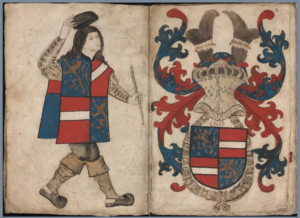
Many people mistakenly believe that finding a coat of arms with your surname means it's "your" coat of arms and that you're entitled to use it. That's not how it works. The coat of arms may have been used by a different family with the same name. You will have to trace your line back to find out if one of your ancestors ever used it. Even that doesn't mean that it's yours to use. For more information, see Ask Yvette - Does my Family have a Coat of Arms? … [Read more...]
Quick tip – Atlas of Mutual Heritage
11 September 2019 by 1 Comment
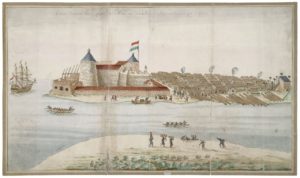
The website Atlas of Mutual Heritage contains images of places associated with the Dutch East India Company (VOC) and West India Company (WIC). These include trade posts and former colonies in Africa, Asia, Australia, and North and South America. For some of these places, the VOC and WIC archives contain the oldest surviving records and images. You can navigate the website by clicking on places on the map, or by searching for place names in the top left corner. … [Read more...]
Quick tip – Was that lost record transcribed or indexed?
21 August 2019 by Leave a Comment
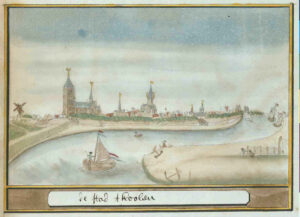
Some parts of the Netherlands, especially Zeeland, suffered heavy record loss during World War II. Church records and court records may have been lost as a result. Most civil registration records survive, because duplicates were made of those at the time of creation, and both copies were in different locations. Before World War II, some people created transcriptions or indexes for their own use. These derivative sources may survive even if the original records were lost. Archives have been … [Read more...]
Quick tip – What Interpretations Were Added to the Abstract?
8 August 2019 by Leave a Comment
I recently came across a publication that abstracted Dutch records. In the publication, the compiler had grouped a marriage record and two baptismal records together. The parents of the child in the first baptismal record, a year after the marriage, had the same names as the married couple. The name of the child in the second baptismal record matched the bride's, and that child was baptized 22 years before the marriage. By the way he grouped the records, the compiler of the abstracts implied … [Read more...]
Quick tip – Use Scanning on Demand
31 July 2019 by 2 Comments
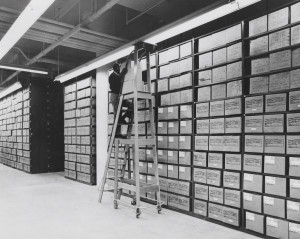
Research in original sources can be difficult if you do not live near the repository. Good news: several archives in the Netherlands offer scanning on demand from their finding aids. They will scan the records for you. Often, they're put online for everyone to use, while other archives choose to send you the files personally. Some archives charge a fee, others provide this great service for free. See the list of archives that provide free scanning-on-demand. … [Read more...]
Quick tip – Some records may be in French (1795-1813)
3 July 2019 by Leave a Comment
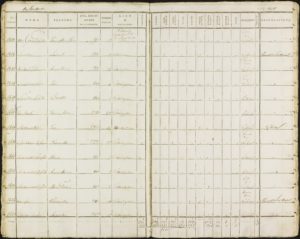
From 1795 to 1813, the Netherlands was under French rule. As a result, some of the records created in this period were in French. This includes the earliest registers of the civil registration of births, marriages, and deaths. The civil registration was introduced in 1811 in most parts of the country, and as early as 1794 or 1795 in parts of Zeeland and Limburg. The records for the period up to 1813 are in French. The census taken around 1811 is also in French. … [Read more...]