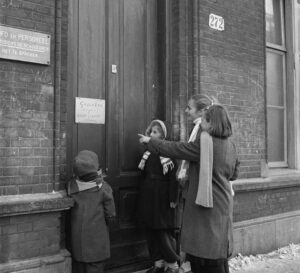
If you are planning to do on-site research in the Netherlands, check their website or contact the archive to make sure they are open. Most archives have announced their reading rooms are closed until further notice, to prevent spreading COVID-19. Check the opening hours ("openingstijden") and look for news announcements mentioning COVID-19 or corona. … [Read more...]
Quick tip – AncestryHour Interview with Yvette Hoitink
7 March 2020 by Leave a Comment

Yvette Hoitink was interviewed by Daniel Loftus for the first episode of "Meet who you tweet" at AncestryHour. Daniel is a young genealogist from Ireland and Ambassador for Youth for #AncestryHour, the weekly Twitter meetup for genealogists across the world. Go to the interview. … [Read more...]
Quick tip – Why did they not marry in May?
4 March 2020 by Leave a Comment
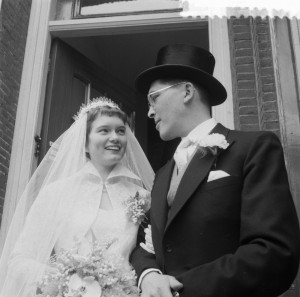
If your ancestors were farm workers in the 1800s, and did not marry in May, check the birth date of their oldest child. Most work contracts ran from May to May. Farm workers who planned on getting married, often married in May so they could then move in together and maybe lease their own farm. When there was a baby on the way, it was customary to marry as soon as possible and not to wait until May. So if you find that your farming ancestors married in a different month, check the birth … [Read more...]
Quick tip – Don’t Stop Looking When They’re Dead
26 February 2020 by Leave a Comment
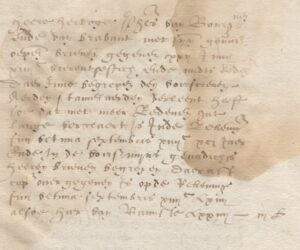
Sometimes, relevant records are produced long after the person of interest is dead. Here are some examples: An estate may remain undivided during the surviving spouse's lifetime. The records of how the estate was divided and who the heirs were might be decades later. A record may have been copied at a later time, for example as part of court proceedings or a chartulary. The original record may not survive, but the later copy might. Land records may include details about the … [Read more...]
Quick tip – Dutch DNA is often identified as something else
12 February 2020 by 3 Comments
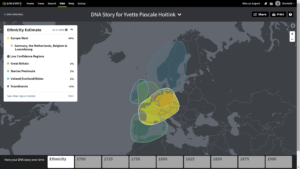
Many Dutch people taking a DNA test are surprised by the ethnicity predictions. Instead of Dutch, they're predicted to be French, German, English, or Scandinavian. When you think about the history of North-Western Europe, this is not surprising. The North Sea was the highway of the Middle Ages, with many people traveling for trade or pillage. During the great migrations, whole populations moved across the continent, leaving descendants in different places. And trade between the Netherlands … [Read more...]
Quick tip – Patronymics are Often Misindexed
5 February 2020 by 2 Comments
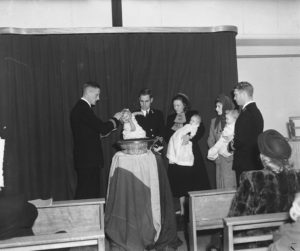
Before 1811, in some parts of the Netherlands, people went by patronymics only. These are names derived from the father's name, like Jansen = son of Jan and Pietersen = son of Pieter. Let's say we have a baptismal record mentioning a child named Dirk, son of Jan Pietersen. No last name or patronymic was indicated for Dirk. His father would be indexed as Jan Pietersen, but Dirk himself could be indexed in a genealogical database three different ways: Dirk [no last name] Dirk Jansen … [Read more...]
Quick tip – Did they need dispensation to marry?
29 January 2020 by 1 Comment
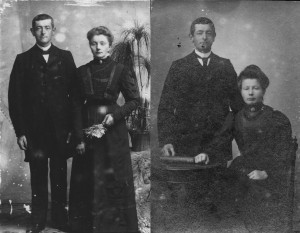
If a couple that wanted to get married was related, either by blood or by marriage, they may have needed dispensation. For example, until well into the 1900s, it was illegal to marry your deceased spouse's sibling. My great-grandfather needed royal dispensation for his marriage to his late wife's sister. Marrying your first cousin or other close relative also required dispensation. These dispensations can hold key information about the family relationship. For an example, see My … [Read more...]
Quick tip – Use an old Dutch-English dictionary
22 January 2020 by Leave a Comment
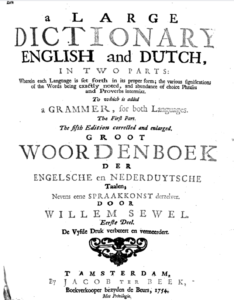
Older Dutch records often use words that no longer exist in modern Dutch, or that have changed meaning. Modern dictionaries or automatic translators will often get it wrong. Using an older Dutch-English dictionary may help you understand the meaning. One such dictionary is A Large Dictionary English and Dutch, where the second half is Dutch-English. The dictionary is from 1754. … [Read more...]
Quick tip – New website Amsterdam City Archives
8 January 2020 by 2 Comments
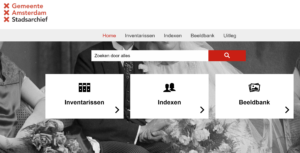
The Amsterdam City Archives is changing the part of their website to search the finding aids, indexes, and image bank. One great new feature is that the indexes search function now searches all indexes at once. You can use * as a wildcard to search for spelling variations like Jans* for Jans, Jansen, Janszen, and Janssen. The new image viewer no longer requires Flash, which used to cause problems on many systems. Another improvement is that the website is now mobile-friendly. The … [Read more...]
Quick tip – Trace enslaved people by their owners
20 November 2019 by Leave a Comment
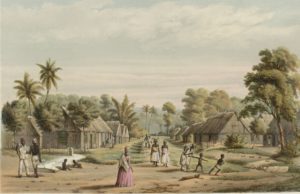
If you are researching enslaved people in the former Dutch colonies like Suriname and the Netherlands Antilles, you need to trace their owners. Enslaved people created few records themselves, but their owners may have created records that mention them. Here are some examples of records created by owners that may include enslaved people: Last wills, disposing of slaves or stipulating their manumission Estate inventories, where slaves are included as property Notarial records … [Read more...]