Did you know that an estimated 98% of people in the Netherlands have an immigrant ancestor somewhere in their trees in the past 500 years? They could be descendants of German laborers, French Huguenots, Swiss or Scottish mercenary soldiers, people from former Dutch colonies like Suriname, the Dutch East Indies (now Indonesia), or the Netherlands Antilles, or more recent immigrants like guest workers from Morocco or Turkey, or refugees from Iraq or Syria. … [Read more...]
Quick Tip – Unusual Name or Transcription Error?
8 July 2020 by 1 Comment
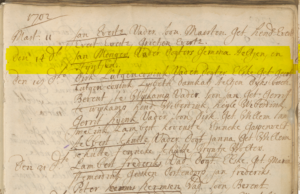
In my tree, I had one set of triplets: Gemma, Aeltjen, and Stijntjen, daughter of Jan Mengers. They were baptized in the Dutch Reformed Church of Winterswijk on 14 March 1702. I first learned about them in the transcribed records that I bought as a teenager and was excited about the special find. I descend from Aeltjen. I haven't been researching this line for a while, but the other day there was a social media post about twins, triplets, and other multiple births, and I shared my triplet … [Read more...]
Quick tip – It’s All About the Dash
24 June 2020 by Leave a Comment
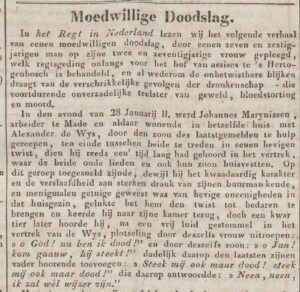
When we research our ancestors, it's easy to focus on the vital events. When was a person born, when did they marry, when did they die? If we're not careful, this reduces our ancestors to names and dates. Take my ancestor Johannes Marijnissen (1806–1844), for example. That dash between his birth and death date represents a full, though short, life. A life in which he went to school long enough to be able to write, married, lost his mother, had children, lost a child, lost his wife, married … [Read more...]
Quick Tip – Living People are not Easy to Find
27 May 2020 by 2 Comments
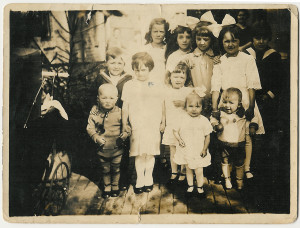
Because of strict privacy rules in the Netherlands, living people are not easy to find. In general, records of people born less than 100 years ago are not public. Here are some sources for researching people in the 1900s that may help you to find living relatives. Another option is to take a DNA test. Because Dutch people are careful of their privacy and most already have pretty complete trees, DNA testing is not that popular. See the Dutch DNA testing strategy for tips on maximizing your … [Read more...]
Quick tip – Check Both Archives For Civil Registration Records
20 May 2020 by 1 Comment
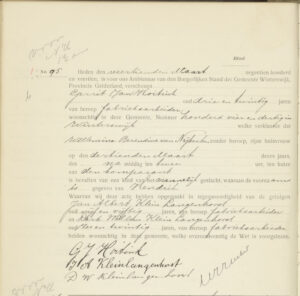
When civil registration records are created, two original copies are made. They are duplicate originals and both have the same legal standing. One is kept at the local level, and can now often be found in municipal or regional archives. The other is kept at the provincial level, originally in court houses but now in the archives in the provincial capital. It is worthwhile to check both archives for the records: One archive may have indexed the records while the other did not One … [Read more...]
Archives preparing to re-open
13 May 2020 by 2 Comments
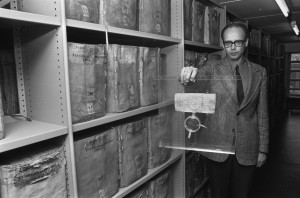
Most archives in the country have closed their doors during the corona crisis. Archives are now preparing to re-open, often with restrictions on the number of visitors in the reading room and new seating plans and routes that allow patrons to keep their distance. I expect all archives to be open again by June 1st. Archives who offer scanning-on-demand will also restart that service (if they haven't already) though they may have to work through their backlog first and it may take longer … [Read more...]
Virtual Pilgrim Event Leiden400 on 16 May
6 May 2020 by Leave a Comment
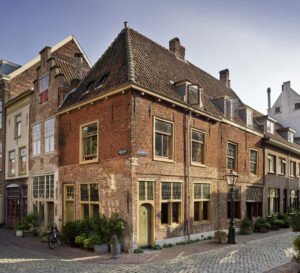
On Saturday May 16, the online opening of the Pilgrim Year Leiden400 will take place! The Pilgrims lived in Leiden from 1609 to 1620, when they left for America. Get to know Leiden during the virtual event, which will be in English. Take a city walk through the historic center, and meet people who will tell you about Leiden in the time of the Pilgrims. The tour will take you to: Museum of Ethnology Museum De Lakenhal, about the textile industry Onze Lieve Vrouwekerk, the Walloon … [Read more...]
Quick tip – Website War Lives
29 April 2020 by Leave a Comment
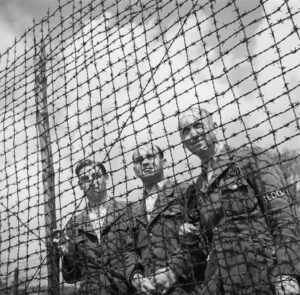
The website War Lives documents the lives of people during World War II using original records from the period. The website shows a time line for each person, and links to the sources that were used to compile the information. Sources include war graves, databases of prisoners in camps in the Netherlands and the East Indies, documentation about resistance groups, cards of people in Japanese internment camps in the Dutch East Indies, and lists of victims killed in concentration camps in … [Read more...]
Quick tip – Achterhoek resources at Genealogiedomein
15 April 2020 by 1 Comment
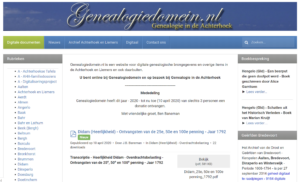
The website Genealogiedomein has resources for research in the eastern part of Gelderland, the area known as the "Achterhoek." Available resources include: Transcribed church records before 1811 Transcribed civil registration records after 1811 Indexed census records Indexes or transcriptions of court records Indexes or transcriptions of tax records Indexes or transcriptions of notarial records Links to online scans on other websites. The resources are organized by … [Read more...]
Quick tip – Blaeu atlas
8 April 2020 by Leave a Comment
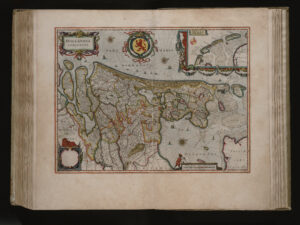
I love to use old maps to see where my ancestors lived. One of the highlights in the history of cartography is the world atlas created by Willem Blaeu in 1662. Erfgoed Leiden, the archives in Leiden, have digitized their Blaeu atlas. You can browse the atlas via Bladeren door Blaeu [Browse Blaeu]. Klik the pink button "Start met Bladeren" to browse the atlas. You can filter by: album [volume] werelddeel [continent] land [country] plaats [town] The names of the geographic … [Read more...]