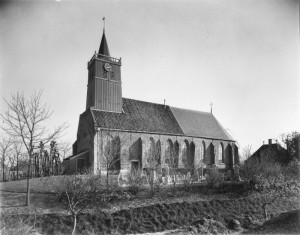
Church membership records or lidmatenboeken record the members of a church. Church membership records are typically kept by protestant churches, like the Dutch Reformed Church. In the protestant faith, people become members by confession of faith as adults. This is different than in the Roman Catholic Church, that considers people as members from the moment of baptism, often in infancy. Structure of church membership records Church membership records are typically kept in chronological … [Read more...]
Dutch term – Boedelscheiding
10 October 2022 by Leave a Comment
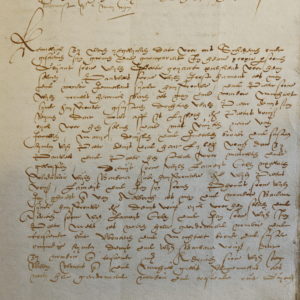
A boedelscheiding is an estate division. This often happened after someone died. An estate division record will include details about the estate and will list who got what. These records can typically be found in notarial records, or in voluntary court records before 1811 in regions where there were no notaries. If there was not much to divide, the estate may have been divided informally without there being an official record. … [Read more...]
Dutch term – Beschikbaar, beschikbaarheid
26 September 2022 by Leave a Comment
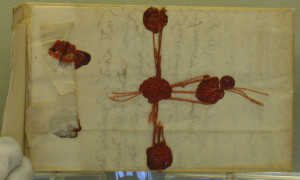
Beschikbaar means available; beschikbaarheid means availability. You may come across the terms in finding aids and texts discussing how to consult records. For example, a finding aid may include a section about availability to discuss where the records are kept, how they can be accessed, whether they are available online, or whether there are access restrictions to consider. … [Read more...]
Researching Military Ancestors in the Netherlands – Before 1795
23 September 2022 by 1 Comment
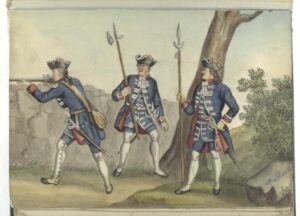
I often get questions about finding military ancestors, and thought I would write a few posts about that. I will start with the early period, before 1795. Before 1795, most soldiers were professional soldiers, not conscripts. The Dutch Republic (1588-1795) hired both Dutch and foreign men. Often, whole regiments were hired, including from Scotland, Switzerland, and Germany. The regiments would be stationed in garrison towns throughout the republic, changing every few years. Some soldiers … [Read more...]
Dutch term – Grondwerker
19 September 2022 by Leave a Comment
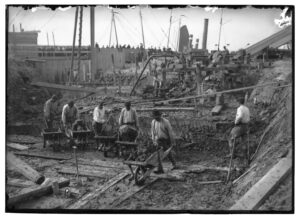
A grondwerker (literally: ground worker) was a digger. Diggers could be employed by builders, to dig foundation trenches, or by canal builders. It was hard, low-paying work. … [Read more...]
Dutch term – Koninkrijk
12 September 2022 by Leave a Comment
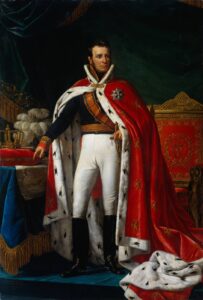
Koninkrijk means kingdom. The Netherlands was the Dutch Republic until 1795, when the French occupied the country. It became the Kingdom of Holland in 1806, with Louis Napoleon as its first king. It was part of the French empire from 1810 to 1813. After the defeat of the French, it became the Kingdom of the Netherlands in 1813. The House of Orange has supplied the monarchs ever since. Kings of Holland Louis Napoleon (1806-1810) Kings and Queens of the Netherlands Willem I … [Read more...]
Dutch Term – Nederlands Hervormd
29 August 2022 by 4 Comments
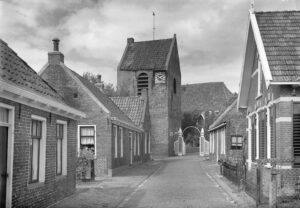
Nederlands Hervormd means Dutch Reformed, a protestant religion. You may come across the term in population registers or church records. The Dutch Reformed church adopted that name in 1816. Before that, it was known as Nederduits Gereformeerd [Nederdutch Reformed]. There are many other protestant religions that split off from the main Dutch Reformed church, including Gereformeerd [Christian Reformed]. … [Read more...]
Dutch term – Huur
15 August 2022 by 1 Comment
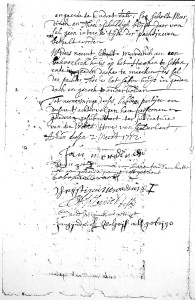
Huur is a noun meaning rent. The verb huren means to rent, and verhuren means to let out (huren is from the viewpoint of the renter, verhuren from the viewpoint of the owner). Many people rented houses and/or land. Historically, most people in the Netherlands were too poor to own their own houses, and rented them instead. The owners were often richer people in the town, noble families, churches, or (especially in earlier periods), monasteries and convents. Some rental contracts were made … [Read more...]
Dutch term – Keuken
8 August 2022 by Leave a Comment
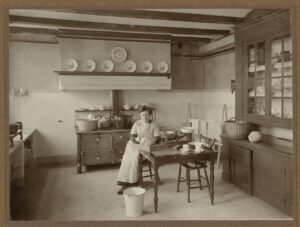
The keuken is the kitchen. You may come across the term in estate inventories, where the items in the house are tallied by room. Kitchens originally had open fires, then hearths, and in the 19th and 20th century this gradually changed to stoves. Small houses where poor people lived did not typically have a separate kitchen. They would cook over the hearth fire or furnace in the living room. … [Read more...]
Dutch term – Naaien, naaister
25 July 2022 by Leave a Comment
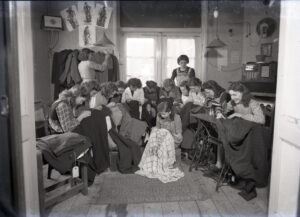
Naaien means to sew. A naaister is a seamstress. In the past, professional naaisters were typically poor women, though women of all classes were taught the basics. Naaien could be done from home, and was an employment possible for women with young children. It is one of the few occupations open to women with children out of wedlock, who would rarely be welcome to work as servants in "respectable" households or stores. … [Read more...]