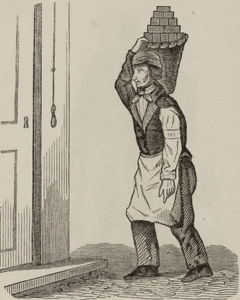
A turfdrager was a peat carrier. Peat was an important fuel, both for private homes and for businesses like breweries and bakeries. An abstract of the instructions for the peat carriers in Leeuwarden from 1660 gives an impression of the regulations that a peat carrier was expected to live by. Articles that regulate the peat carriers of this city Nobody will be admitted as peat carrier without the consent and approbation of the magistrate of the city. Peat carriers are required … [Read more...]
Dutch term – Heemkunde
2 April 2018 by Leave a Comment
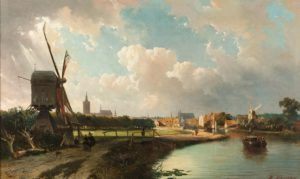
"Heemkunde" is the study of the home environment. The word "heem" means home or place of origin. "Kunde" is study or science. Many towns or regions have their own heemkundevereniging, historical societies. They will often give lectures, organize excursions, or have a magazine dedicated to the history of the area. Some heemkundeverenigingen have a genealogy section. They are great places to ask to identify or locate old family photos. The Stamboomgids website has a list of … [Read more...]
Dutch term – Vrijdag
30 March 2018 by Leave a Comment
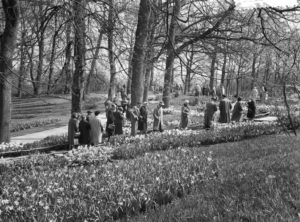
Vrijdag is the Dutch term for Friday. Goede Vrijdag is Good Friday. … [Read more...]
Dutch term – Maandag
12 March 2018 by Leave a Comment
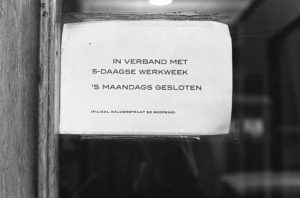
Maandag is the Dutch word for Monday. It is also a (rare) family name. … [Read more...]
Dutch term – Slavenhandel
26 February 2018 by 1 Comment
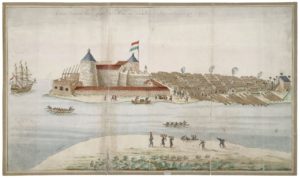
Slavenhandel is the slave trade. The Dutch West India Company was heavily involved in transporting slaves. They had an outpost in Elmina on Africa's Gold Coast, where they gathered the enslaved people bought or captured in Africa. Ships would sail from Amsterdam with merchandise to buy slaves on the local slave markets in Africa, from where they would bring them to the West Indies or New Netherland. On the way back, the ships brought the proceeds from the colonies, such as sugar, tobacco, and … [Read more...]
Dutch term – Gezin
5 February 2018 by 4 Comments
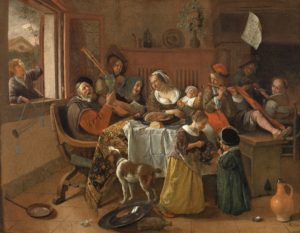
A gezin is a nuclear family, consisting of a couple and their children. Other family members who lived in the same household can be considered part of the gezin too. … [Read more...]
Dutch term – Haaldode
8 January 2018 by Leave a Comment
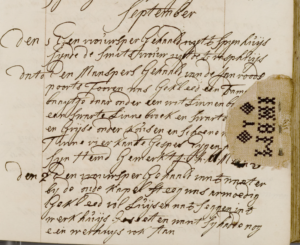
A haaldode is a dead person that was retrieved. I have only ever seen the word used in Amsterdam records, but it may have been used elsewhere as well. In Amsterdam, a lot of people were living in poverty by the end of the 1700s. People died in the streets or drowned in the canals. Their bodies were retrieved and brought for inspection to a hospital at the Overtoom. They were recorded in a special register of haaldoden. If their identity was unknown, the record would include a description of … [Read more...]
Dutch term – Familiebijbel
25 December 2017 by 2 Comments
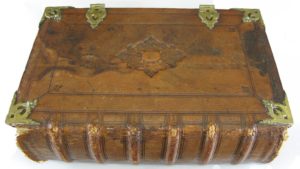
A familiebijbel is a family bible. Some Dutch families recorded births, marriages, and deaths in their bibles. Familiebijbels were not as common in the Netherlands as they were in other parts of the world. Until the 1900s, a large part of the population was illiterate and only richer people were able to create their own records. You rarely see family bibles cited in Dutch genealogical publications. The records kept by the churches and civil registration are readily available, include the … [Read more...]
Dutch term – Brand
18 December 2017 by Leave a Comment
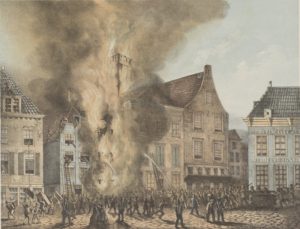
Brand is the Dutch word for "fire." Fire was a major threat to any town. Fires effect the available records. The obvious connection is that some records are destroyed by fires. Examples are Enschede town records prior to 1862 and Varsseveld town and church records prior to 1723. Fires or the threat of fire can also create records: Lists of houses that burned Lists of victims who died Lists of people who had fire buckets (the original "bucket lists") or ladders Records of … [Read more...]
Dutch term – Innocent
27 November 2017 by 1 Comment
Innocent literally means "innocent." It is a term used in older Dutch records to refer to somebody who had a mental disability or who had severe dementia. You may encounter the term in a will, for instance, if the parent wanted to provide for a child with disabilities or in a hospital record describing an elderly patient's mental condition. Read researching relatives with disabilities for more information. … [Read more...]