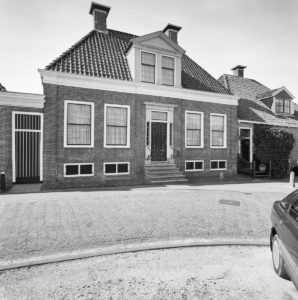
The Vredegerecht (sometimes spelled vredegeregt) is the Peace Court or Justice of the Peace. The system of vredegerechten was introduced during the French occupation and lasted from 1811 to 1838. The Vredegerecht held the lower jurisdiction in a canton, a district roughly the size of one or a few municipalities. After 1838, the vredegerechten were renamed to kantongerechten. In Belgium, these courts are still called vredegerechten. The vredegerechten only had the jurisdiction over … [Read more...]
Dutch term – Passagierslijst
13 November 2017 by 1 Comment
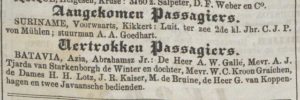
A passagierslijst is a passenger list. Most passenger lists are kept in the country of arrival. Passenger lists for people who emigrated from the Netherlands to another country, are rarely found in the Netherlands. But the passenger lists of people who travelled to the Netherlands may be found in Dutch archives. The Stadsarchief Rotterdam [Rotterdam City Archives] has the largest collection of passenger lists, including those of the Holland Amerika Lijn and the Koninklijke Lloyd. Passenger … [Read more...]
Dutch term – Familiearchief
6 November 2017 by Leave a Comment
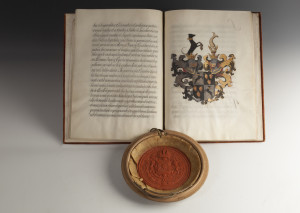
A familiearchief is an archive created by a family. The records in a family archive can relate to personal, business, or government affairs and were often formed by several generations. Many familiearchieven are still in the possession of the family, while others have been turned over to an archival institution. The website Archieven.nl has finding aids for many familiearchieven that are in public facilities. … [Read more...]
Dutch term – Grietenij
30 October 2017 by 1 Comment
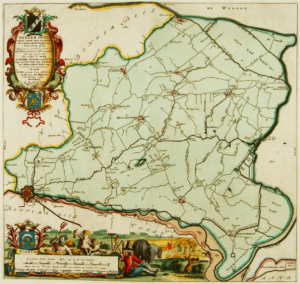
A grietenij is a municipality. The term is mainly used in Friesland. In 1851, it was changed to gemeente, the common Dutch word for municipality. In parts of Groningen, the term grietenij was also used to refer to the local courts. A grietenij was led by the grietman, whose function was similar to that of a mayor. … [Read more...]
Dutch term – Verboden graad
23 October 2017 by Leave a Comment
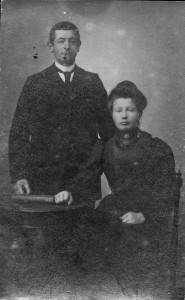
A verboden graad means "forbidden degree." You will usually encounter this in marriage records, if the bride and groom received dispensation for being too closely related. This could mean that they were blood relatives, or relatives-by-marriage. You can also encounter the term in requests for dispensation to the civil or ecclesiastical courts, or the King and Queen (in later times). Read more about royal dispensations. … [Read more...]
Dutch term – Besnijdenis
16 October 2017 by Leave a Comment
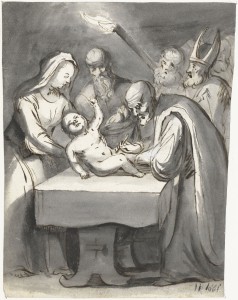
Besnijdenis is the Dutch word for circumcision. In the Netherlands, circumcision was traditionally performed on Jewish boys only. For the period before the introduction of the civil registration in 1811, besnijdenisregisters [circumcision records] are an important source of birth information about male Jewish ancestors. They can often be found among the church records. Read about other resources for Jewish research. … [Read more...]
Dutch term – Openbaarheid
9 October 2017 by Leave a Comment

Openbaarheid means the status of a document as a public record. Records can have different statuses: Openbaar [public]: the record is public and can be accessed without restrictions. Beperkt openbaar [limited public]: the record is not public but can be accessed under certain conditions. Niet openbaar [not public]: the record is not public and cannot be accessed. Common reasons for records to not be public are to protect the privacy of living people or in the case of state secrets. … [Read more...]
Dutch term – Klompenmaker
25 September 2017 by 3 Comments
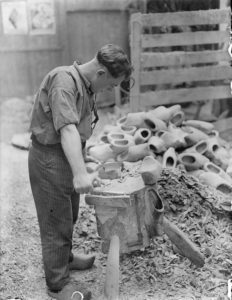
A klompenmaker is a wooden shoe maker. For many people in the Netherlands, wooden shoes were the common footwear. Wooden shoes were sturdy, protected toes when something fell on it, and made from material that's easily available. And if they broke beyond mending, you could always use them for firewood! Nowadays, some farmers still wear wooden shoes because they're practical. They're also part of traditional costumes. … [Read more...]
Dutch term – Veer or Veerpont
18 September 2017 by Leave a Comment
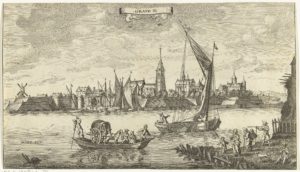
A veer or veerpont is a ferry. If you can't find a person, try looking in the records on the other side of the ferry. People living on one side of the river may have normally used a ferry to go to church, but if the ferry was out during the winter or bad weather they might have had to go to another church to have their children baptized. People could have used the ferry to go to a market on the next island, and perhaps met a spouse there. If your ancestor was a ferryman, you may find an … [Read more...]
Dutch term – Gemengd huwelijk
4 September 2017 by 1 Comment
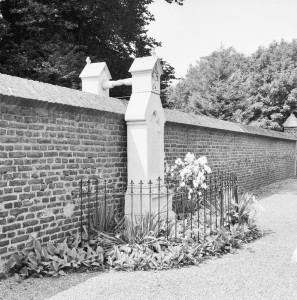
A gemengd huwelijk is a mixed marriage. The term typically refers to two people with different religions, but is sometimes also used for two people of different racial backgrounds. Until recently, many churches would not perform a mixed marriage ceremony and required the other party to convert and promise to raise all their children in that church's faith. A civil marriage before the court was an alternative for couples who did not want to convert. Some couples chose to raise the boys in the … [Read more...]