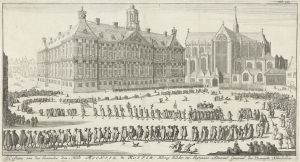
In burial records, you will sometimes see the reference to the "beste kleed" or "slechtste kleed." To someone unfamiliar with Dutch or using an automatic translator, that may look like somebody was buried in their best or worst clothes, but in fact the term refers to the lijkkleed or burial pall. The "beste kleed" was the best and most expensive pall. The "slechtste kleed" was the worst and cheapest pall. Many burial records were created as account books, to keep track of the income from … [Read more...]
Dutch term – Eiland
14 August 2017 by Leave a Comment
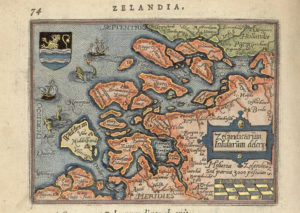
An eiland is an island. The Netherlands has several islands, such as the Zeeland islands in the south-west and the Wadden islands in the north. But there used to be many more. Large parts of the mainland of the coastal provinces used to be islands. The waterways have since been dammed off and reclaimed from the sea. Modern examples of this are the former islands of Urk and Schokland, now part of the province of Flevoland. Earlier examples include the former island of Cadzand in … [Read more...]
Dutch term – Collaterale Successie
7 August 2017 by Leave a Comment
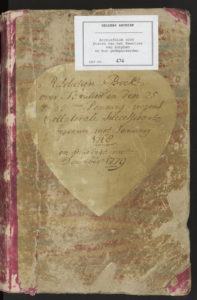
Collaterale Successie [Collateral Succession] is the situation where an inheritance goes to heirs in collateral lines, such as the siblings, aunts and uncles of the deceased, or their descendants. Many regions charged a tax on collateral successions, which was recorded in separate registers. These tax registers can give a good overview of the family composition. After about 1806, these registers were rendered obsolete by the introduction of the Memories van Successie [death duties files] … [Read more...]
Dutch term – Tachtigjarige Oorlog
24 July 2017 by Leave a Comment
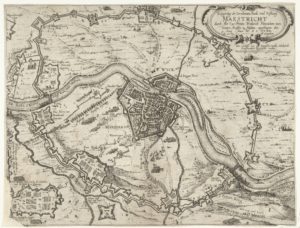
The Tachtigjarige Oorlog was the Eighty Years' War that lasted from 1568 to 1648. It was the Dutch war of Independence where the Dutch fought for independence from the Habsburg empire, ruled by the Kings of Spain. Read about Five ways that the Eighty Years' War affected our ancestors. … [Read more...]
Dutch term – Rijkslandbouwwinterschool
10 July 2017 by Leave a Comment
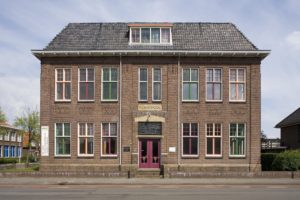
The rijkslandbouwwinterschool was the national agricultural winter school. Farmer's sons (and later, daughters) attended the school during the winter months when there was not a lot to do on the farm. They'd learn about growing crops and raising cattle. This type of school was introduced in the period 1890-1920 throughout the country. Some still exist, but as a year-round school with an agricultural curriculum. … [Read more...]
Dutch term – Bij Kaarsenbrand
3 July 2017 by Leave a Comment
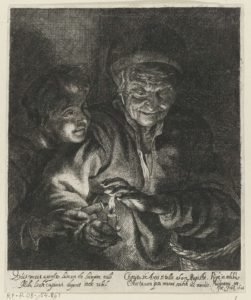
In old legal records, you can sometimes find that property was sold "bij kaarsenbrand" [by burning candle]. It does not mean that it was sold at night, but rather that the property was sold in an auction that lasted as long as a candle burned. If the candle went out, the highest bid at that time was the winning bid. It made sure that auctions would not drag on. … [Read more...]
Dutch term – Klederdracht
26 June 2017 by Leave a Comment
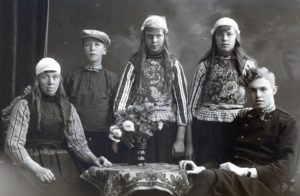
Klederdracht means traditional costume. Many regions had their own style. Experts can tell you what area a person in a photo came from just by looking at the style of headwear or clothing. … [Read more...]
Dutch term – Auteursrecht
19 June 2017 by Leave a Comment
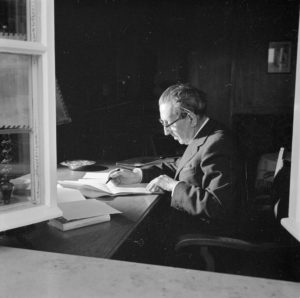
Auteursrecht (literally: author law) is the Dutch term for copyright. Here are some things that you need to know about copyright in the Netherlands: Copyright expires seventy years after the death of the creator, after which time the work becomes part of the public domain. Copyright requires originality. There is no copyright on a truthful reproduction of a record in the public domain. The provider of the scan can set limits on reuse in the terms of use of the website, but this is … [Read more...]
Dutch term – Peter and Meter
5 June 2017 by 8 Comments
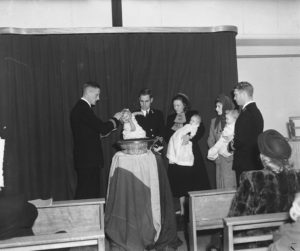
A peter is a godfather, meter is a godmother. The terms are typically used in Catholic sources. The word compeer is also sometimes used, especially in older records. In Dutch Reformed sources, the term doopgetuige (baptismal witness), or getuige (witness) is used more often. … [Read more...]
Dutch term – Klapper
29 May 2017 by Leave a Comment
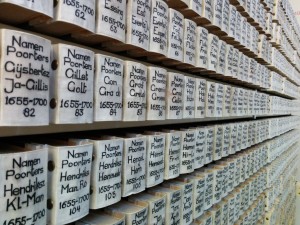
A klapper is a finding aid, usually a physical book or binder with a name index. Klappers can often be found in reading rooms of archives. They are disappearing as they are being scanned or entered into databases. Finding out what klappers exist can help you create a research plan for a visit to an archive. Some archives have a catalog or research guide on their website that indicates what klappers they have. Usually, you can only find out in the reading room itself. There may be a list of … [Read more...]