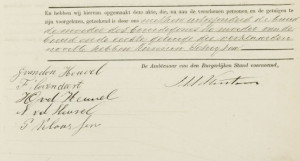
Schrijven means 'to write.' It wasn't until well into the 20th century that most of the people in the Netherlands were able to write. In birth, marriage or death records in the 19th century, you will often read sentences like "verklarende de moeder der bruid uit hoofde van ongeleerdheid niet te kunnen schrijven" [declared the mother of the bride, for reasons of not being educated, to be unable to write]. Women were more likely to be illiterate than men. It is worth checking the bottoms of … [Read more...]
Dutch term – Herberg
10 September 2014 by Leave a Comment
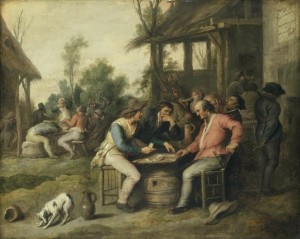
A herberg was an inn. Herbergen played an important role in the community. It was where people came after work or after church, where they stayed if they were travelling and where they met business partners to discuss deals. Innkeepers often played a role as informal scribes, writing documents for clients who could not read or write. Things could get rowdy. When things got so rough that someone got injured or killed, so you can find inns featured in court records. If your ancestor was an … [Read more...]
Dutch term – Herfstmaand
1 September 2014 by Leave a Comment
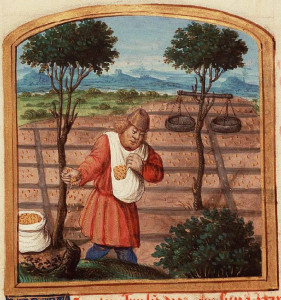
Herfstmaand (literally: Autumn month) is the old word for September. … [Read more...]
Dutch term – krant
28 August 2014 by Leave a Comment
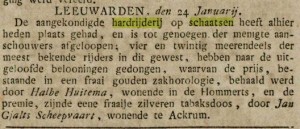
A krant (plural: kranten) is a newspaper. The first newspaper in the Dutch language was the Courante uyt Italien, Duytslandt, &c. that first appeared in 1618. The oldest newspaper that still exists is the Leeuwarder Courant, that has appeared since 1752. The Royal Library of the Netherlands is digitizing old newspapers and making them available for free at Delpher.nl. Click the tab kranten to search the newspapers. The website is only available in Dutch. Search for names of ancestors … [Read more...]
Source: Family announcements
22 August 2014 by 1 Comment
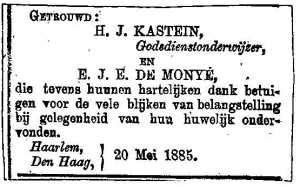
In the Netherlands, there has never been a tradition of writing biographical obituaries like you see in countries like the United States. Instead, "familieberichten" [family announcements] simply announce the death of a person. In the 19th century, only more affluent people had a familiebericht placed in the paper. It was usually very short and only signed by the closest relative, typically the spouse or eldest son. In the 20th century, the announcements became a bit more informative and … [Read more...]
Dutch term – Weeskamer
21 August 2014 by 5 Comments
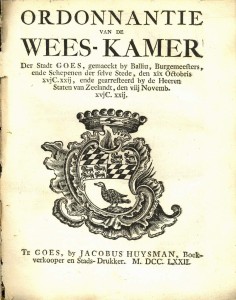
A weeskamer is the orphan chamber, a government body responsible for overseeing the administration of the estates of (half) orphans. Weeskamers should not be confused with orphanages: they did not take care of the orphans, just the administration of the estates. Weeskamers existed in most parts of the Netherlands until 1810. After 1810, their tasks were taken over by the court. They also existed in Dutch colonies, like New Amsterdam (present-day New York). Tasks of the orphan chamber After a … [Read more...]
Dutch term – Bruid
11 August 2014 by Leave a Comment
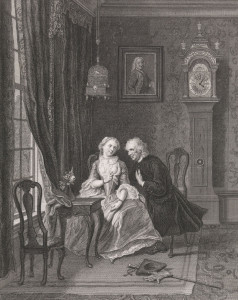
A bruid is a bride. Most women married for the first time in their mid to late twenties. If you see a woman who got married before the age of twenty, you will often find one of these circumstances to be the case: The bride is pregnant The bride is an orphan The groom is a widower with young children and the bride is his former maid. Of course, there could be several other reasons why people married young, but in my experience one of these three situations usually applies. … [Read more...]
Dutch term – Oogstmaand
4 August 2014 by Leave a Comment
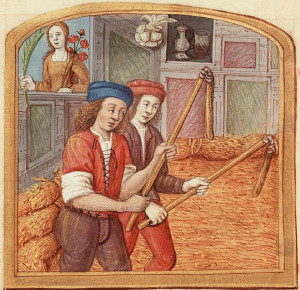
Oogstmaand literally means "harvest month" and is the old word for August. … [Read more...]
Dutch term – Trekschuit
28 July 2014 by Leave a Comment
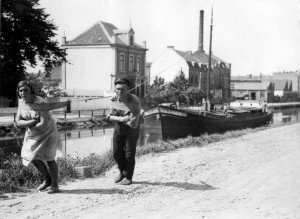
Trekschuit literally means "pull barge" and is a low-bottomed ship that was dragged along canals and rivers. In the waterlogged country that is The Netherlands, trekschuiten were one of the main forms of transportation for people and goods over longer distances, as roads were often so muddy that they were useless for most of the year. Most trekschuiten were powered by horses, who walked along the rivers and canals on specially created paths. In some cases, the people who operated the … [Read more...]
Dutch term – Toegang
21 July 2014 by Leave a Comment

The Dutch word toegang literally means "access" or "entrance." In archival jargon, it means a finding aid that describes the content of a record group. For example, you can have a toegang on the records of the Dutch East India Company. Another word for toegang is inventaris. In source citations or search forms, you can encounter the word toegang or toegangsnummer (finding aid number). This refers to the name and number of the record group. The record group number of the Dutch East India … [Read more...]