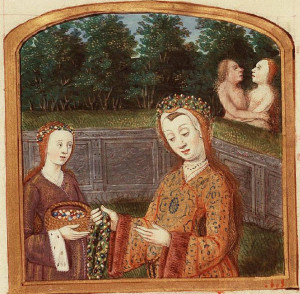
Bloeimaand (literally: bloom month) is the old word for May. … [Read more...]
Dutch term – Bevrijding
5 May 2014 by Leave a Comment
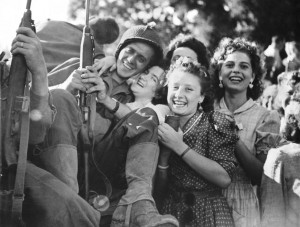
Bevrijding means 'liberation.' On 5 May 1945, the Netherlands was liberated from the German occupation. Every year on this day, we celebrate "Bevrijdingsdag" (Liberation Day) to commemorate this event. … [Read more...]
Dutch term – Bode
29 April 2014 by Leave a Comment
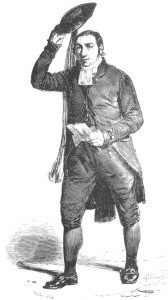
A bode was a messenger, which can sound like an errant boy but it was a far more important function than that. The best approximation is probably a bailiff, someone charged with delivering important documents and news and making sure that the other party receives it. They had a wide array of tasks, ranging from taking messages to organizing public tenders and contracts. Bodes were usually employed by government bodies, like city councils, poor administrations and the States-General. … [Read more...]
Ask Yvette: Resolving Conflicting Evidence in Early Civil Registration Records
25 April 2014 by 1 Comment
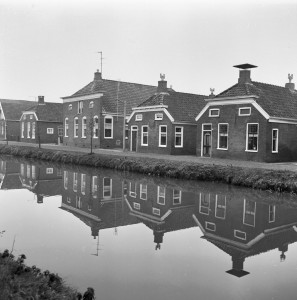
Since the introduction of the civil registration (in 1811 in most part of the Netherlands), everybody was supposed to have a fixed name. Everybody who did not have a surname, was required to take a name and have that recorded. The reality was not always so neat. Especially in regions where many people did not have surnames before 1811, like Friesland, Groningen, Overijssel and Gelderland, the same person may appear in civil registration records under different names. Willem Lucas de Jonge and … [Read more...]
Dutch term – wijlen
21 April 2014 by Leave a Comment
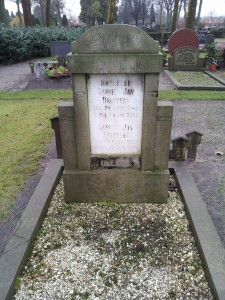
The term wijlen means 'the late,' or 'deceased.' You will often encounter the term in marriage records or death records, where one or both parents are deceased. The record might say "zoon van wijlen..." [son of the late...] or "dochter van wijlen..." [daughter of the late...]. Sometimes, the word is abbreviated to 'w' and you will see svw or zvw [soon/zoon van wijlen: son of the late] or dvw [dochter van wijlen: daughter of the late]. These abbreviations are most commonly found in church … [Read more...]
Sources for Dutch Genealogy – Pre 1811 Cheat Sheet
18 April 2014 by 1 Comment

Looking for information about Dutch ancestors in the period from say 1650 until 1811 (before the introduction of the civil registration)? This cheat sheet will tell you which sources to consult. In some cases, not all types of records are available in each region. If a town did not have an orphan chamber, the administration of the estates of (half-)orphans was handled by the court. Not all regions had notaries, in which case voluntary legal actions were handled by the court as well. … [Read more...]
Dutch term – Brouwer
14 April 2014 by 2 Comments
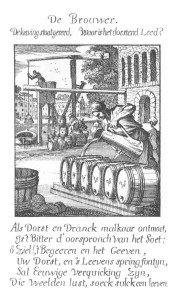
A brouwer is a brewer. Since most of the water was not safe to drink, most people drank beer. 'Small beer' only had a low alcohol percentage so it was safe to drink for children. In larger towns, brewers were organized in guilds. In smaller towns, they operated independently. In most places, brewers had to pay tax on the beer they produced. Some of these tax records can be found in local archives or city ledgers. Also, their measures and pints were sometimes calibrated by town officials to … [Read more...]
Dutch term – Grasmaand
7 April 2014 by Leave a Comment
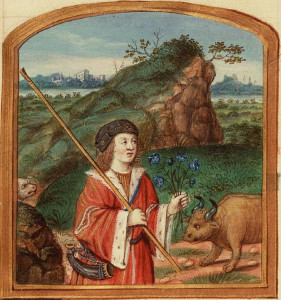
Grasmaand literally means "grass month" and is the old word for April. … [Read more...]
Case study – Using population registers to tell a story
4 April 2014 by 3 Comments
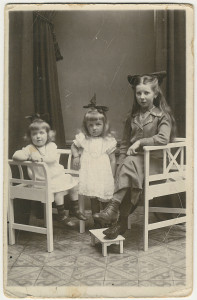
When you find enough evidence to answer your initial research questions, it is tempting to move on to another family. But you can discover a whole lot more if you make the effort to find all available records. In this case study, I will show you how you can find out more about the lives of your ancestors using information from Population Registers. Example: Maria Gommeren When I first researched my great-great-grandmother Maria Gommeren (1864-1918), I stopped looking for records once I proved … [Read more...]
Dutch term – levenloos
31 March 2014 by 6 Comments
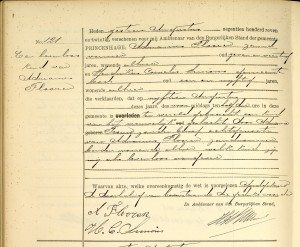
Levenloos literally means "lifeless" and is used to refer to stillborn children. In death records, you will often read "levenloze dochter" [stillborn daughter], "levenloze zoon" [stillborn son] or "levenloos kind" [stillborn child]. Since 1811, death records were created for stillborn children (children born after a pregnancy of more than six months). They did not have birth records, as these were reserved for children that were born alive. If a child died before the birth record was created, … [Read more...]