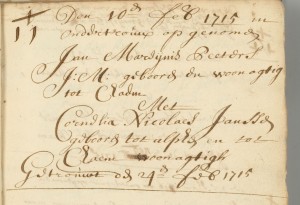
A patroniem is the Dutch word for 'patronymic,' a name derived from the father's name. Examples are Jansen (son of Jan), Marijnissen (son of Marijn or Marinus) or Damen (son of Daam or Adam). In some provinces where patronymics were common, like Friesland and Noord-Brabant, you may encounter the word patroniem in search engines. If this is the case, be sure to use try that field, because you will not get any results by searching for a patroniem in the achternaam (surname) field. See the … [Read more...]
Dutch term: nummerwisselaar
2 September 2013 by 2 Comments
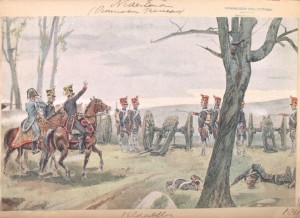
A nummerwisselaar or number changer was a person that was hired as a replacement for military service. Often, this was somebody who signed up in the same year, but whose number did not come up. They literally "exchanged numbers" so one man served instead of the other. In most cases, a contract between the (father of the) draftee and his substitute was drawn up before a public notary. It stipulated the terms, often involving a sum of money to be paid immediately and another sum after the … [Read more...]
Dutch term: tussenvoegsel
26 August 2013 by 2 Comments
A tussenvoegsel (literally: something put in between) is a prefix of a surname. Common prefixes are De (the) or Van den (from the). Tussenvoegsels are ignored when determining the alphabetical order, so De Vries can be found under the V. See the article about prefixes in surnames for more information. … [Read more...]
Marriage supplements: gateway to more information about your ancestors
23 August 2013 by 4 Comments
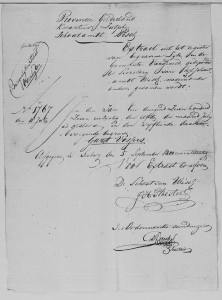
Since the introduction of the civil registration in 1811, a bride and groom had to submit several documents to prove they were eligible to get married. Not only do these records tell you when your ancestors were born, but they may also provide information about their physical appearance, death dates of parents and previous spouses or even of their grandparents. These documents are known as the 'Huwelijksbijlagen' and most of them still exist and can be found online. … [Read more...]
Dutch term: Landverhuizer
19 August 2013 by Leave a Comment
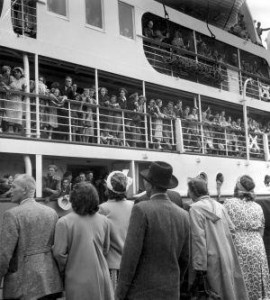
The word landverhuizer means somebody who moved to another country. It's the term most 19th century records use when referring to emigrants. Knowing this term can help to find lists of emigrants ("staten van landverhuizers") in catalogs of repositories. Read more about landverhuizers in the column "Land movers." … [Read more...]
Top 10 most common Dutch surnames
16 August 2013 by 62 Comments
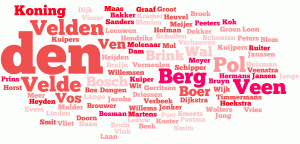
The ten most popular surnames in the Netherlands in 2007 were De Jong, Jansen, De Vries, Van den Berg, Van Dijk, Bakker, Janssen, Visser, Smit and Meijer. More than 5% of the people in the Netherlands had one of these ten last names. 1. De Jong (86,534 in 2007) De Jong literally means "The Young". Often used when two people in the same family had the same first name. The youngest one would be called De Jong, similar to somebody who is called "junior". Its counterpart, De Oude (the … [Read more...]
Dutch term: schoonvader
12 August 2013 by Leave a Comment
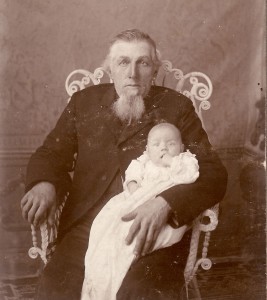
The current meaning of the term schoonvader is "father-in-law." In earlier records, the term is used more generally and can also mean stepfather. Just think of the term as "father by marriage," the marriage being either the one to the spouse (making his/her father the schoonvader) or the mother (making her husband the schoonvader). … [Read more...]
Dutch term: ondertrouw
5 August 2013 by 2 Comments
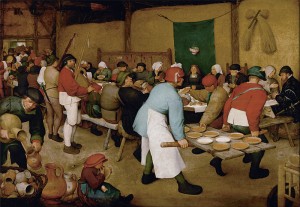
"Ondertrouw" is the event when the banns for a marriage are published. Following the ondertrouw, the marriage is announced three times, at least a week apart (usually on 3 consecutive Sundays). If nobody objects, the marriage is usually performed shortly after the third publication of the banns. Banns were published in the place where the bride and groom lived. If they only lived there shorter than 6 months, they also needed to be published in their previous place of residence. It is not … [Read more...]
Dutch term: knecht
29 July 2013 by Leave a Comment
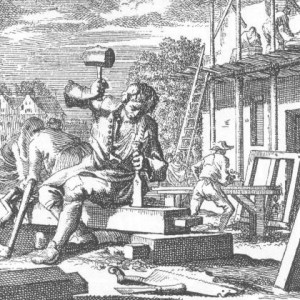
A knecht is a term used to describe the occupation of somebody who works for somebody else. The term does not have an exact English equivalent, but terms like servant, hand, apprentice or assistant come close. Often, the type of knecht is specified, for example timmermansknecht (carpenter's hand), bakkersknecht (baker's hand) or landbouwersknecht (farmhand). Most men started out working as a knecht to learn a trade. Some became masters in their own right, others remained a knecht for the rest of … [Read more...]
Dutch term: lidmaat
22 July 2013 by Leave a Comment
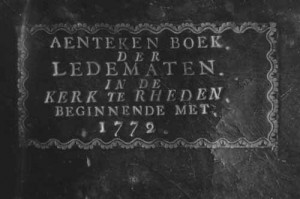
The word lidmaat (plural: lidmaten, sometimes ledematen) means member, usually a member of a protestant church. Most protestant became members by confessing around the age of 18-20. Their membership is recorded in the lidmatenboek (church membership book). If they moved, they were given a declaration by their old church so they could become members of another church without having to confess again. … [Read more...]