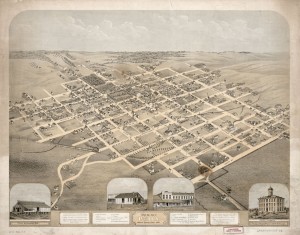
Don't stop looking for your family in a town just because they don't live there anymore. They may still own property there, have business partners there, or may be heirs of people who stayed behind. In notarial records, I often find references to children living abroad, for instance when one of their parents died and their estate needed to be divided. If your ancestors emigrated from the Netherlands while one of their parents or unmarried siblings was still alive, make sure to check the death … [Read more...]
Dutch term – Achternicht
18 April 2016 by Leave a Comment
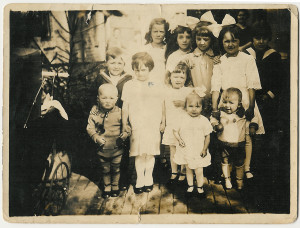
An achternicht (literally: behind cousin) is a female relative. The term covers the English terms great-niece, first cousin once removed and second cousin. The male form is achterneef. … [Read more...]
Organization of Archives in the Netherlands
15 April 2016 by 2 Comments
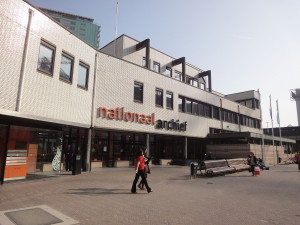
To find records about your ancestors, it is useful to know how archives are organized; even if you're looking for online records. Government archives The most important sources for genealogical research are kept in government archives. Churches were required to hand over their baptismal, marriage and burial registers when the civil registration was introduced (in 1811 in most parts of the country), so you can even find those records in government archives. National Archives At the national … [Read more...]
Quick tip – Beware of same-named towns
13 April 2016 by 1 Comment
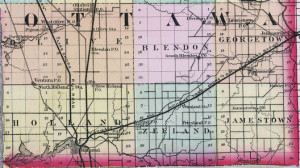
If you are researching immigrants, beware that immigrants often named towns after their place of origin, so there might be two or more places by that name, perhaps thousands of kilometers apart. When a New Netherland records says "Haerlem," did they mean Harlem in current-day New York or Haarlem in the Netherlands? If your Michigan ancestor was born in Holland, was he born in Holland, Michigan or somewhere in the Netherlands? Studying the surrounding records can help, for example if you … [Read more...]
Dutch term – Crematie
11 April 2016 by Leave a Comment
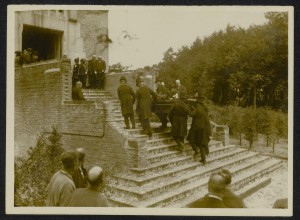
Crematie is the Dutch word for cremation. In 1874, a group of Dutch people organized a foundation for the introduction of corpse burning in the Netherlands. They lobbied to allow cremation, which was forbidden by law. Their efforts led to the building of the first crematorium in 1913 and the first cremation took place in July 1914. Technically, this was still illegal, since it would take until 1955 for the law to be changed. Film about the first crematorium This film, created by the … [Read more...]
Dispatch from Deuel
8 April 2016 by 6 Comments
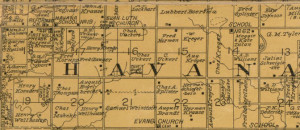
In the nineteenth century, there were several Dutch language newspapers in North America. The Dutch were spread all over the Mid-West, looking for opportunities to buy good farm land at a cheap price. These newspapers formed an important link in those migration chains, where people shared news about their colonies and the people who lived in them. Several of these Dutch newspapers have been digitized and are available via Delpher. You can search them for the names of your ancestors, but also … [Read more...]
Quick tip – That index may not be complete
6 April 2016 by 1 Comment
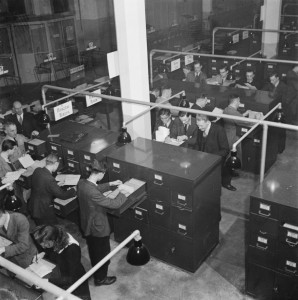
If you are using a genealogical database such as WieWasWie, beware that the record you are looking for may not be in the index. Either it may not exist (anymore, if ever), or it may not have been indexed yet. Most indexes provide a table of contents that show which records have been included. If you don't find the record you are looking for, check the contents to make sure that the record should be there. If the record should be there, and you can't find it despite searching for … [Read more...]
Dutch term – Inbrengregister
4 April 2016 by 1 Comment
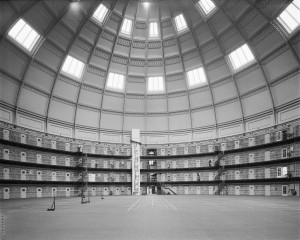
An inbrengregister is an admission register. Inbrengregisters can be found in the archives of institutions where people were housed, like prisons, orphanages or mental institutions. Inbrengregisters will usually give you the following information about an inmate: Name Place and date of birth Reason for admission Date of admission Date of departure. Sometimes, information about their time in the institution can be found in a notes column, or the register may include … [Read more...]
Seven Tips for Writing a Family History
1 April 2016 by 12 Comments
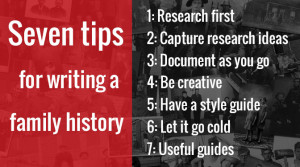
Writing a family history is more than exporting a report from your genealogy program. A family history has hand-crafted sentences that describe the lives of your ancestors. I have written several of these stories, including a Kinship Determination Project for my portfolio for the Board for Certification of Genealogists. Here are seven practical tips for writing such a narrative. 1: Research first Before you start writing, make sure you have finished most of the research. For each person in … [Read more...]
Quick tip – Don’t Assume Your Ancestors Were Like You
30 March 2016 by Leave a Comment
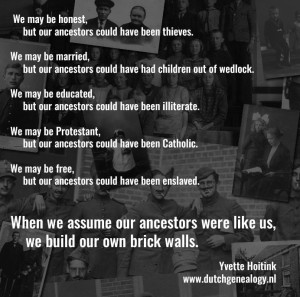
(feel free to share!) … [Read more...]