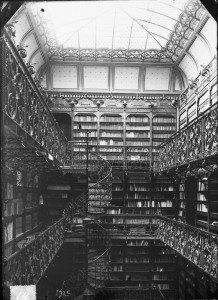
A bibliotheek is a library. When doing Dutch research, keep in mind that most genealogical collections are held at archives, not libraries like in some other countries. … [Read more...]
What Dutch DNA looks like
25 March 2016 by 52 Comments
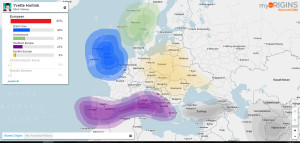
Update: This is the 2016 version of the article, the 2018 version of this article is now available! There's a meme going around on Facebook, started by J Paul Hawthorne, where people share their pedigree chart that shows the ethnicities rather than the names. In this article I am going to compare my ethnicity based on my paper trail to the ethnicity predictions by the DNA companies. Ethnicity pedigree chart Here is my pedigree chart, showing the countries of birth of ten generations of … [Read more...]
Quick tip – Search Dutch Newspapers at Delpher
23 March 2016 by Leave a Comment
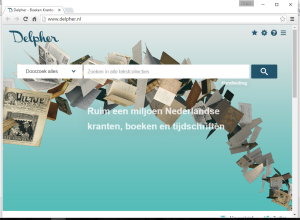
The Koninklijk Bibliotheek, the Royal Library of the Netherlands, is making Dutch newspapers, books and magazines availble for free at Delpher. Delpher has the following sections: Boeken basis [basic books] Boeken Google [Google books], books scanned in collaboration with Google Kranten [newspapers] Tijdschriften [magazines] Radiobulletins [radio bulletins] Searching Delpher Good things to try are: Full name of your ancestor in quotes, e.g. "Arend Kastein" Name of your … [Read more...]
Dutch term – Sub conditione
21 March 2016 by 1 Comment
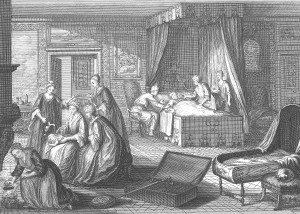
Sub conditione is a Latin term meaning "under the condition." You may encounter the term in Roman-Catholic baptismal records in cases when the midwife performed an emergency baptism. If the child lived, the child would be baptized again by the priest, under the condition that he was able to receive the baptism. Read more about emergency baptisms. … [Read more...]
Why are the Dutch so tall?
18 March 2016 by 36 Comments
When I visited Salt Lake City earlier this year, I was once again reminded that the Dutch are the tallest people on earth. At 1.75m (5'9"), I'm a bit above average height for a woman in the Netherlands, but in the US I was taller than most men and women. Here in the Netherlands, almost all of my male friends and some of my female friends are over 6' tall. At 6'5", my husband is considered to be tall, but not unusually so. This Youtube video explains that in the past 150 years, Dutch men have … [Read more...]
Quick tip – Use bond letters to find out where your ancestor came from
16 March 2016 by Leave a Comment
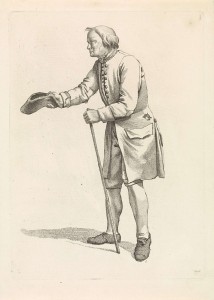
If you can't find a Dutch ancestor from the 1700s, it could be that they originally came from elsewhere. At that time, you had to provide a bond letter (borgbrief or akte van indemniteit) from your previous place of residence before you could settle elsewhere. This letter assured the new town that you would not be a burden to them, because the old town agreed to take care of you if you were unable to support yourself. They are a wonderful source of information about migrations. Read more … [Read more...]
Dutch term – Cipier
14 March 2016 by Leave a Comment
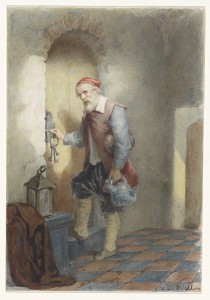
A cipier is a prison warden or jailer. If your ancestor was a cipier, you may be able to find more information about him in the administration of the prison. You may also find a cipier as the witness in a death record. In that case, your ancestor might have been in jail. You can check prison records to find out more information. … [Read more...]
Open data case study: Changing names in Winterswijk
11 March 2016 by 2 Comments
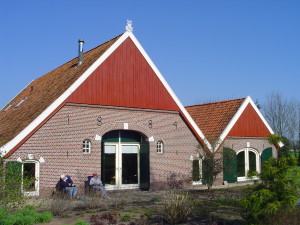
The Gelders Archief just published many of their genealogical indexes as open data. This allows everyone to download the indexes and re-use them. Being a bit of a geek, I could not resist downloading some of the sets for Winterswijk to see what I could do with them. Winterswijk is the town where my father was born, and most of his ancestors to0, and I have been working on a one-place-study of Winterswijk for over twenty years. I thought it would be fun to use Excel and see how Winterswijk … [Read more...]
Quick tip – Don’t search too broadly too soon
9 March 2016 by Leave a Comment
If you are stuck, it is tempting to start searching broadly. You might use Google or a national database like WieWasWie to see where your ancestors' name pops up. However, this strategy often does not give you the result you're hoping for. You may find dozens of namesakes all over the country, without any way to tell if any of them is your ancestor. Or, even riskier, you may find just one namesake, and be tempted to conclude that this must be the one. However, the index may be incomplete, so … [Read more...]
Dutch term – Belasting
7 March 2016 by Leave a Comment
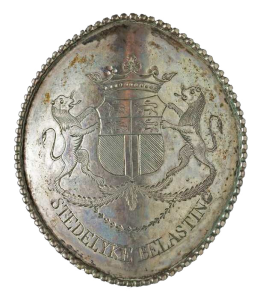
Belasting means tax. The high tax burden in the Netherlands was (and still is) one of the reasons for people to emigrate. Before about 1810, different regions had different taxes. And even in the nineteenth and twentieth centuries, there were taxes that we would not expect today. To name a few: Real estate tax Income tax Value-added tax Poll tax Marriage tax Burial tax Hearth tax Salt tax Spice tax Servant tax Bicycle tax Dog tax Cow tax Alcohol tax Tobacco … [Read more...]