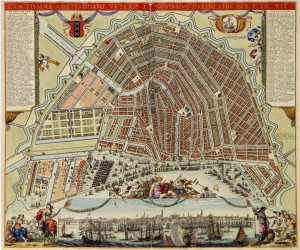
One of my clients asked me to research the origins of her Dutch colonial ancestor, Jan Dirkse van Eps. She graciously allowed me to share the research I did for her on my website, to make it available to other Van Eps descendants. As this article is based on the research report I wrote for her, it will also give you an insight into my work process and the type of research that I do. Unfortunately, the terms of the Amsterdam City Archives website do not allow me to reproduce the scans of the … [Read more...]
Quick tip – Visit the virtual Jewish monument
27 January 2015 by Leave a Comment
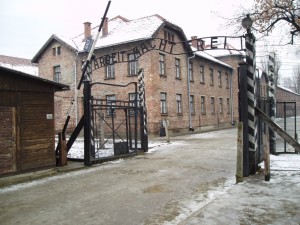
Today we commemorate that Camp Auschwitz was liberated 70 years ago. I visited the camp with my class in high school and it made a lasting impression on me. We saw rooms packed with children's shoes, toothbrushes, toys, and then read that it was just 1% of the total number that had been collected. Each one representing a tragic story. The website Jewish Monument tries to show each of these stories of the Dutch victims of the Holocaust. On the homepage, one dot represents each victim: blue for … [Read more...]
Dutch term – Echtscheiding
26 January 2015 by Leave a Comment

Echtscheiding (or scheiding) is the Dutch name for divorce. Up until the last part of the 20th century, divorce was pretty rare in the Netherlands. There are several ways to find out if a couple got divorced. The most common one is to look in the margins of the marriage record, where the divorce will be noted. The divorce will also be recorded in the marriage register, with a reference to the court ruling. You can use this to find the ruling in the court records, which may give more … [Read more...]
New website: Alle Drenten
23 January 2015 by Leave a Comment
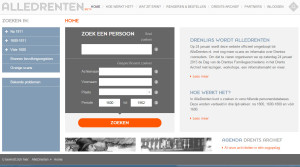
A new website launched this week: Alle Drenten (all people from Drenthe). Drenthe is a province in the north-east of the country. Many people from other regions lived there too, as it was home to the pauper colonies where beggars, vagrants and prisoners were sent to. The new website is the successor of DrenLias. It contains all the indexes that were available on the old site, and it now includes scans of the original records, just like the similarly-named websites Alle Groningers and Alle … [Read more...]
Quick tip – Most people did not own real estate
21 January 2015 by 1 Comment
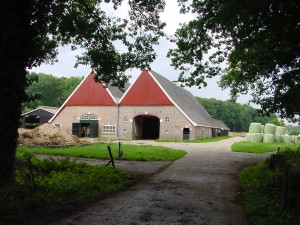
Historically, most people in the Netherlands did not own real estate. Most farmers were tenant farmers, often living on the same farm for generations. Others were seasonal laborers who moved from farm to farm every year. It is rare to find tenancy contracts or rental agreements as these things were usually arranged between the owner and the tenant without registration by a notary or court. In cities, many workers were too poor to own their own house and would have rented a room or house. … [Read more...]
Dutch term – Koopman
19 January 2015 by 7 Comments
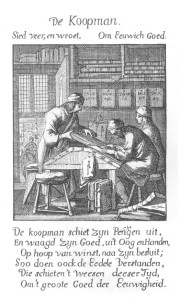
A koopman was a merchant, with the plural being kooplieden. Kooplieden could trade in all sorts of goods, ranging from spices from the Far East, timber from the Baltic or fur from the Americas. Others traded in domestic products like grain, cloth or glassware. One of the nice things about having a koopman in your tree is that they left much more records than the average person: purchase contracts, partnership agreements, declarations of debts, powers of attorney and a range of other … [Read more...]
11 things to know if you plan a trip to the Netherlands
16 January 2015 by 15 Comments
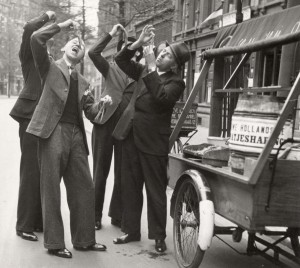
Are you planning a trip to the Netherlands in the new year? Here are some things you need to know if you've never been to the Netherlands before. 1. Most churches are still there Most churches are still standing, whether they are from the medieval period or later. Not all of them will be open to the public. Some churches are only open on a Sunday. You can check the church website to inform about opportunities to visit the church when there is no service going on. Often, a sexton will have a … [Read more...]
Quick tip – research the collateral lines
14 January 2015 by 1 Comment
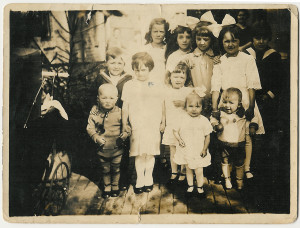
Most people are more interested in ancestors than their siblings, but records of the siblings can contain vital clues. For example, death duties files (memories van successie) of siblings who died without children can show that nieces and nephews or more distant relatives inherited. The death duties files can reveal complex family relationships, especially in the case of an elderly person who died after their siblings. Another tip is to always check the marriage supplements of marriages of … [Read more...]
Dutch term – Familieberichten
12 January 2015 by Leave a Comment
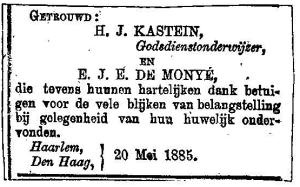
Familieberichten are family announcements, ads people placed in the newspaper to inform the readers of births, marriages or death. They are often less informative than obituaries but can help to provide background information and serve as illustrations. Read more about family announcements. … [Read more...]
Column – DNA tools
9 January 2015 by 6 Comments
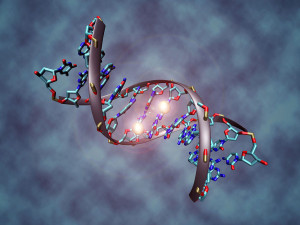
Two years ago, I took my first genealogical DNA-test. Thankfully, the results weren't too surprising, but definitely interesting. Grandpa, who was born three months after his parents' marriage, was indeed the son of his father because I share DNA with multiple relatives on that side. My friend Mary, whom I knew to be related on my father's side, also turned out to share DNA with my mother. This find may enable us to trace the father of an illegitimate ancestor. Before I tested, I would never … [Read more...]