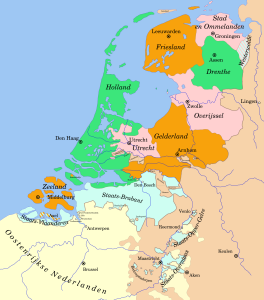
When you encounter a date in original records that is between 1582 and 1701, it could be in either the Julian or the Gregorian calendar, depending on the province where the record was created. This means the date you find could be as much as twelve days "off." Read more about the introduction of the Gregorian calendar in the Netherlands and the introduction dates per province. … [Read more...]
Dutch term: Spoorwegen
29 September 2014 by 4 Comments
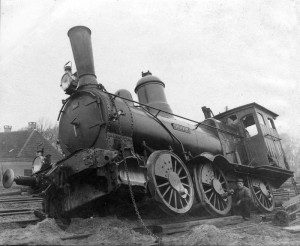
The term Spoorwegen means Railways. The first railway in the Netherlands began in 1839, and ran between Amsterdam and Haarlem. In the rest of the 19th century, a multitude of railway companies developed a railway network that spanned the entire country. The train quickly replaced the Trekschuit (pulled barge) as the most popular form of long-distance transportation. … [Read more...]
How to find the father of an illegitimate child
26 September 2014 by 88 Comments
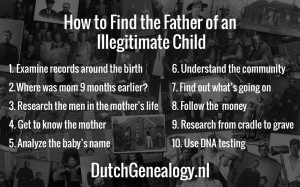
In most families, sooner or later you will encounter a child born to an unwed mother. Finding the fathers of these 'illegitimate' children can be difficult, but not necessarily impossible. I've researched dozens of these cases, both in my own tree and for clients. In four cases, I have been able to prove who the father was. In two other cases, I have developed good theories which I hope to prove through DNA. In the majority of cases, I ended up with a list of possible fathers, but no … [Read more...]
Quick tip – Dutch Genealogy Quiz
24 September 2014 by Leave a Comment

Are you an expert in Dutch Genealogy? Take the Dutch Genealogy Quiz and find out in three minutes! Regular readers of this blog and newsletter will recognize some of the topics. Don't worry if you get some answers wrong. I can see which questions people struggle with and promise to write articles about these topics in the next few weeks. Take me to the quiz! … [Read more...]
Dutch term – Timmerman
22 September 2014 by Leave a Comment
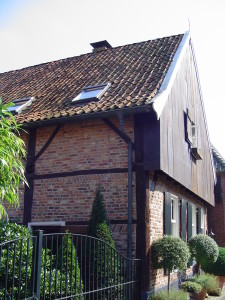
A timmerman is a carpenter. In the days before all houses were made of concrete or brick, carpenters built the frames. In the Middle Ages, most houses were made of wood. The houses had timber frames filled up with wicker and mud/clay. Later, bricks were used to fill in the timbers. Many carpenters were also employed to build ships. In the 17th century, the Russian Czar Peter the Great came to Zaandam to be apprenticed as a shipwright. … [Read more...]
Quick tip – Introduction to Dutch history
17 September 2014 by 1 Comment

If you want to learn about Dutch history, you can read the 50 canonical articles at Canon van Nederland. These articles act as 'windows to the past' and were developed as the basis for the history curriculum in schools. Each window tells the story of one canonical event in the history of the Netherlands from prehistory to the modern day. Topics include Charlemagne, the Hanseatic league, Rembrandt, slavery and Anne Frank. Each article takes one landmark person, artifact or topic and shows how … [Read more...]
Dutch term – Schrijven
15 September 2014 by 1 Comment
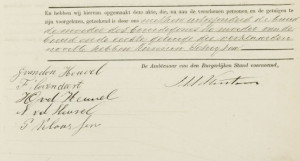
Schrijven means 'to write.' It wasn't until well into the 20th century that most of the people in the Netherlands were able to write. In birth, marriage or death records in the 19th century, you will often read sentences like "verklarende de moeder der bruid uit hoofde van ongeleerdheid niet te kunnen schrijven" [declared the mother of the bride, for reasons of not being educated, to be unable to write]. Women were more likely to be illiterate than men. It is worth checking the bottoms of … [Read more...]
Quick tip – Was he really born there?
11 September 2014 by Leave a Comment
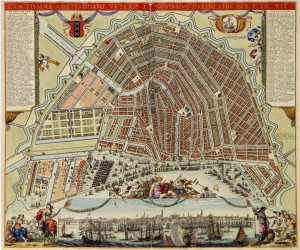
People who move a long way from their small village will often claim a larger city in the area as their place of birth since nobody would have heard of their real place of birth. If you can't find your ancestor in the city where he was supposed to be born, try looking in the villages around there. This is especially true after immigration. Many people just listed 'Rotterdam' or 'Amsterdam' as place of birth since those were the best known places in the new country. You may be counting … [Read more...]
Dutch term – Herberg
10 September 2014 by Leave a Comment
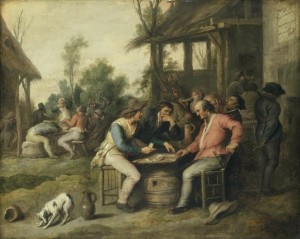
A herberg was an inn. Herbergen played an important role in the community. It was where people came after work or after church, where they stayed if they were travelling and where they met business partners to discuss deals. Innkeepers often played a role as informal scribes, writing documents for clients who could not read or write. Things could get rowdy. When things got so rough that someone got injured or killed, so you can find inns featured in court records. If your ancestor was an … [Read more...]
News from the Netherlands – August 2014
9 September 2014 by 2 Comments
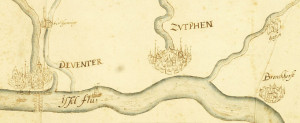
‘News from the Netherlands’ is a monthly series to inform you about the best new websites, projects and books that help you find and understand your Dutch ancestors. New records The Erfgoed Leiden en Omstreken [Heritage Leiden and Surrounding areas, which includes the Leiden archives] has published a series of indexes of Leiden records on their website. [Source: Geneaknowhow] Images and indexes of church records from several Gelderland municipalities have been put online by the Gelders … [Read more...]